







UV DTF Film Quality Standards Every Importer Should Know
A practical guide to UV DTF film quality standards, including coating, release, adhesion, dimensions, durability, packaging, sampling, and supplier control.

Estimated reading time: 14 minutes
UV DTF film quality should be judged by a written, repeatable acceptance standard, not by whether one sample looks good. An importer needs to control A film printability, B film transfer behavior, coating uniformity, release consistency, adhesive clarity, roll dimensions, surface cleanliness, substrate adhesion, storage stability, packaging, and lot traceability. The most useful standard defines the test method, sample conditioning, target substrate, printer settings, acceptance limit, sample size, and response when a lot fails.
There is no single universal specification that automatically makes every UV DTF film suitable for every printer, ink, laminator, product, and destination market. Importers must convert their real application into a supplier agreement and an incoming quality-control plan. A film that performs well on smooth glass may behave differently on coated metal or a low-surface-energy plastic. A roll that releases well at the beginning may still create costly downtime if coating or tension changes later in the roll.
This guide explains the quality standards importers should establish before placing a production order. It focuses on measurable performance, fair comparison, shipment protection, and evidence that can be traced to a batch.
What exactly is being inspected in a UV DTF film system?
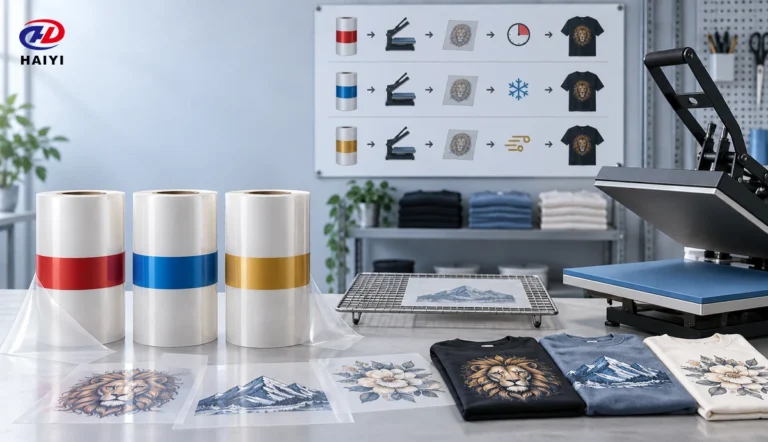
UV DTF normally uses two coordinated films. A film receives the printed image and supports the ink, white layer, and varnish during printing and curing. B film laminates over the cured design, lifts the image from A film, carries it to the product, and then releases after application. The final result depends on the complete relationship among the films, ink, varnish, curing energy, lamination pressure, environment, and substrate.
Buyers who need a process overview can first review how UV DTF film and the A/B transfer system work. Understanding the sequence matters because a defect seen at transfer may originate in several places. Weak adhesion can come from contamination, the wrong B film tack, insufficient contact pressure, an incompatible surface, or the printed layer itself. A quality standard should separate film-related evidence from process-related evidence.
The importer should identify each supplied component by construction, finish, nominal thickness, roll width, roll length, core size, winding direction, surface treatment, tack category, and intended use. Terms such as “premium,” “high tack,” or “easy release” are not acceptance criteria unless they are connected to a documented method and measurable range.
Why should importers create a product specification before requesting prices?
A product specification makes quotations comparable. Without it, two suppliers can offer materials with different thickness, coating, adhesive, roll length, release behavior, and packaging under the same product name. The lower quote may represent a different product rather than a better price.
The specification should describe the intended printer platform, ink and varnish system, curing arrangement, laminator, roll width, production speed, target substrates, indoor or outdoor exposure, application method, and expected storage period. It should also state which properties are critical to quality. For a high-volume label producer, stable web handling and low defect frequency may matter more than a small price difference. For premium transparent products, optical clarity and resistance to visible adhesive haze may be decisive.
Which visual defects should be part of incoming inspection?
Visual inspection is the fastest way to detect shipping damage and obvious production variation. Examine the roll under consistent backlighting and reflected light. Check both edges and several positions across the web. The inspection area should be clean, and staff should use gloves appropriate for handling film so fingerprints do not create false defects.
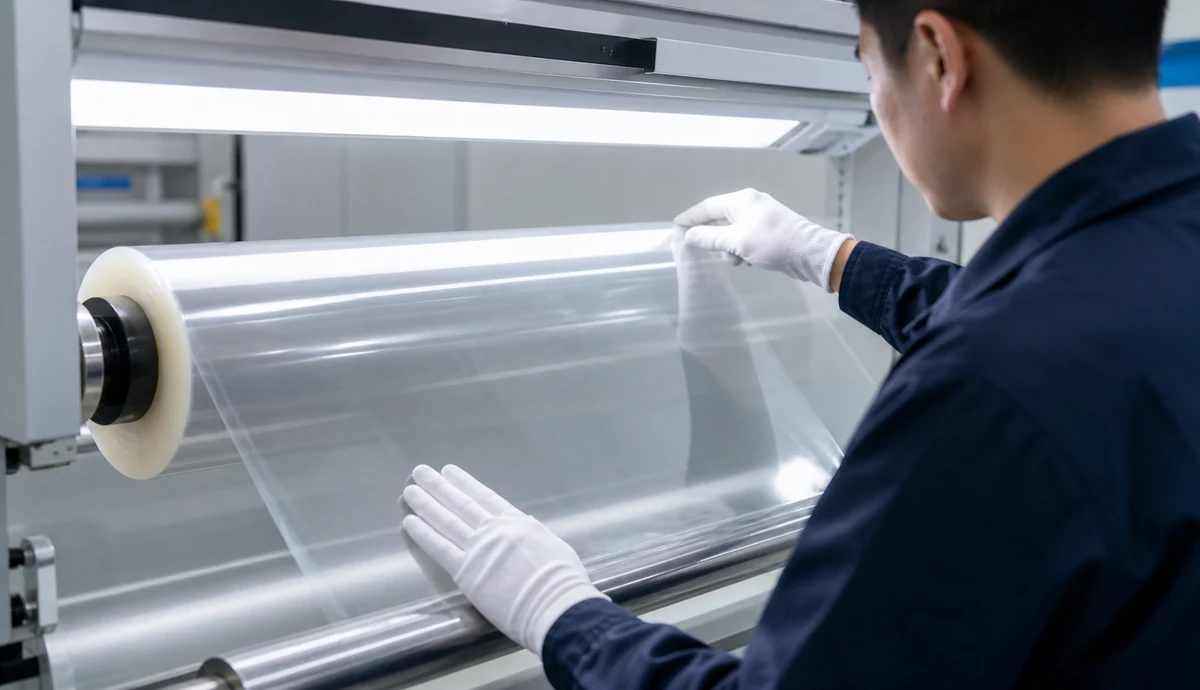
Common rejectable conditions include scratches in the usable print area, embedded particles, oil marks, coating streaks, gels, fisheyes, wrinkles, blocking, bubbles, telescoped winding, crushed cores, damaged edges, splice locations that were not declared, and visible variation in transparency or finish. The buyer should define defect categories by severity. A particle that creates a visible void in a customer logo may be critical, while a minor mark outside the agreed usable width may be cosmetic.
Defect limits should use a known inspection length and area. “No defects” is attractive language but can be impossible to administer fairly across large rolls. A better agreement defines the defect type, maximum size, maximum frequency, edge allowance, splice allowance, and whether a defect requires rejection, credit, or replacement. Retain dated photographs and the roll label whenever a defect is recorded.
How should thickness, width, length, and roll geometry be controlled?
Dimensions affect feeding, lamination alignment, inventory value, and cost per usable meter. The importer should specify nominal film thickness with an agreed tolerance and test it using a suitable calibrated thickness gauge. Measure multiple points across the web and along the roll because one reading cannot show coating or base-film variation.
Roll width should be measured without compressing or distorting the edges. The usable width can be more important than the total width if the coating does not extend uniformly to both sides. A and B film widths must suit the equipment and lamination method. Some workflows intentionally use a wider B film, so the purchase order should state the required pairing rather than assuming both rolls must match.
Check winding alignment, hardness, edge straightness, telescoping, wrinkles, and blocking. Excessive or uneven winding tension can cause curl and feeding problems even when the film itself meets thickness requirements. The standard should also define maximum roll diameter when printer or laminator clearance is limited.
What printability tests reveal A film quality?
A film quality is proven by a controlled print test using the buyer’s actual production system. The test file should include fine positive and negative lines, small type, solid color areas, gradients, white ink coverage, varnish, sharp corners, and dense image sections. The same file, RIP settings, ink lot, curing settings, environment, and machine condition should be used when comparing suppliers or batches.
Inspect ink wetting, dot control, edge sharpness, color uniformity, white ink coverage, varnish appearance, pinholes, mottling, bleeding, and visible contamination. The film should remain stable through feeding and curing without unacceptable skew, head contact, lifting, or deformation. If one sample is printed with slower speed or different curing energy, the comparison is no longer controlled.
Run more than a short leading sample. Importers need evidence from the beginning, middle, and end of a roll or from multiple rolls in the same lot. This helps reveal coating variation, winding changes, and intermittent surface defects. Record machine settings and environmental conditions with each result so a future claim can be investigated rather than debated from memory.
The site’s UV DTF production workflow provides useful context for locating failures at printing, curing, lamination, transfer, or final application. A good inspection form follows that sequence.
How can importers test A film release consistency?
A film must hold the printed structure securely through printing, curing, handling, and lamination, then release it consistently when B film is used. Release that is too easy can cause premature lifting or distortion. Release that is too difficult can tear fine details, stretch the carrier, or leave parts of the image behind.
Use a fixed test image and a matched B film. Condition samples for an agreed time after printing, then laminate with controlled pressure and speed. Peel at a consistent angle and rate. Inspect fine lines, isolated dots, corners, large solids, and the full image boundary. Record whether release is clean, whether the printed structure distorts, and whether residue remains.
Release should be compared at several positions across the film and at different roll locations. The buyer may create a practical rating scale with photographic examples, but the examples must be approved by both parties. A subjective phrase such as “peels well” is not enough for resolving a batch claim.
What standards matter most for B film adhesive and optical clarity?
B film must pick up the cured design from A film, protect it during handling, provide controlled placement, transfer the design to the target, and release without pulling the applied image back. The adhesive should not introduce unacceptable haze, yellow color, residue, bubbles, or visible texture in the final decoration.
Adhesion is substrate-specific. An internal peel or shear method can help compare lots, while recognized pressure-sensitive adhesive test methods may provide useful measurement principles. However, importers should not claim compliance with a named external method unless the construction, conditioning, substrate, equipment, angle, speed, and reporting requirements are actually followed. A modified factory test should be identified as an internal method, not presented as an official certification.
How should adhesion be tested on real customer substrates?
The final acceptance program should include the surfaces the buyer actually sells for. Glass, acrylic, coated metal, ceramic, painted panels, rigid plastics, wood coatings, and leather-like materials can present different surface energy, texture, plasticizer, and contamination conditions. A pass on glass does not guarantee a pass on every plastic.

Prepare each substrate using a documented cleaning procedure. Record material type, coating, supplier, surface condition, cleaning agent, application pressure, dwell time, and test environment. Use both immediate inspection and an aged check because some bonds develop over time while others fail after environmental exposure.
Useful evaluation modes include edge lifting, cross-cut behavior of the printed structure where appropriate, controlled peel comparison, static shear comparison, handling abrasion, water exposure, temperature cycling, humidity conditioning, and limited chemical spot testing. The correct set depends on the final product. A decorative indoor acrylic sign does not need the same validation as a bottle exposed to washing, oils, or outdoor sunlight.
The purpose of testing is to define a supported use envelope. It is not responsible to promise adhesion to “all materials.” Exclude unsuitable or unverified surfaces and provide customers with preparation instructions. Importers comparing the process with other label technologies can review UV DTF film versus traditional sticker printing to understand where the workflows and performance expectations differ.
What durability claims require evidence?
Words such as waterproof, scratch resistant, weather resistant, dishwasher safe, chemical resistant, and outdoor grade require defined test conditions. A sample surviving brief contact with water does not prove long-term outdoor durability. A transfer surviving hand washing does not automatically support a dishwasher claim.
Specify exposure duration, temperature, humidity, liquid or chemical concentration, abrasion tool, load, number of cycles, substrate, acceptance criteria, and visual evaluation method. Accelerated weathering equipment can compare materials under controlled light and moisture cycles, but accelerated hours do not translate directly into a guaranteed number of outdoor years without a validated correlation for the specific construction and use environment.
For color and appearance, use a retained control and consistent illumination. Record fading, yellowing, gloss change, cracking, edge lifting, adhesive haze, and loss of detail. If the importer markets a specific durability claim, the evidence should cover the exact film, ink, varnish, substrate, application process, and exposure condition behind that claim.
How should buyers control curl, static, blocking, and feeding?
Roll films can meet visual requirements yet perform poorly on equipment. Curl, static, blocking, uneven tension, loose winding, and edge damage can interrupt printing or lamination. The acceptance plan should therefore include a machine trial at normal operating conditions, not only bench inspection.
Condition the roll in the production environment before testing. Record room temperature and relative humidity. Observe unwind behavior, flatness, tracking, liner separation, static attraction, feed consistency, head clearance, and lamination alignment. If the film requires unusually slow speed or constant operator correction, it may not be commercially acceptable even when individual transfers look good.
Define storage orientation and environmental limits with the supplier. Keep rolls sealed until use, away from direct sunlight, excessive heat, moisture, dust, and chemicals. Use first-in, first-out inventory control and retain the original lot identification. After opening, reseal unused film according to the agreed storage method.
Which packaging standards protect UV DTF film during import?
Export packaging is part of product quality because a good roll can be damaged by humidity, impact, compression, dust, or unsupported movement in transit. Each roll should have suitable protective wrap, secure end protection, a strong core, and an outer carton matched to its weight and route. Heavy rolls may need additional internal supports so the core and edges do not carry damaging loads.
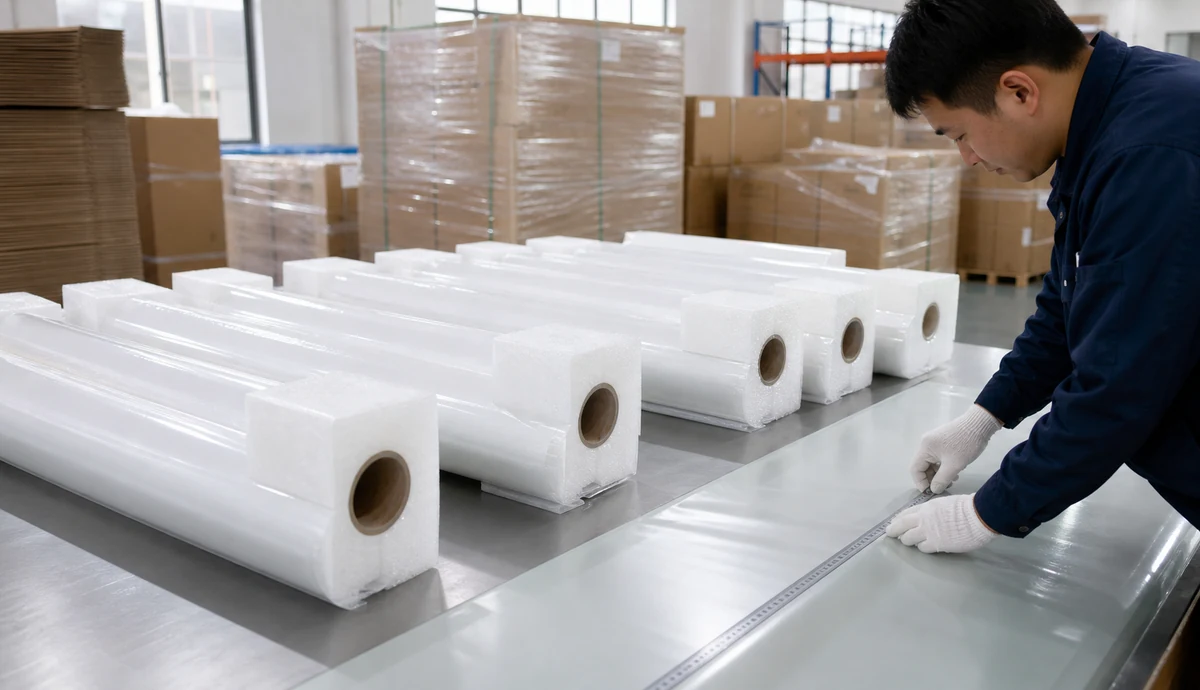
The packaging specification should state roll orientation, end protection, bag or barrier material, sealing method, desiccant use when justified, carton strength, pallet pattern, pallet protection, maximum stack height, and container loading precautions. Labels should identify the product code, A or B film, width, length, lot, production date, roll number, and storage instructions. Buyer and supplier should agree on whether labels are placed on the roll, bag, carton, or all three.
Inspect packaging at receipt before moving rolls into inventory. Photograph crushed cartons, punctures, water marks, broken pallets, displaced rolls, or telescoping before unpacking. This evidence helps separate manufacturing issues from transport damage and supports timely carrier claims.
What documents should accompany every production lot?
Every shipment should be traceable to production and inspection records. At minimum, importers should request a packing list tied to product codes and lot numbers, a certificate of analysis or conformance listing agreed properties, roll-level identification, production date, and confirmation that the supplied revision matches the approved specification.
Depending on the market and end use, buyers may also need safety data, chemical declarations, restricted-substance information, test reports, country-of-origin documents, and packaging compliance records. Regulatory obligations differ by destination, product classification, chemical composition, and use. A generic logo on a sales sheet is not a substitute for a current report that identifies the tested material, method, laboratory, date, and result.
For EU sales, importers should determine how REACH restrictions, candidate-list communication duties, and other applicable chemical rules relate to the supplied film and its intended use. Other markets have their own requirements. The importer remains responsible for checking the rules that apply to its product, claims, customers, and destination; supplier paperwork should support that assessment rather than replace it.
How many samples should an importer test?
One perfect sample does not demonstrate batch consistency. The sampling plan should reflect order size, process risk, supplier history, defect cost, and the destructive nature of the test. Include rolls from different carton and pallet positions, and test material from more than one location within selected rolls.
New suppliers and changed constructions deserve tighter inspection than stable, proven supply. Reduced inspection can be considered after consistent documented performance, while repeated failures should trigger increased sampling or full containment. The purchase agreement should state who pays for testing, replacement, rework, freight, and disposal when a confirmed nonconforming lot is found.
Importers should keep reference samples from the approved preproduction material and from received lots for an agreed retention period. Store them under controlled conditions with lot numbers and test records. A retained sample gives both parties a physical basis for investigating color, release, adhesion, or aging complaints.
What should a supplier audit cover?
A supplier audit should examine whether the manufacturer can control the variables promised in the specification. Relevant areas include incoming raw material control, coating formulation control, coating and drying equipment, in-process inspection, web cleaning, slitting, winding, environmental control, calibration, traceability, change management, nonconforming product control, final inspection, packaging, complaint investigation, and corrective action.
Ask how the supplier prevents unapproved substitution. A change in base film, release coating, adhesive, liner, core, or process setting can alter performance. The quality agreement should require notification and approval before a material or process change that may affect fit, function, printability, transfer, compliance, or appearance.
The guide to finding a reliable UV DTF film supplier in China expands on factory capability, sampling, documentation, communication, and risk control. Buyers planning a larger order can also use the UV DTF film buying guide to compare A film, B film, roll formats, and sourcing options.
What should be included in a practical UV DTF acceptance checklist?
| Control area | What to define | Evidence to retain |
|---|---|---|
| Identity | Product code, revision, A/B type, construction, tack category | Purchase order, roll labels, approved specification |
| Dimensions | Thickness, width, usable width, length, core, roll diameter | Calibrated measurements and production records |
| Appearance | Defect types, size limits, frequency, edge allowance, splice rules | Inspection sheet and photographs |
| Printability | Printer, ink, file, settings, curing, environment, acceptance examples | Printed control chart and machine log |
| Release | Matched films, conditioning, lamination, peel angle, rating criteria | Test transfers and scored results |
| Adhesion | Actual substrates, preparation, dwell time, test method, limit | Substrate records and aged samples |
| Durability | Exposure, cycles, temperature, chemicals, pass/fail criteria | Test report and retained control |
| Packaging | Wrap, edge protection, carton, pallet, label and storage rules | Loading and receipt photographs |
| Traceability | Lot, roll, date, raw material and inspection linkage | COA or conformance record |
For small-format trials, buyers may also compare roll material with UV DTF film supplied in sheets, but the final approval should use the same format and equipment planned for production. Sheet behavior does not always reproduce roll feeding, winding, and lamination conditions.
Final recommendation for importers
The strongest UV DTF quality standard is a shared operating document. It tells the supplier what to make, tells inspectors how to judge it, tells purchasing what is being bought, and tells both parties how to respond when results fall outside the agreed range. It should be specific enough to prevent ambiguity but practical enough to run for every lot.
Start with the application and work backward. Approve a matched A/B system on real equipment and real customer substrates. Define critical dimensions, visual defects, print and release tests, adhesion and durability conditions, packaging, traceability, sampling, and change control. Do not accept unsupported universal claims, and do not confuse a sales sample with evidence of production consistency.
A lower price per roll has little value if coating variation, poor release, damaged edges, or unclear traceability creates reprints and customer claims. Importers who standardize inspection before scaling can compare suppliers more fairly, protect production capacity, and build a reliable UV DTF product line.
Frequently asked questions
Is there one international standard specifically for all UV DTF films?
No single standard covers every complete UV DTF film system and application. Buyers can use recognized material or adhesive test principles where applicable, but they still need a product-specific specification covering their films, equipment, substrates, process, claims, and market requirements.
What is the most important test before a bulk order?
A controlled production trial using the buyer’s printer, ink, curing, laminator, matched A/B films, and actual target substrates is the most useful test. It should include material from multiple roll locations and measure printability, release, adhesion, appearance, and handling.
Should importers test A film and B film separately?
Inspect their individual dimensions, appearance, winding, and relevant properties separately, but approve performance as a matched system. A film release and B film pickup cannot be evaluated meaningfully without the full printed and laminated process.
Can a supplier test report replace incoming inspection?
No. A valid supplier report supports lot acceptance, but the importer should still verify identity, shipment condition, dimensions, and critical performance according to risk. Incoming inspection also detects transport damage and labeling errors that factory tests cannot prevent.
How can buyers prevent quality changes after sample approval?
Use a controlled specification, approved reference sample, product revision, lot traceability, certificate requirements, and a written change-notification clause. Require approval before changes to base film, coating, adhesive, liner, core, or important process conditions.
Do UV DTF transfers work on every hard surface?
No. Adhesion varies with surface energy, coating, texture, contamination, plasticizers, and environmental exposure. Buyers should qualify each intended substrate and publish clear exclusions and preparation instructions.