







DTF Film for Cotton T-Shirts: Pressing and Durability Considerations
A cotton-specific guide to DTF film heat pressing, peel timing, wash durability, testing, and wholesale film selection.

DTF film can produce durable graphics on cotton T-shirts when the transfer is pressed within a verified process window and the finished garment is tested under realistic care conditions. For a cotton program, that means matching the film’s release type to the workflow, controlling the actual heat delivered to the adhesive, preparing the shirt surface, and evaluating the result after washing and normal flexing. A temperature printed on a machine display is only a starting point; adhesion and durability are properties of the complete film, ink, powder, press, and garment system.
This guide answers the practical questions a print shop, garment decorator, or wholesale buyer faces when decorating cotton T-shirts. It focuses on cotton-specific press decisions and a repeatable production check. For a broader comparison of film candidates across fabrics and wash methods, see Haiyi’s DTF film wash-resistance guide.
Quick answer: what matters most for cotton T-shirts?
A reliable DTF cotton transfer needs four conditions at the same time: a correctly printed and cured transfer, a clean and dry cotton surface, a heat press that delivers uniform temperature and contact pressure, and a peel action that matches the film. If any one condition changes, a previously approved time and temperature may stop working. The fastest path to a durable production setting is to run small tests on the actual shirt style, record the settings and observations, then wash the selected samples before approving a run.
For example, Haiyi’s T-shirt transfer-film product page describes 150-160°C and 15-20 seconds as a product-specific example with peeling after cooling. Treat those numbers as a supplier example for that product, not a universal specification for every DTF film, powder, press, or cotton garment. Confirm the current technical instructions for the exact materials being ordered.
Why does cotton behave differently under a DTF press?
Cotton is absorbent and its knitted surface has visible texture. Moisture held in the fibers can turn to vapor during pressing, interrupting contact between adhesive and fabric. A short pre-press can remove moisture and flatten the print zone, but it should be validated because too much heat may change garment dimensions or leave a visible platen mark. A smooth, dry surface gives the melted adhesive a more consistent opportunity to anchor around the yarns.
Cotton T-shirts also differ from one another. Ring-spun jersey, heavy open-end cotton, garment-dyed cotton, and brushed or coated shirts can have different surface finishes, thicknesses, stretch, and shrinkage. A setting that passes on one white blank should not be assumed to pass on another supplier’s dark or garment-washed blank. Record the exact shirt SKU, fabric weight, color, and lot used for approval so that the press result has a defined meaning.
What does the DTF film actually control?
DTF PET film is a temporary carrier: it receives the ink image, supports powder application and curing, and releases the transfer during peeling. The film’s coating, surface flatness, static behavior, and release characteristics affect how cleanly the printed layer is built and removed. Once the carrier is peeled away, the film itself is not part of the shirt. Long-term wear depends mainly on the cured ink and adhesive layer bonded to the cotton, plus the conditions in which the shirt is used and washed.
This distinction matters when troubleshooting. Ragged edges during peeling may point to release timing or coating compatibility. Edges that lift only after laundering may point to adhesive coverage, cure, press contact, garment finish, or care conditions. A buyer should not attribute either result to film alone without checking the other variables. Haiyi’s consumables compatibility protocol provides a separate framework for assessing film, ink, and powder together.
How should a cotton shirt be prepared before pressing?
Inspect the T-shirt for lint, seams, wrinkles, finishes, and residual moisture before placing a transfer. The print area should lie flat on the lower platen; collars, side seams, pockets, and hems can create local gaps that reduce pressure. A suitable pressing pillow or a smaller platen can isolate an uneven print zone, but the chosen support must be included in the approved production recipe because it changes heat and pressure at the transfer.
A short pre-press is useful when it removes moisture and wrinkles without shifting the garment or making a dark cotton shirt shiny. After pre-pressing, allow trapped steam to escape and position the transfer on the intended print area. Use a placement guide or documented measurements if several operators must reproduce the same result. Lint removal is especially important for light-colored designs on dark cotton because stray fibers can interrupt fine lines and leave visible defects.
If a garment has been treated with softener, water repellent, stain resistance, heavy dye, or other finish, test it separately. A finish can change surface wetting or the adhesive’s ability to grip the knit. Washing an unprinted blank before testing may help diagnose a finish, but prewashing production garments is a commercial decision that can affect sizing, packaging, and cost. Do not quietly substitute prewashed test shirts for unwashed production stock.
Which press variables should be controlled?
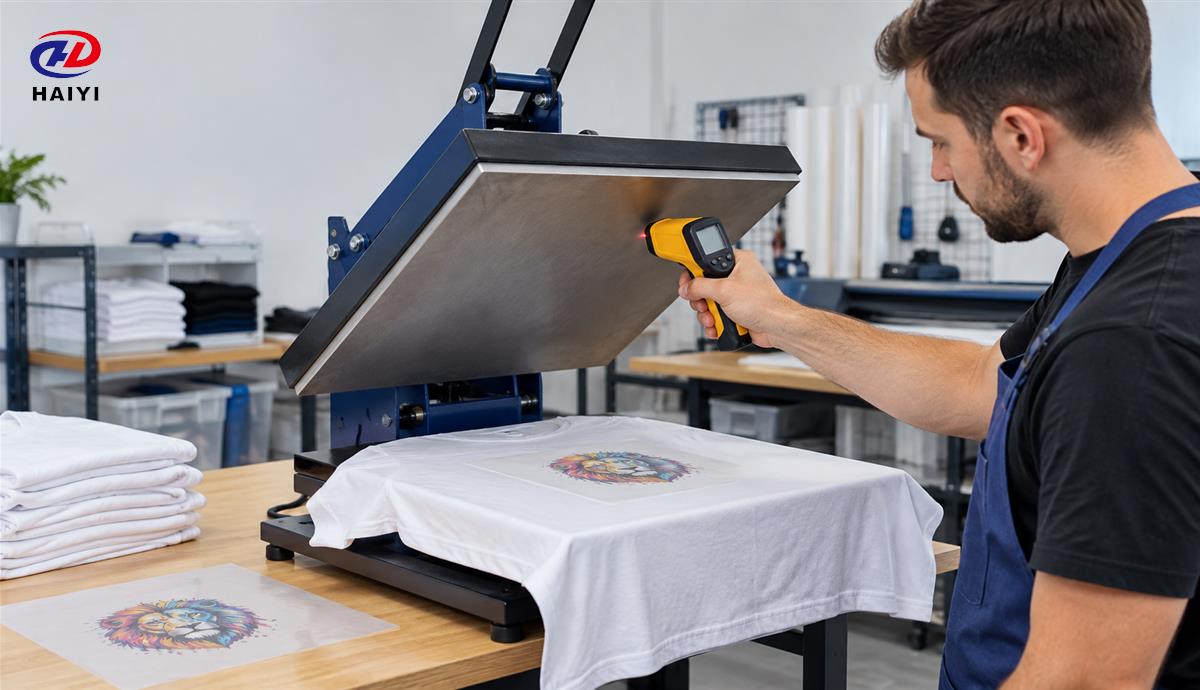
Temperature controls how the hot-melt adhesive flows and how the transfer responds to heat. The displayed setting does not prove that the platen is uniform or that the adhesive reached the required temperature. Check the actual platen with an appropriate measurement method, note cold spots, and repeat checks after warm-up or maintenance. Insufficient heat can leave incomplete bonding; excessive heat can damage fabric, alter texture, or make a transfer brittle.
Dwell time is the time under effective pressure at the target heat. A few seconds can matter when a press opens slowly, when a thick shirt absorbs heat, or when operators use different loading habits. Longer is not automatically better. Increase time only after observing the transfer and the shirt, and keep it within the current supplier’s validated range. A second press, if specified for the material, is a separate step and should not be added without testing its effect on appearance and hand feel.
Pressure determines contact between the transfer adhesive and cotton yarns. A machine’s dial position or a quoted force value is difficult to compare across platen sizes, garments, and press mechanisms. Document the press model, pad, garment position, and pressure method. If the center passes but edges lift, test platen parallelism and seam interference before simply increasing the pressure. Excess pressure can also emboss the knit or squeeze adhesive beyond fine design edges.
Cover and support materials alter heat transfer and surface texture. A silicone sheet, parchment-like cover, protective cloth, foam pad, or pressing pillow may change the result even when the press display remains identical. Use one defined stack for approval and production. If a buyer wants a matte hand or to remove a platen mark with a finishing press, qualify that finishing stack independently rather than assuming it is cosmetically neutral.
How can a print shop find a usable press window?
Start with the supplier’s current instructions for the exact film and adhesive combination. Select one cotton shirt SKU and one test artwork that includes a solid area, fine line, small isolated elements, and sharp corners. Fix the printer, ink, powder, curing method, and transfer age. Make several replicate transfers across a small matrix around the supplier’s recommended time and temperature, using one documented pressure method. Do not change every variable at once; otherwise a good result cannot be traced to a cause.
Inspect each sample immediately after peeling and again after cooling. Look for missing fine elements, edge lift, uneven gloss, adhesive halos, shirt scorching, and visible press marks. Stretch the shirt gently in a defined direction and compare the graphic with an unpressed control. Wash the strongest candidates using the intended care method, then inspect at planned intervals. The chosen production point should sit inside a range that works, rather than at a narrow boundary where small press variations cause failure.
A simple record should include shirt SKU and lot, film SKU and lot, ink and powder lots, print and cure settings, press identification, measured platen temperature, dwell time, pressure method, pre-press and finishing steps, peel timing, operator, and test date. This sounds detailed, but it turns a successful sample into a repeatable order. It also lets a supplier and printer investigate a later complaint without guessing what changed.
Hot peel, warm peel, or cold peel: which fits cotton production?
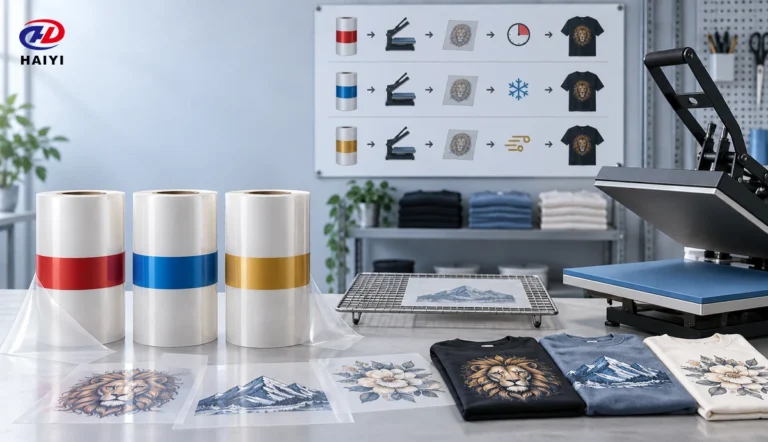
Peel type describes when the PET carrier is removed after pressing. A hot-peel film can reduce waiting time in a high-volume cotton line, but it often requires disciplined timing and confident operator handling. A cold-peel film gives the transfer time to cool before removal and may be easier to handle consistently in short runs, although cooling adds cycle time. A warm-peel option sits between those workflows when the product is designed for it. The release category does not, by itself, prove greater wash durability.
Use the supplier’s instructions for the exact release coating and do not convert a cold-peel film to hot peel just to speed production. If a warm or cold transfer resists peeling, check its cooling state and the printed layer before pulling harder. A clean release should leave the intended graphic on the cotton without lifting corners or leaving pieces on the carrier. For a deeper diagnosis of release defects, Haiyi has a DTF film peeling troubleshooting article.
Why do some DTF prints fail after washing?
Early edge lifting usually means the bond at the perimeter was weak or interrupted. Common contributing factors include insufficient powder on fine features, contamination or finish on the cotton, uneven platen pressure, moisture, incomplete adhesive activation, or an incorrect peel. A transfer can appear acceptable right after pressing yet fail in the first wash because a marginal bond has not faced water, detergent, movement, and drying stress.
Cracking and surface wear are different observations. A stiff design may crack when a knit stretches if the ink and adhesive layer cannot flex with the garment. Heavy solid artwork, excessive ink or powder, over-curing, and aggressive laundering can all contribute. Color loss may reflect ink or cure behavior rather than weak bonding. Record whether the defect is edge lift, internal separation, cracking, color change, or fabric distortion; each points to a different investigation.
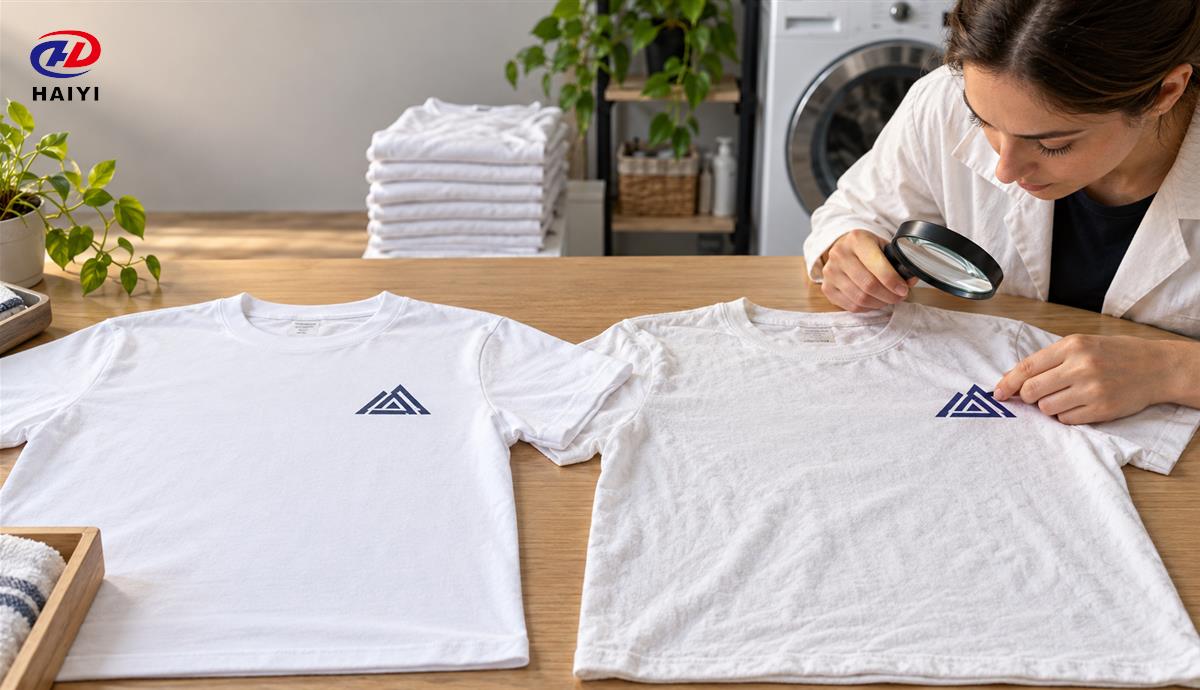
Cotton shrinkage can make an intact transfer look puckered. Compare the printed shirt with an unprinted blank from the same lot after the same wash. If both shirts shrink similarly, the knit is part of the appearance change. If only the printed area distorts, inspect the transfer construction and press process. This comparison prevents a film supplier from being blamed for a garment dimensional issue, and prevents garment shrinkage from hiding a genuine transfer failure.
What is a useful durability test for cotton shirts?
A useful test reproduces the garment’s intended care and checks named failure modes at set intervals. Define the washer program, water temperature, detergent, load, drying method, and whether shirts are turned inside out. Record those conditions before testing and apply them consistently to a transfer sample and a baseline control. A statement such as “survives many washes” is not a meaningful acceptance rule unless the washing method and pass criteria are stated.
Inspect a sample before washing, after an early interval, and after the buyer’s target interval. Photograph it under the same light and measure any visible edge lift or distortion. Check fine lines, corners, large solids, and the white underbase on dark cotton. A gentle, repeatable stretch check after the shirt has dried can reveal cracking that is not obvious when the garment lies flat. Stop and investigate if the first few cycles show progressive damage; do not wait until the final interval to discover a clear trend.
For a customer claim, keep the actual test report, garment description, artwork, material lots, press recipe, and acceptance criteria together. An internal comparison can guide material selection, but a market-facing wash claim should reflect the defined materials and conditions actually tested. Haiyi’s separate wash-resistance selection framework explains how to compare film candidates; the cotton workflow here is the practical application of those principles to T-shirt production.
How should customers care for a DTF cotton T-shirt?
Care guidance should follow the qualified transfer system and the garment label. As a conservative starting practice, let the transfer fully cool and follow the supplier’s waiting period before the first wash. Turn the shirt inside out, use a mild cycle and detergent, avoid aggressive heat and abrasion, and do not place a hot iron directly onto the printed design. These steps reduce unnecessary stress, but they cannot rescue an under-cured or poorly bonded transfer.
If a brand wants to promise tumble drying, hot-water washing, or industrial laundry, test those exact exposures. A shirt that passes gentle home laundering may behave differently in a high-heat dryer or a commercial wash. The care label must also respect the blank shirt manufacturer’s instructions. When transfer and garment care limits differ, the more restrictive validated instruction should govern the finished product.
What are the main cotton-specific production mistakes?
Using one press recipe for every blank ignores differences in knit weight, finishes, and moisture. Group shirts by verified SKU or construction and confirm new lots before a full run. Trusting the press display without checking the platen can leave one corner underheated while another area scorches. Periodic temperature and pressure checks should be part of preventive maintenance.
Rushing the peel can pull fine details away from the cotton when the film requires cooling. Adding a second press automatically may change hand feel or leave a visible border. Judging durability only on press day overlooks failures that appear under washing and flexing. A small, documented pilot is cheaper than replacing a large batch of printed shirts.
Changing film, ink, powder, and shirt at once makes troubleshooting almost impossible. When a problem appears, restore a known control and change one factor at a time. If the control also fails, inspect equipment and garment handling before rejecting a new film. If only the new film fails repeatedly under the same controlled conditions, take the recorded samples and process data to the supplier for a targeted compatibility review.
What should a buyer specify when sourcing DTF film for cotton?
A wholesale request should state the printer and feed format, roll width and length, preferred hot, warm, or cold peel workflow, ink and powder system, target cotton garments, artwork type, expected print volume, and packaging requirements. The buyer should also define what a successful trial means: acceptable feed behavior, clean release, appearance, hand feel, and wash performance on the intended shirt. A quote based only on roll width and price cannot establish whether the material will run well.
Request a technical sheet or current operating guidance for the proposed film and ask whether the supplier can provide a consistent construction across repeat lots. Samples should come in a usable format and be identified by SKU and lot. For a private-label or distributor program, agree on core size, winding direction, roll protection, labeling, and change notification. The Haiyi DTF film range provides a starting point for discussing formats and peel choices.
How can a team move from a sample to repeat production?
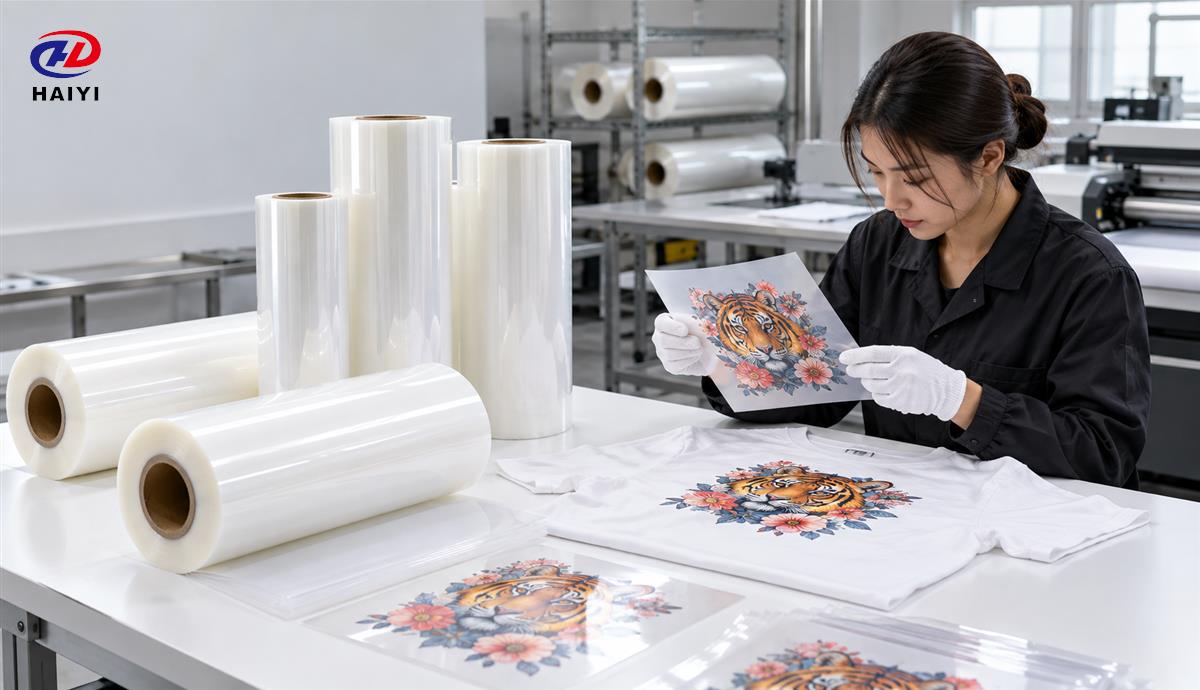
Approve a controlled sample first, then run a pilot using commercial roll packaging, normal operators, and the intended shirts. Monitor feeding, static, powder cleaning, peel quality, press results, and reject rate across the roll rather than only on a short piece. Retain a marked sample and its settings. A pilot shows whether the process is stable when the material is handled the way it will be handled after purchase.
Frequently asked questions
Can DTF film be used on 100% cotton T-shirts?
Yes. DTF transfers are commonly applied to 100% cotton T-shirts when the printed transfer, adhesive, and press settings are compatible with the fabric. The exact result depends on cotton construction, finish, moisture, film release type, ink, powder, curing, and the heat press. Qualify the actual shirt style rather than assuming every cotton label performs identically.
What temperature and time should I use for cotton?
Use the current instructions for the exact DTF film and adhesive system. Haiyi lists 150-160°C for 15-20 seconds on one T-shirt film product page, with cooling before peel, but this is a product-specific example. Verify the actual platen temperature and test the intended cotton blank before setting a production recipe. Do not transfer one product’s numbers to a different film or powder without a trial.
Does a second press always improve durability?
No. A finishing press can sometimes improve contact or alter surface texture, but it also adds heat, time, and the possibility of a press mark or a changed hand feel. Follow the material supplier’s guidance and compare washed samples with and without the step. Keep a second press only if it produces a measurable improvement in the approved cotton application.
Is hot-peel film less durable than cold-peel film?
Peel temperature alone does not determine the finished shirt’s wash life. Hot and cold peel refer to release timing from the PET carrier; the durable layer is the ink and adhesive left on the cotton. A fair comparison uses compatible products, correct peel timing for each, the same garment and care test, and a documented press window.
Why did my print look good before washing but lift afterward?
An apparently clean transfer can still have a marginal adhesive bond. Check powder coverage, cure, shirt finish and moisture, actual platen temperature, pressure uniformity, and peel handling. Compare an approved control printed and pressed on the same day. If both fail, investigate the process or garment first; if only the new sample fails repeatedly, assess its compatibility with the system.
How many washes should a DTF cotton shirt survive?
There is no responsible universal number without a defined garment, print system, wash method, dryer condition, and acceptance threshold. Set the performance target for the intended market, test several representative shirts, and keep the report. A cycle count from an unrelated product or gentle test should not be turned into a guarantee for a different production workflow.
Discuss cotton T-shirt DTF film wholesale with Haiyi
Haiyi supplies DTF film for wholesale and customized programs serving print shops, distributors, apparel decorators, and private-label buyers. If your business needs cotton T-shirt transfers, share your printer width, preferred roll format and peel type, ink and powder combination, cotton garment range, press equipment, expected order volume, and target wash-test method. That information helps Haiyi recommend samples and discuss a film specification that can be tested on your line.
Start with a sample and a documented cotton press trial, then request a quotation for repeat supply or custom formats. Review Haiyi’s customization options or contact the Haiyi team to discuss wholesale DTF film, OEM packaging, and a practical pilot order for your business.