

Is DTF transfer heat transfer? What is the difference between DTF transfer and heat transfer?

DTF transfer is a subdivision of heat transfer, but there are obvious differences between the two in terms of technical principles, application scenarios and operation procedures. The following is a specific analysis:
The relationship between DTF transfer and heat transfer
DTF transfer is a branch of heat transfer technology. Heat transfer is a process of transferring patterns from transfer media (such as transfer film, transfer paper) to the surface of the substrate by heat pressing, while DTF transfer is a special heat transfer process developed for dark fabrics. Its core feature is to achieve high hiding power and color reproduction through white ink primer.
Core difference analysis
1. Technical principles and materials
DTF transfer:
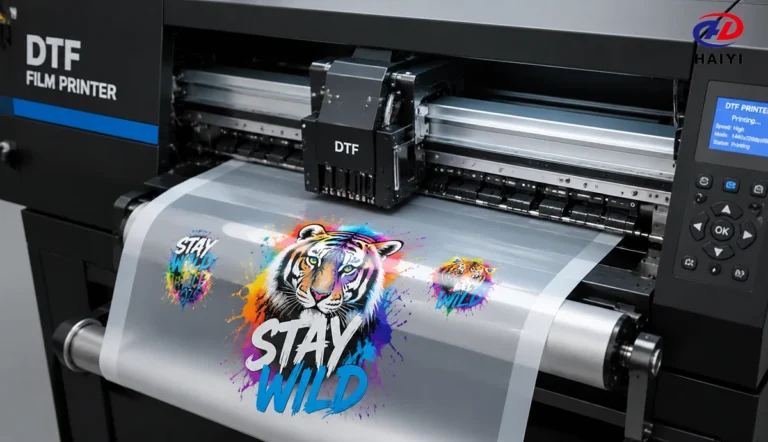
Process flow: Use a special printer to directly print white ink and color ink on PET transfer film. After shaking powder and drying, transfer the pattern to the fabric by heat pressing.
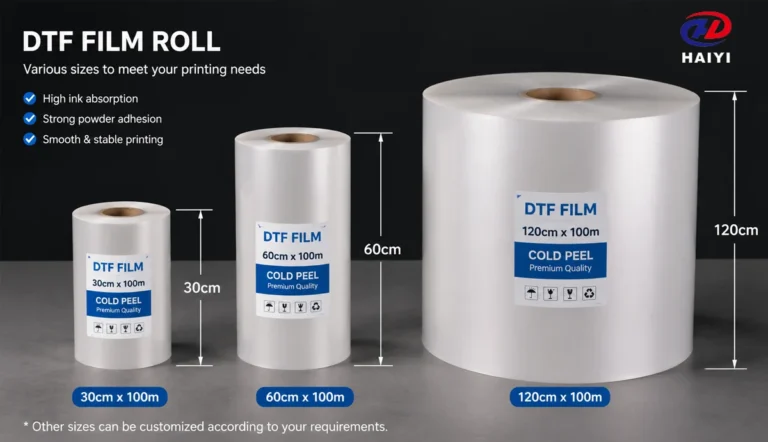
Key materials: white ink (to achieve dark fabric covering), PET release film (good ink absorption and moderate release).
Technical features: No need for plate making, support single-piece order, suitable for small batch customization.
Heat transfer:
Process flow: pre-print the pattern on the transfer film or transfer paper, and then transfer the pattern to the substrate (such as cloth, metal, glass, etc.) through high temperature and high pressure.
Key materials: transfer film/paper, hot melt adhesive or sublimation dye.
Technical features: plate making is required, suitable for mass production, but the application of fabrics is limited by polyester content.
2. Application scenarios and fabric adaptation
DTF transfer:
Applicable fabrics: almost all fabrics (knitted, woven, nylon, non-woven, etc.), especially good at dark fabrics.
Typical scenarios: personalized customization of T-shirts, school bags, hats, shoes and clothing, supporting complex patterns and photo-level effects.
Heat transfer:
Applicable fabrics: mainly suitable for light-colored or white polyester fabrics (the higher the polyester content, the brighter the color).
Typical scenarios: non-textile fields such as advertising signs, metal products, glass products, etc., where the application of fabrics is relatively limited.
3. Operation process and efficiency
DTF transfer:
Process: printing → powdering → shaking → drying → hot pressing, fully automated, no plate making required.
Efficiency: fast delivery (10 minutes to pick up), supports one-piece printing, suitable for urgent orders.
heat transfer:
Process: design → plate making → transfer film production → high temperature and high pressure transfer.
Efficiency: plate making is time-consuming (4-7 days), suitable for long-term stable orders, low flexibility.
4. Effect and feel
DTF transfer:
Color: photo-level effect, bright colors, strong covering power.
Feel: There is a white ink layer on the back, the touch is similar to silk screen, slightly textured but not hard.
Fastness: Washing fastness is above level 3, machine washable.
Heat transfer:
Color: depends on the fabric composition (high polyester content means bright colors).
Feel: The ink penetrates the fabric, and it feels soft and non-touch.
Fastness: Equivalent to DTF transfer, but the transfer temperature and time need to be strictly controlled.
5. Cost and threshold
DTF transfer:
Cost: medium equipment investment, controllable consumables (PET film, ink) cost.
Threshold: simple operation, suitable for small and medium-sized businesses and personalized customization.
Heat transfer:
Cost: high equipment precision requirements, high plate-making costs, suitable for large-scale production.
Threshold: professional equipment and technicians are required, small batch costs are high.
Summary: How to choose?
Choose DTF transfer: if you need dark fabrics, small batch customization, fast delivery or complex patterns (such as photos).
Choose heat transfer: if you need large-scale production, non-fabric materials (such as metal, glass) or light-colored polyester fabrics.
Both belong to the category of heat transfer technology, but DTF transfer has solved the application problems of dark fabrics through technological innovation and has become a new favorite in the field of personalized customization.