



10 Common DTF Film Problems and How to Fix Them: The Ultimate Troubleshooting Guide for Perfect Transfers
Learn how to solve the 10 most common DTF film problems, including ink bleeding, powder adhesion, peeling, ghosting, static, curling, and transfer failure. Discover expert troubleshooting tips, preventive solutions, and how to choose high-quality DTF film for consistent printing results.

Read Time: 13 min read
Why Even Well-Run DTF Printing Lines Still Hit These 10 Failure Points
Even advanced DTF printing setups run by experienced operators occasionally produce inconsistent results — bleeding edges, patchy powder, transfers that peel after the first wash. The instinct is usually to blame one bad roll of film or one off batch of ink, but most transfer failures actually come from a combination of factors interacting: film quality, ink compatibility, adhesive powder, curing conditions, printer calibration, environmental humidity, and heat pressing all influence the same outcome at the same time.
This guide walks through the ten most common DTF film problems in commercial production, breaks down their root causes individually, and gives practical fixes for each — plus how to prevent them from recurring rather than just resolving them once.
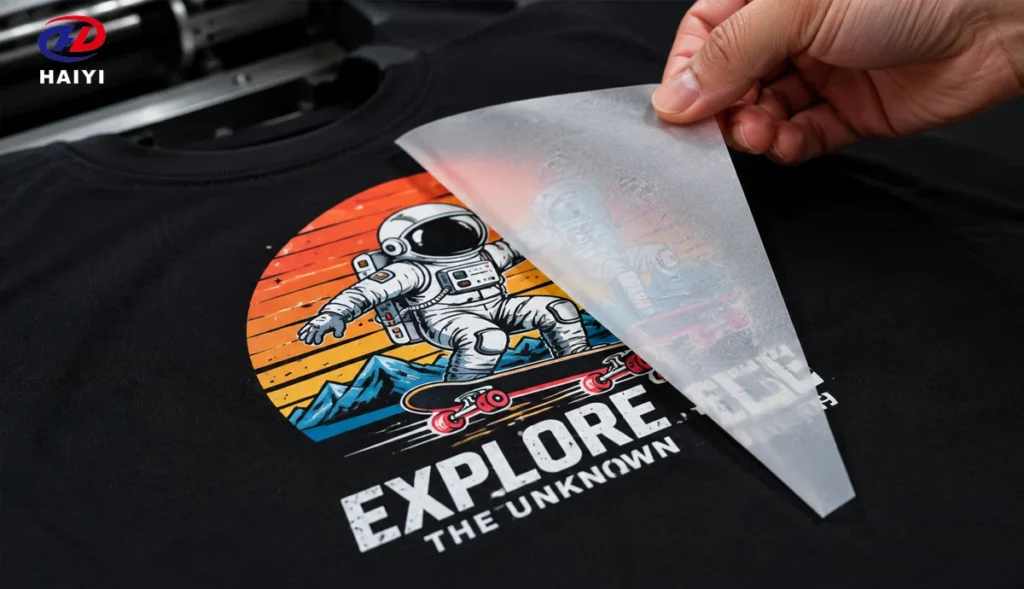
Why Does DTF Film Quality Have Such a Big Impact on Printing Results?
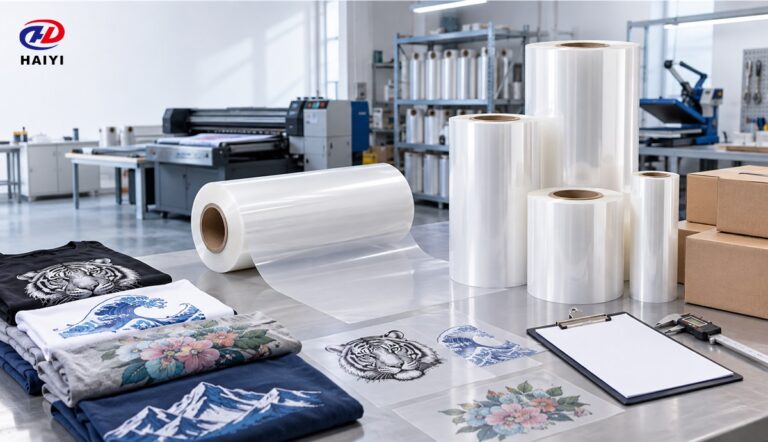
DTF film functions as the foundation of the entire transfer process, since it controls ink reception, adhesive bonding, release performance, and dimensional stability all at once. Premium coated PET film supports consistent results across a full production run, while low-quality film tends to generate multiple, seemingly unrelated defects throughout the workflow — which is why film quality is usually the first place to check when several different problems appear together.
How Film Coating Determines Print Accuracy
Coating uniformity directly affects how evenly ink is absorbed into the film surface, which shapes color sharpness and how well powder adheres to the printed ink afterward. A film with inconsistent coating produces visibly different ink density across a single sheet, even when the printer output is identical.
Why Film Stability Reduces Production Errors
Flatness, thickness consistency, and heat resistance together determine how reliably a film feeds through the printer and holds its shape through curing and pressing. Film that isn’t dimensionally stable causes feeding errors and registration problems that look like printer malfunctions but actually originate from the material itself.
Problem 1: Why Does Ink Bleed or Spread on DTF Film?
Ink bleeding happens when printed droplets fail to stay in their intended position after landing on the film, spreading beyond the design’s clean edges.
Root causes: poor coating quality that absorbs ink unevenly, excessive ink output from the printer, incorrect ambient humidity, and ink formulated for a different film chemistry than the one in use.
How to fix it: reduce ink output limits in the printer’s color profile, correct environmental humidity to the recommended range, and switch to a premium coated DTF film if bleeding persists after ruling out printer settings.
Prevention tips: build routine coating inspection into incoming material checks, and calibrate printer ink output on a fixed schedule rather than only after a visible problem appears.
Problem 2: Why Doesn’t the Adhesive Powder Stick Evenly?
Uneven powder coverage weakens both the durability and the visual finish of the finished transfer.
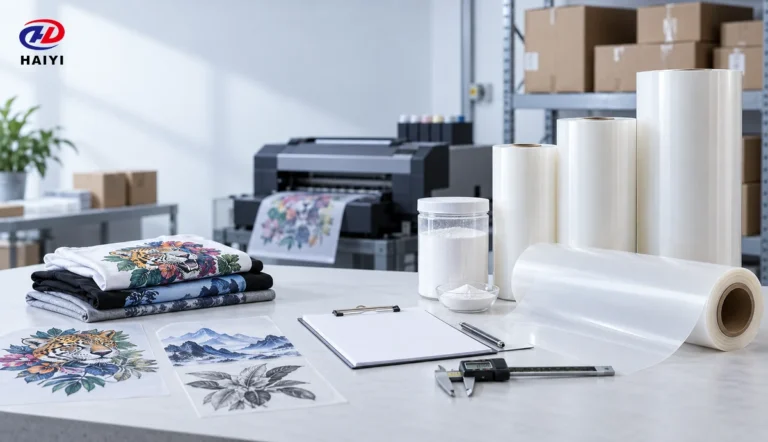
Root causes: inconsistent wetness in the printed ink layer, high humidity causing premature powder clumping, contaminated powder stock, and uneven manual or mechanical powder application.
Solutions: improve powder distribution technique or equipment settings, control powder storage conditions to prevent moisture exposure, and maintain correct curing procedures that lock in even coverage before it can shift.
Problem 3: Why Does the Printed Image Peel After Washing?
Peeling is one of the most common customer complaints in DTF production because it directly shortens the usable life of the finished garment.
Root causes: insufficient curing that leaves the adhesive layer incompletely activated, incorrect heat press settings, poor-quality adhesive powder with weak bonding strength, and low-quality DTF film with an unreliable release or coating layer.
Solutions: optimize curing temperature and duration first, since this is the most common single cause, then verify heat press pressure and pressing time, and finally confirm that both the film and powder in use meet a consistent quality specification.
Problem 4: Why Do Colors Look Dull or Fade Quickly?
Color fading directly reduces both the visual appeal and the perceived value of a finished transfer.
Root causes: low pigment concentration in the ink, improper curing that affects how ink and adhesive bond together, an incorrect ICC color profile, and excessive pressing temperature that can degrade pigment.
Solutions: recalibrate the printer’s color profile against a known reference, switch to a compatible, properly pigmented ink system if fading persists, and verify curing parameters are within the correct range rather than assuming color output is purely an ink issue.
Problem 5: Why Does DTF Film Curl During Printing?
Curling disrupts film feeding through the printer and significantly increases the rate of print failures on affected sheets.
Root causes: uneven film thickness across a roll, high workshop temperature affecting the PET base, improper storage before use, and moisture absorption into the film itself.
Solutions: store film in a climate-controlled environment with stable temperature and humidity, maintain consistent production-area conditions rather than letting them fluctuate seasonally, and use premium PET film with better dimensional stability if curling continues under controlled storage.
Problem 6: Why Is the DTF Film Difficult to Peel?
Incorrect release performance during peeling can damage the finished transfer or slow down production significantly.
Root causes: peeling at the wrong timing for the specific film type, incorrect pressing temperature that affects how the release layer behaves, a poorly formulated release coating, and a fundamental mismatch between the film type in use and the production process.
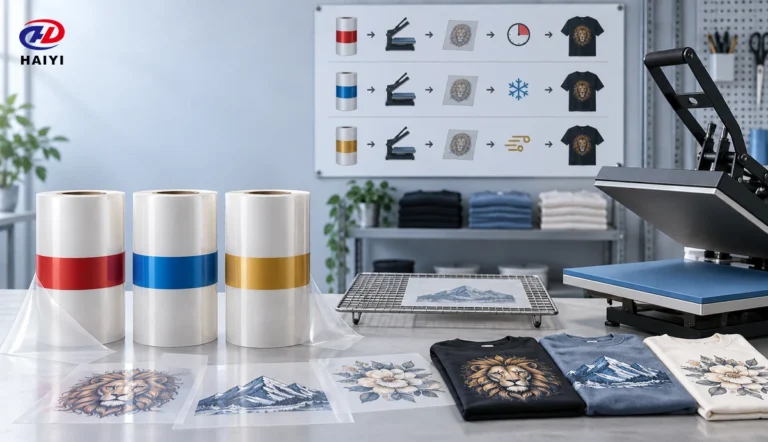
Solutions: match peeling technique precisely to the film’s designed type — hot peel, warm peel, or cold peel — rather than applying one timing rule across all film, since each type is engineered to release under different conditions.
Problem 7: Why Does Static Electricity Cause Printing Problems?
Static buildup attracts dust onto the film, interrupts feeding through the printer, and creates print inconsistency that’s often hard to trace back to its actual cause.
Root causes: low ambient humidity, insufficient anti-static treatment on the film itself, and generally dry production environments, particularly in colder seasons.
Solutions: control humidity within the recommended production range, switch to film with proper anti-static coating, and maintain regular equipment grounding as part of routine maintenance.
Problem 8: Why Do Images Appear Blurry or Have Ghosting Effects?
Blurry graphics or visible ghosting noticeably reduce the perceived quality of an otherwise well-produced garment.
Root causes: printhead misalignment, bidirectional calibration errors, unexpected film movement during printing, and carriage speed set too high for the resolution being printed.
Solutions: perform alignment calibration on a fixed schedule, optimize carriage speed relative to print resolution rather than defaulting to maximum speed, and include routine maintenance checks that catch drift before it affects a full run.
Problem 9: Why Are White Ink Layers Uneven?
Unstable white ink creates inconsistent color reproduction and weak opacity, which is especially visible on dark or colored fabric where the white layer does the most work.
Root causes: pigment sedimentation from insufficient circulation, poor ink circulation system performance, nozzle blockage from settled pigment, and incorrect white ink density settings in the printer profile.
Solutions: maintain active agitation and circulation systems continuously rather than only before large jobs, schedule daily maintenance that specifically checks white ink lines, and verify circulation management is functioning correctly as part of routine equipment checks.
Problem 10: Why Do Transfers Crack or Break After Stretching?
Flexibility is essential for finished garments that experience repeated movement and washing over their usable life.
Root causes: over-curing that makes the adhesive layer brittle, excessive powder application beyond what’s needed for adhesion, adhesive with poor inherent flexibility, and incorrect pressing conditions that compound the stiffness issue.
Solutions: optimize curing parameters to avoid over-processing, and switch to high-quality adhesive powder engineered for flexibility if cracking persists even after curing adjustments.
Quick Troubleshooting Chart for Common DTF Film Problems
| Problem | Likely Cause | Recommended Solution |
|---|---|---|
| Ink bleeding | Poor coating or excessive ink | Improve film quality and adjust ink limits |
| Uneven powder | High humidity or poor application | Control humidity and distribute powder evenly |
| Peeling after washing | Incorrect curing | Optimize curing and pressing |
| Color fading | Low-quality ink or over-heating | Recalibrate color profile and curing |
| Film curling | Improper storage | Store film in a controlled environment |
| Difficult peeling | Incorrect peel timing | Match the peel method to the film type |
| Static electricity | Low humidity | Increase humidity and use anti-static film |
| Blurry images | Printhead misalignment | Perform printer calibration |
| Uneven white ink | Sedimentation | Maintain white ink circulation |
| Cracking transfers | Over-curing | Reduce curing intensity and verify powder application |
How to Prevent DTF Film Problems Before They Happen
Prevention is consistently more cost-effective than troubleshooting after defects have already reached finished production, since reworking failed transfers wastes both material and labor that correct process control would have avoided.
Establish Material Quality Standards
Select reliable DTF film, compatible ink, and consistent adhesive powder as a fixed specification, rather than switching suppliers or materials based on price alone from one order to the next.
Maintain Stable Production Conditions
Environmental control, scheduled equipment maintenance, and consistent operator training together prevent the majority of the ten problems above from recurring, since most of them trace back to variability in one of these three areas.
Implement Routine Quality Inspection
Inspect incoming materials against specification, monitor production continuously rather than only at the start and end of a run, and test finished transfers — including wash and stretch testing — before shipment rather than relying on visual inspection alone.
How to Choose High-Quality DTF Film That Minimizes Printing Problems
For distributors, importers, OEM buyers, and printing businesses, the fastest way to reduce recurring problems is often a supplier decision rather than a process adjustment.
Check Coating Consistency
Uniform coating across every production batch directly reduces the printing defects covered throughout this guide — inconsistent coating is one of the most common root causes behind ink bleeding, poor powder adhesion, and unreliable peeling.
Verify Manufacturing Capability
Production capacity, demonstrated batch-to-batch consistency, a documented quality control system, and export experience together indicate whether a supplier can maintain quality as order volume scales up.
Evaluate Technical Support and Customization
Suppliers capable of providing application guidance, OEM packaging, custom roll sizes, and ongoing technical support add value well beyond the film itself — particularly useful when troubleshooting a persistent problem that isn’t resolving through process adjustments alone.
About Haiyi Materials: Haiyi Materials is a professional manufacturer of DTF film materials, based in the Pearl River region of Foshan, Guangdong — one of China’s most developed manufacturing hubs. With more than 10 years of professional experience in the coating industry, Haiyi Materials builds coating consistency and dimensional stability into every batch, helping distributors and OEM buyers reduce exactly the kind of recurring production problems covered in this guide.
Frequently Asked Questions About DTF Film Problems
Why does my DTF film keep lifting during peeling? Lifting during peeling is usually caused by incorrect peel timing relative to the film’s designed release type, insufficient curing that left the adhesive incompletely activated, or a film that’s fundamentally incompatible with the process being used.
Can low-quality DTF film damage print quality? Yes. Inconsistent coating, a poorly engineered release layer, and unstable PET film all contribute to recurring production defects — often multiple defects at once, since film quality issues tend to cascade through the entire process rather than staying isolated.
Why do DTF transfers fail after several washes? Wash failure typically comes down to adhesive activation during curing, overall curing quality, powder performance, and pressing conditions working together — a transfer can look correct immediately after production and still fail later if any of these were slightly off.
How can I reduce production waste in DTF printing? Standardized operating procedures, regular equipment maintenance, consistent environmental control, and premium consumables together address most of the root causes behind wasted production, rather than any single fix on its own.
Which DTF film is better for commercial production? The best choice depends on production speed requirements, the peeling method your workflow supports, specific application requirements, and manufacturing consistency — not on price alone, since the cheapest film often creates the recurring problems this guide addresses.
Conclusion: Solve Problems Faster by Building a Stable DTF Printing Process
Most DTF film problems trace back to controllable production variables rather than unavoidable equipment failures. Premium DTF film, compatible consumables, accurate printer calibration, proper curing, optimized heat pressing, and standardized quality control all work together to produce transfers that are vibrant, durable, and repeatable — and addressing them as a connected system solves problems faster than chasing each defect individually.
For distributors, print shops, and OEM buyers, the most reliable way to reduce these problems long-term is partnering with an experienced DTF film manufacturer that can deliver consistent quality, technical expertise, and dependable supply. Haiyi Materials brings over a decade of coating industry experience from its Foshan production base to support exactly that kind of long-term reliability. Contact us to discuss your current production challenges and find the right film specification for your line.