







DTF Film Handling Checklist for Production Operators
A daily DTF film handling checklist for operators from storage through pressing.

A good DTF process can still fail when film is handled inconsistently between storage, printing, powdering, curing, pressing, and partial-roll storage. This operator checklist turns handling into a repeatable production control rather than an informal habit.
New operators who need the complete production sequence should first read how to use DTF film step by step. The checklist below is designed for daily floor use.
Before Opening a Roll or Pack
- Confirm the product, size, release type, and lot match the work order.
- Inspect the outer packaging for moisture, punctures, crushed edges, or contamination.
- Allow sealed material to condition when storage and production temperatures differ.
- Verify that the printer, ink, powder, curing, and press setup matches the approved process.
Loading the Film
- Identify the printable side using the product instruction or approved sample.
- Handle edges where practical and avoid touching the printable area.
- Check roll direction, core seating, alignment, tension, and edge guides.
- Remove dust with an approved method that does not scratch or contaminate the coating.
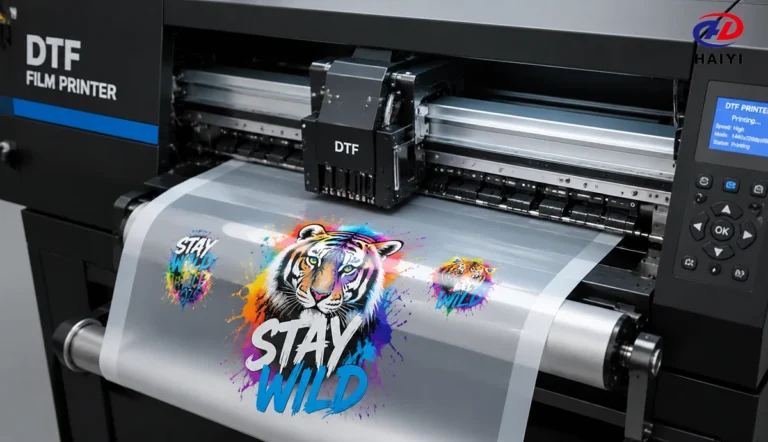
- Run a short feed and print check before committing a large job.
During Printing
Watch for skew, curl, head contact, static, ink spreading, banding, edge damage, or changes in take-up tension. Stop and identify the cause before a small drift becomes a full-roll problem. Record the position on the roll when a repeating defect appears.
Powdering and Curing
- Apply powder consistently across all printed areas.
- Remove excess powder from non-image areas according to the approved process.
- Keep loose powder away from the printer and film storage zone.
- Confirm curing through the defined visual and process checks.
- Do not stack warm transfers tightly if trapped heat or vapor may affect them.
Pressing and Peeling
Verify fabric, platen condition, pressure method, and the approved press settings. Follow the correct hot-, warm-, or cold-peel instruction. Peel in the defined direction and at a consistent angle. Complete the finishing press when the standard process requires it.
Handling Partial Rolls
Mark the date opened, remaining quantity, and lot. Protect the printable surface and edges, secure the roll without creating pressure marks, and return it to suitable packaging. Do not mix unidentified partial rolls or leave film exposed near powder, heat, direct sunlight, moisture, or workshop dust.
Shift Handover Checklist
| Item | Record |
|---|---|
| Material | Film type, lot, roll position, and remaining quantity |
| Process | RIP preset, curing, press, and peel instruction |
| Quality | Control sample result and any active defect |
| Equipment | Maintenance, cleaning, or abnormal feeding condition |
| Storage | Location of partial rolls and quarantined material |
When to Stop Production
Stop when the film identity is unknown, the coating appears damaged, a repeating defect cannot be isolated, the printer contacts the film, environmental conditions fall outside the approved range, or the control sample fails. Segregate affected material and preserve the evidence needed for diagnosis.
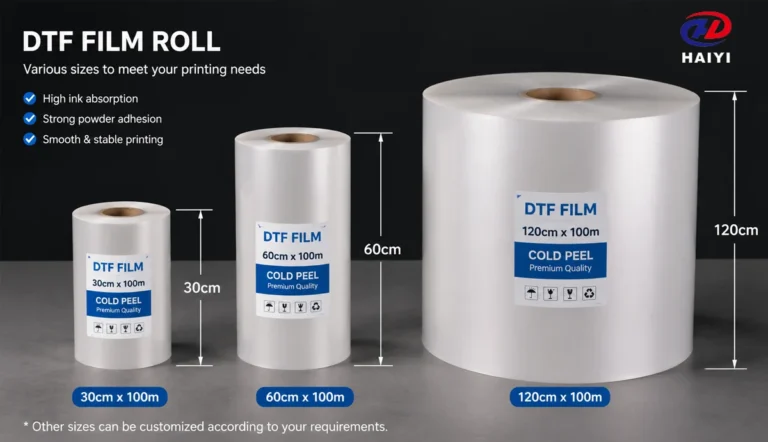
For production rolls, review Haiyi’s DTF film roll options.
B2B Film Supply and Operator Support
Haiyi supplies wholesale and customizable DTF film for printers and distributors. Contact Haiyi with your roll width, release method, equipment, packaging needs, and purchase volume to discuss samples and a repeatable receiving and handling process.