
DTF vs Screen Printing: Which Process Fits Your Order?
Compare DTF and screen printing by setup, artwork, fabric, volume, hand feel, durability, capacity, and cost per accepted garment.

Reading time: 9 minutes
DTF is usually the stronger choice for short runs, mixed designs, personalization, full-color artwork, and varied garment materials. Screen printing is usually stronger for stable high-volume runs of one design, especially when the artwork uses a limited number of spot colors. The correct choice depends on the order structure, not on a universal quantity cutoff.
This DTF vs screen printing comparison gives distributors, apparel brands, decorators, and purchasing teams a practical decision model. It considers setup, variable cost, artwork, fabric, hand feel, special effects, production capacity, reorders, and quality control without treating either process as the winner for every job.
What is the main difference between DTF and screen printing?
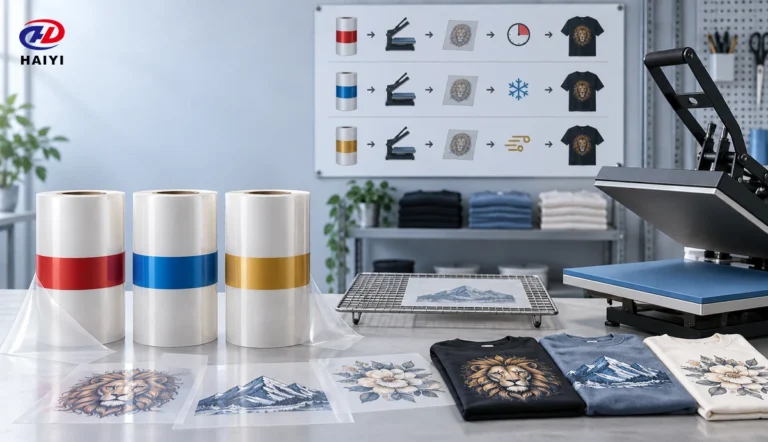
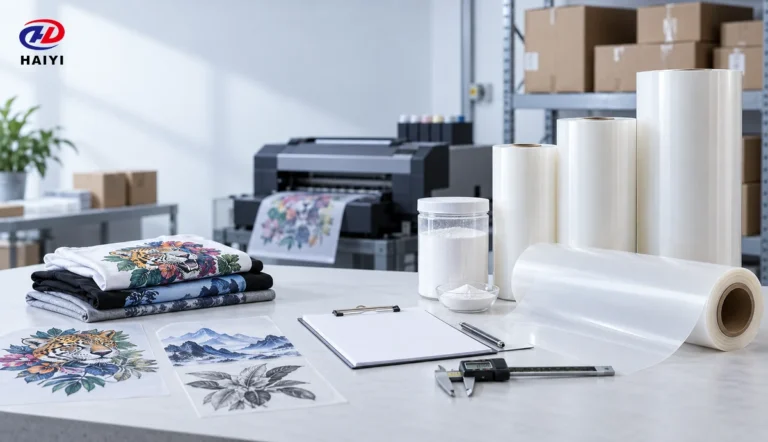
DTF prints a digital image onto coated PET film, adds adhesive powder, cures the transfer, and applies it to a garment with heat and pressure. Screen printing pushes ink through a prepared mesh stencil directly onto the garment, normally using a separate screen and print station for each color.
The process difference changes the cost curve. DTF has little artwork-dependent physical setup, so adding colors or changing designs does not require new screens. Screen printing has more setup before the first acceptable piece, but the press can reproduce one approved design efficiently across a large identical run.
| Decision factor | DTF | Screen printing |
|---|---|---|
| Best order pattern | Short runs, mixed SKUs, frequent design changes, personalization | Large stable runs of the same design and placement |
| Artwork | Full color, gradients, photographs, fine detail | Spot colors, bold graphics, repeatable separations |
| Setup behavior | Digital file, RIP, film, powder, cure, press | Color separation, screen preparation, registration, ink setup, cleanup |
| Garment range | Broad, subject to compatibility testing | Broad, but ink system and cure must match the fabric |
| Hand feel | Transfer layer sits on the textile and changes with coverage | Can range from soft water-based deposits to heavier specialty ink |
| Special effects | Available through compatible films, powders, and finishes | Very broad ink and texture options, including thick and specialty deposits |
| Inventory option | Cured transfers can be stored and pressed later under controlled conditions | Normally prints directly during the production run |
When is DTF the better choice?
DTF is the better choice when an order contains many designs, sizes, names, numbers, garment colors, or replenishment patterns. Digital transfer production allows those variations to share film through gang-sheet planning, while the garment application stage can be scheduled separately.
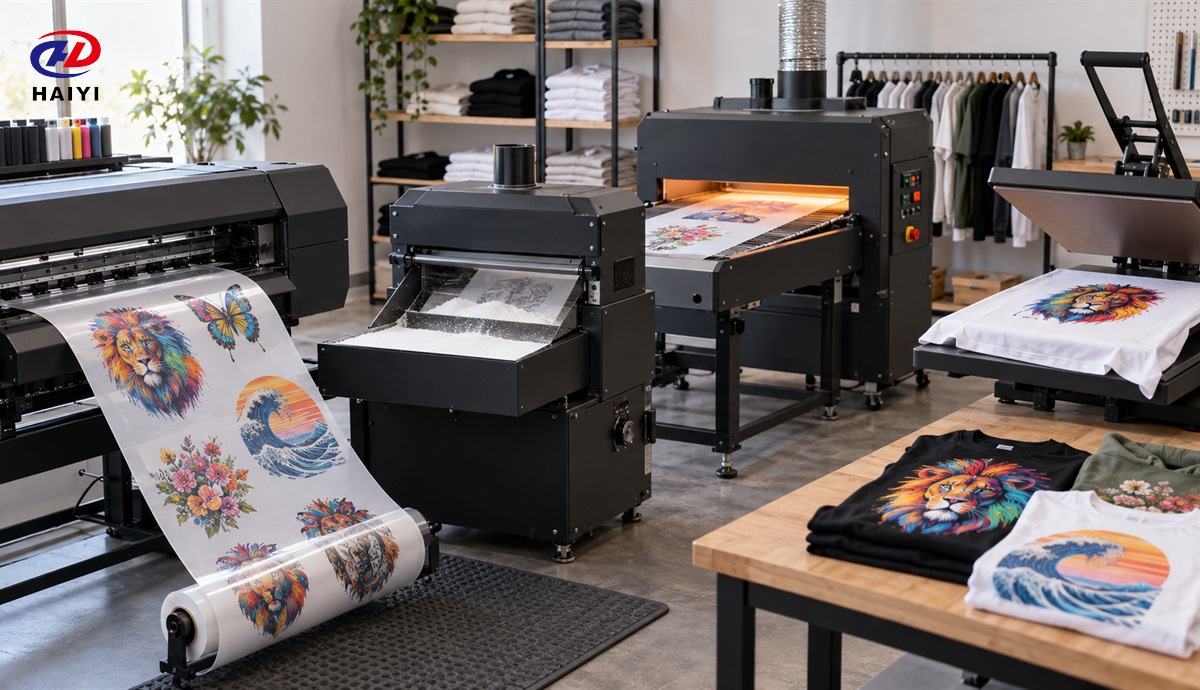
DTF also simplifies multi-color artwork because a photograph and a one-color logo follow the same fundamental digital route. Color complexity still affects ink use, file preparation, white underbase, and curing, but it does not create one physical screen per color. This makes DTF useful for samples, e-commerce orders, event merchandise, branded workwear with names, and distributors serving customers with small repeat orders.
DTF is not automatically the lowest-cost method for every quantity. Film, ink, powder, curing energy, transfer handling, heat-press labor, and rejected pieces remain variable costs. Large solid prints can also create a more noticeable hand than a well-engineered direct ink deposit. Buyers should approve the actual artwork at its final size.
When is screen printing the better choice?
Screen printing is the better choice when setup can be spread over a long run of identical garments. Once screens are prepared, registered, and approved, a suitable production line can print each additional piece quickly. Simple artwork with few colors usually reaches this efficiency earlier than complex artwork with many separations.
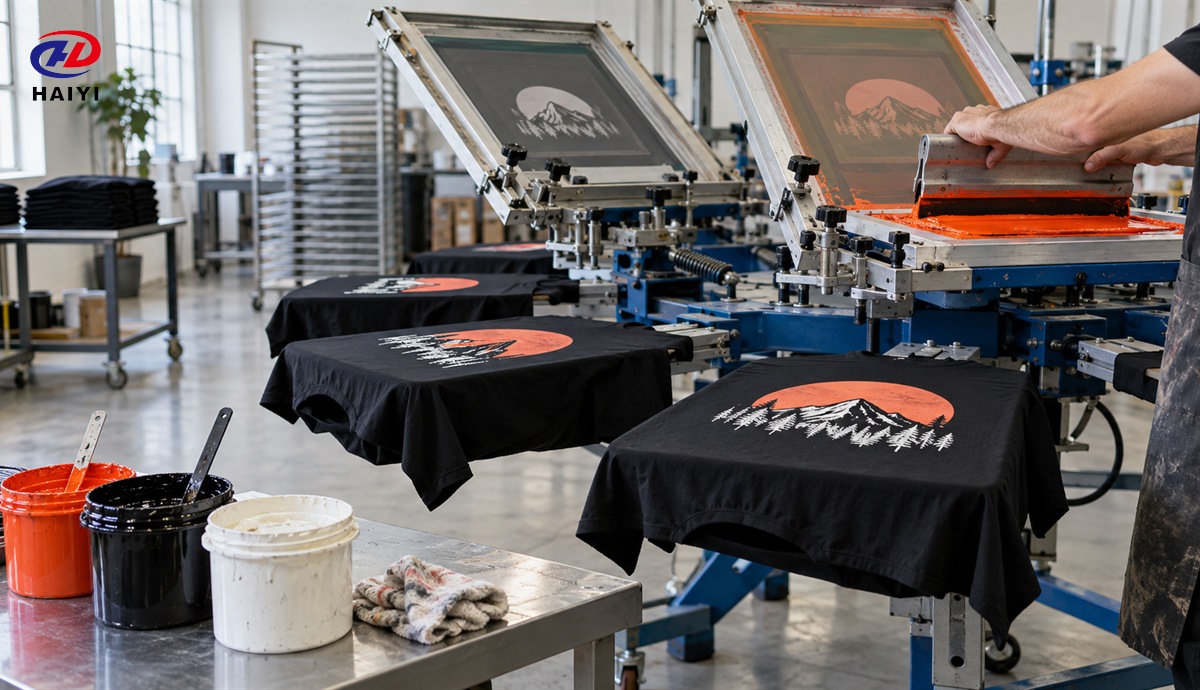
Screen printing also provides a wide choice of ink deposits and specialty effects. A production team can design for soft hand, high opacity, raised texture, metallic appearance, or other effects when the ink system, mesh, stencil, cure, and garment are compatible. These capabilities can be more important than unit price for a brand with a defined aesthetic.
The limitation is variation. A design change can require new separations, screens, registration, and approval. A nominal order of 1,000 garments is not one efficient run if it contains many unrelated designs, placements, and personalization fields.
Is there a fixed break-even quantity between DTF and screen printing?
There is no reliable universal break-even quantity. Published comparisons use different labor rates, press speeds, film costs, ink coverage, screen costs, color counts, garment types, spoilage assumptions, and equipment utilization. A threshold quoted by another shop may be wrong for your production floor.
Calculate each job using its own setup and variable costs:
Total job cost = setup cost + artwork and administration + consumables + machine time + labor + expected waste + quality-control cost.
For screen printing, setup rises with colors, screens, registration, and cleanup. For DTF, variable cost rises with printed area, white ink coverage, film utilization, powder, curing, pressing, and handling. Compare cost per accepted garment, not cost per attempted print.
How should artwork influence the choice?
Choose DTF when artwork contains gradients, photographs, many colors, very small quantities, or frequent changes. Choose screen printing when artwork can be separated into a stable set of colors and the same approved image will repeat enough times to absorb setup.
Do not judge only by the source file. A large full-coverage DTF graphic can feel heavier because a continuous adhesive layer covers more fabric. A screen print can also feel heavy if it uses a thick ink deposit. Evaluate the final print area, garment stretch, expected drape, and approved hand rather than assuming one process is always softer.
How do garment material and construction affect the decision?
Both processes can decorate multiple textiles, but neither should be approved from a generic fabric name alone. Cotton, polyester, blends, nylon, coated fabrics, stretch garments, fleece, and performance textiles can respond differently to ink, adhesive, heat, dye migration, and curing.
DTF requires a film, powder, press recipe, and peel behavior compatible with the garment. Screen printing requires a suitable ink chemistry, pretreatment where relevant, flash and final cure, and control of dye migration or fabric movement. Seams, pockets, zippers, and uneven surfaces can complicate both processes.
Which method is better for color consistency?
Both methods can be controlled, but the control points differ. DTF depends on color management, nozzle condition, white ink behavior, film coating, powder, cure, press settings, and garment color. Screen printing depends on separation, mesh, stencil, ink mixing, squeegee, registration, deposit, flash, and cure.
A buyer who requires repeat orders should define a visual tolerance, reference sample, garment specification, and measurement method where appropriate. The same digital file does not guarantee the same final color if the garment, consumables, or process changes.
Which method lasts longer?
Durability is a process outcome, not a method-only promise. A well-produced DTF transfer can fail if powder coverage, curing, pressing, or garment compatibility is wrong. A well-designed screen print can fail if ink, cure, stretch, or substrate compatibility is wrong. Compare samples after a defined wash and use protocol.
For DTF programs, see Haiyi’s guide to choosing film for strong wash resistance. The guide explains why film cannot be isolated from powder, curing, pressing, and garment preparation.
How do DTF and screen printing compare for production planning?
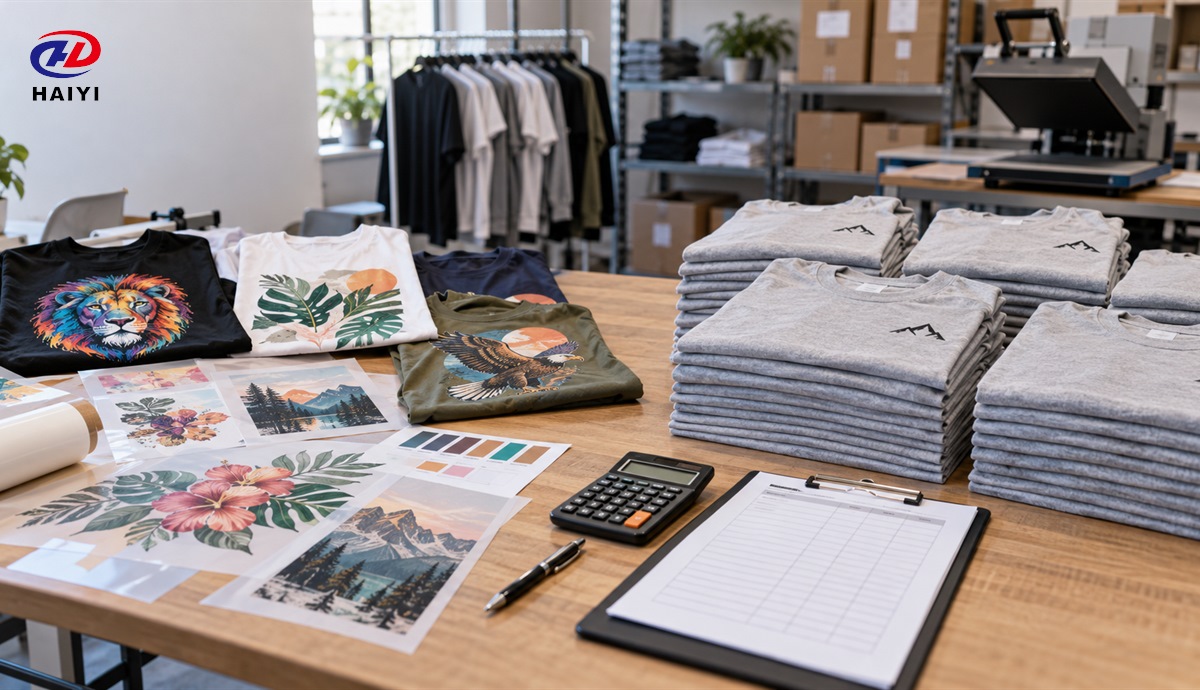
DTF can centralize transfer production, store approved transfers, and distribute garment pressing across locations or schedules. This can reduce finished-garment inventory for on-demand programs. Screen printing can deliver high output on stable runs, but changes and small reorders may recreate setup work.
Capacity should be measured at the bottleneck. A fast DTF printer does not create fast finished garments if powder curing or heat pressing is constrained. A fast screen-printing carousel does not create output if screens, registration, loading, or curing cannot keep pace. Use accepted garments per labor hour for the complete route.
What questions should a buyer answer before choosing?
- How many pieces share the exact same design, size, placement, and garment?
- How many colors, gradients, photographs, names, or numbers are required?
- Which fabrics, colors, coatings, seams, and stretch levels are included?
- What hand feel, opacity, special effect, and color tolerance is approved?
- Will the design be reordered in small batches or produced once in bulk?
- Which equipment stage limits actual finished-garment output?
- What wash, stretch, abrasion, and end-use tests define acceptance?
- What is the total cost per accepted piece under realistic waste?
Can a business use both DTF and screen printing?
Yes. Many production businesses use screen printing for repeat bulk programs and DTF for samples, complex artwork, personalization, gap filling, and small reorders. A hybrid portfolio prevents one process from being forced into jobs that fit the other process better.
For a wider comparison that also covers DTG, HTV, and sublimation, read Haiyi’s garment printing methods guide. For the complete DTF route, see how to print DTF transfers.
Frequently asked questions about DTF vs screen printing
Is DTF better than screen printing for small orders?
DTF is often more efficient for small orders because it avoids physical screens and handles full-color variation well. The answer can change if a shop already has an approved screen setup, the artwork is simple, or the order is part of a repeat program.
Is screen printing always cheaper for bulk orders?
No. It often becomes economical for long identical runs, but color count, setup, garment changes, personalization, labor, cleanup, and rejected pieces affect the break-even. Calculate the actual job.
Which method is best for photographic artwork?
DTF is generally easier for photographic artwork in short and mixed runs because it uses a digital process. Screen printing can reproduce complex tonal artwork, but separation and production requirements are more specialized.
Which method is best for wholesale apparel programs?
The best method is the one that fits the program’s repeat quantity, SKU variation, artwork, garment, quality standard, and inventory model. Many wholesale programs use both.
Source wholesale DTF film for a controlled production program
Haiyi supplies wholesale and customizable DTF film for distributors, print shops, and private-label buyers. If DTF fits your order mix, request samples and test them with your printer, ink, powder, curing system, heat press, artwork, and garments. Use Haiyi’s DTF film buying guide to define the specification, then contact Haiyi with your width, peel type, monthly volume, packaging, and performance requirements.