

DTF vs Sublimation Printing: Technical Workflow Comparison
Compare DTF and sublimation printing by image formation, consumables, substrates, workflow, print feel, failure modes, and production fit.

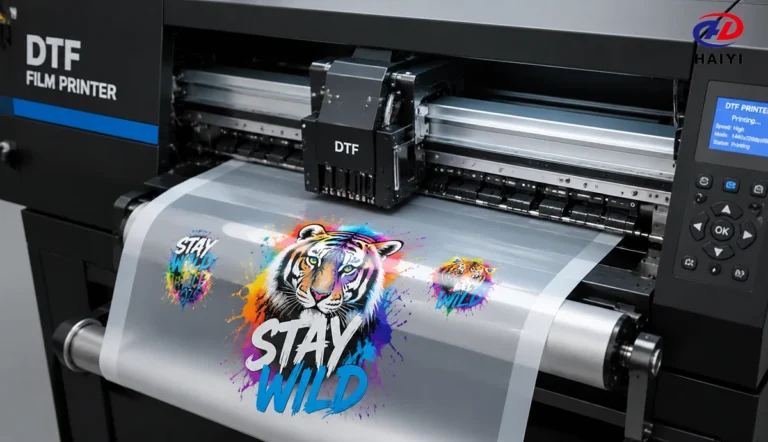
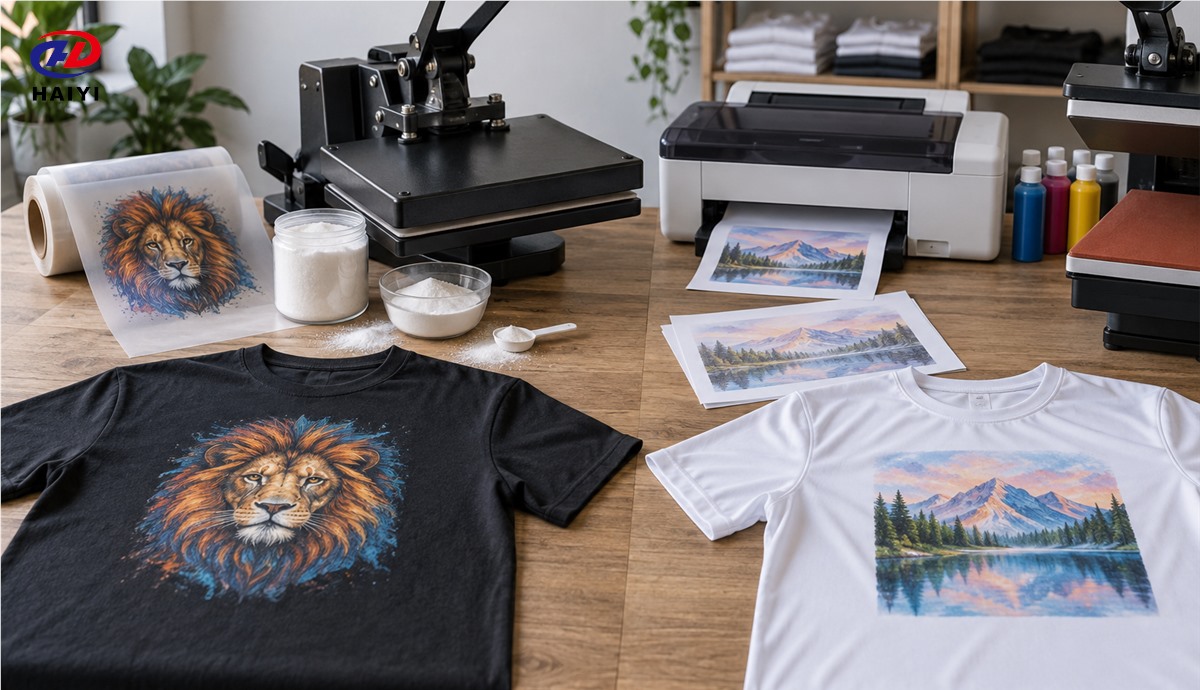
DTF and sublimation are both digital transfer methods, but they form images in different ways. DTF prints onto coated film, adds hot-melt adhesive, cures the transfer, and bonds a printed layer to a textile. Sublimation prints dye onto transfer paper and uses heat to turn the dye into gas so it enters compatible polyester or polymer-coated material.
Quick answer: choose DTF when production must cover dark colors, cotton, blends, and varied textile orders. Choose sublimation when the product is light polyester or a polymer-coated item and a dye-infused, nearly hand-free result is the priority. The correct method follows substrate and workflow, not a universal winner.
What is the core technical difference?
DTF creates a layered transfer. Color and white ink form the image, adhesive powder bonds it to the garment, and the carrier film is removed. Sublimation has no white ink or adhesive powder in the normal workflow. Its dyes become part of compatible light-colored polyester or a polymer coating, so the finished image has little or no separate surface layer.
This difference explains most downstream choices. DTF can create opacity on dark fabric because it includes white ink. Sublimation depends on the substrate color as its white point, so it is best on white or light material. DTF adhesion must be controlled; sublimation requires enough polyester or coating to receive the dye.
How do the production workflows compare?
| Process point | DTF | Sublimation |
|---|---|---|
| Carrier | Coated PET transfer film | Sublimation transfer paper |
| Image system | Color ink plus white backing | Sublimation dye without white ink |
| Bonding | Hot-melt adhesive powder | Dye diffusion into polyester or coating |
| Intermediate step | Powder application and curing | Paper drying and controlled transfer |
| Best textile range | Cotton, polyester, many blends, dark and light colors | Light polyester and compatible coated products |
| Finished hand | A surface layer is present | Minimal added hand on compatible fabric |
| Key control risks | White ink, powder, cure, adhesion, peel | Color profile, moisture, ghosting, migration, substrate coating |
Which materials suit each method?
DTF is often selected for cotton garments, dark polyester, cotton-polyester blends, and mixed textile orders because the white backing creates opacity and the adhesive bonds to many heat-compatible fabrics. Fabric finishes, stretch, dye migration, heat sensitivity, and texture still require testing.
Sublimation is strongest on white or light polyester and on rigid items manufactured with a compatible polymer coating. Natural cotton does not provide the same dye receptor, and dark substrates cannot display normal sublimation colors accurately because the method does not print an opaque white base.
How does print feel and appearance differ?
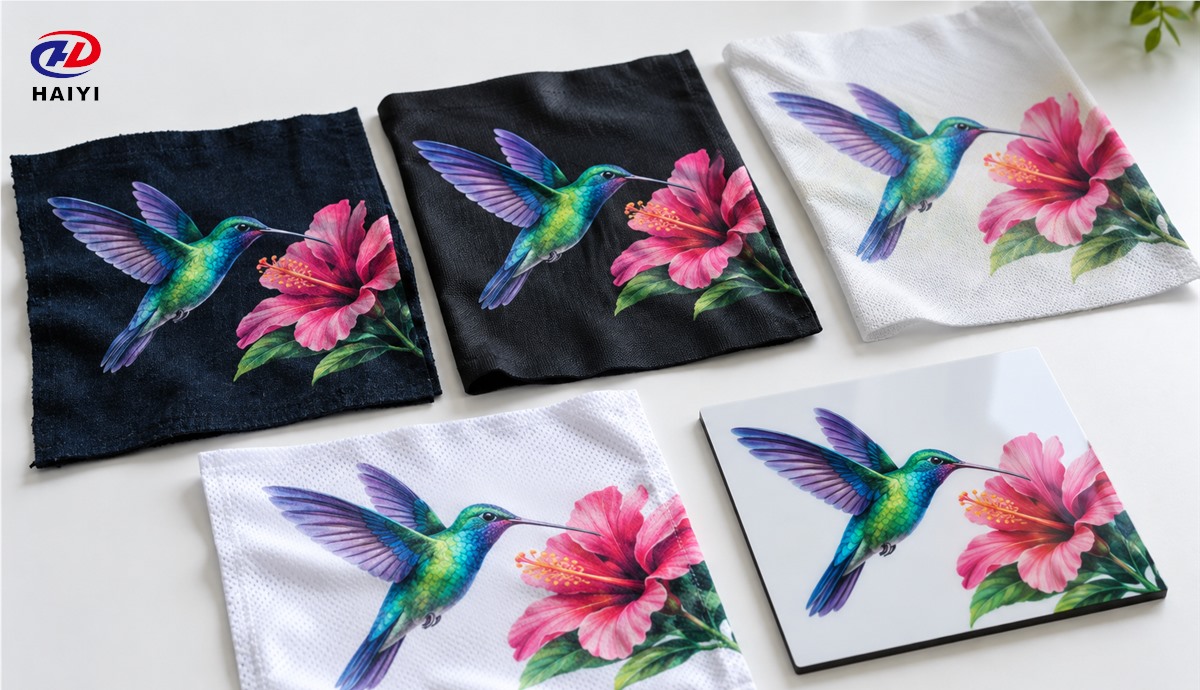
DTF places an ink-and-adhesive layer on the textile surface. Hand depends on artwork coverage, ink load, powder, cure, pressing, and garment. Fine, open artwork can feel lighter than a large solid block. Sublimation changes the color of compatible fibers or coating, so the textile remains breathable and the image has almost no raised transfer layer.
DTF can produce bright color on dark garments because white ink isolates the design from the fabric color. Sublimation can produce vivid photographic color on a suitable light substrate, but its output is influenced by the base color and polymer content. Neither method should be judged from a monitor alone; color-managed production requires printed control samples.
Which process has more production stages?
DTF normally adds powdering, curing, and carrier peeling to the print-and-press workflow. White ink also requires circulation, agitation, nozzle care, and disciplined maintenance. Sublimation removes powder and white ink from the normal process, but still requires printer maintenance, dry paper, controlled heat, pressure, time, color management, and measures against ghosting or dye migration.
A method with fewer steps is not automatically lower cost. Cost per accepted item depends on labor, waste, consumables, equipment utilization, order size, artwork, substrate price, rework, and the variety of products being produced. A shop that handles dark cotton cannot substitute sublimation simply because its transfer sequence is shorter.
What failure modes should buyers expect?
| DTF failure mode | Typical control points | Sublimation failure mode | Typical control points |
|---|---|---|---|
| Poor release or edge lift | Cure, press calibration, peel timing, compatibility | Faded color | Profile, ink load, heat, polyester/coating content |
| Powder background | Static, moisture, shaking, powder condition | Ghosting | Paper movement, press opening, fixing method |
| Oily or bubbled transfer | Ink load, curing window, storage | Blurring or migration | Heat, dwell, substrate dyes, cooling |
| White-ink inconsistency | Agitation, circulation, nozzles, RIP | Uneven transfer | Pressure, platen flatness, contact, coating |
How should a business compare capacity?
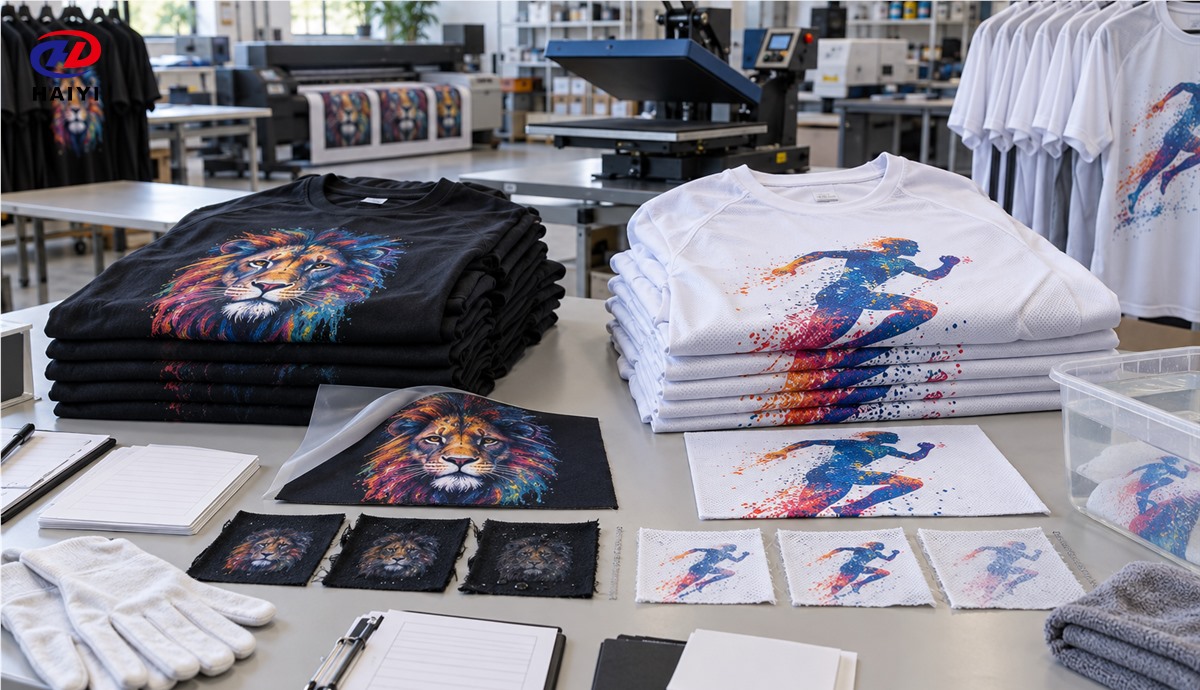
Map the real order mix: garment fibers, garment colors, artwork size, repeat quantity, personalization, daily peaks, operator skills, available floor space, finishing labor, and quality requirements. DTF is attractive for mixed garments and dark colors. Sublimation is efficient for light polyester sportswear, cut-and-sew panels, and compatible coated products.
For a commercial decision framework, read DTF vs sublimation for business. For the DTF production sequence, use the complete DTF transfer printing guide.
Can one workshop use both technologies?
Yes. The methods can serve different product families. A shop might use DTF for dark cotton uniforms and short mixed-fabric runs while using sublimation for light polyester sportswear and coated promotional items. Separate ink systems, color profiles, consumable storage, job routing, and quality checks keep the workflows controlled.
What should distributors evaluate in DTF consumables?
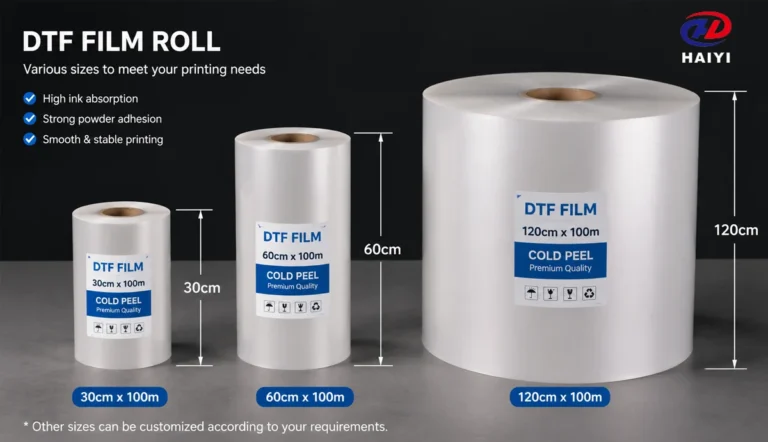
Compare film, ink, powder, and operating guidance as a system. Request samples on representative fabrics, document the cure and press window, assess release and wash behavior, and confirm lot traceability. For film purchasing specifically, the DTF transfer film guide explains construction and selection criteria.
Frequently asked questions
Is DTF a type of sublimation?
No. DTF uses a film, ink layer, white backing, and hot-melt adhesive. Sublimation uses heat to diffuse dye into compatible polyester or polymer coating.
Which method works on black cotton?
DTF is the relevant choice between these two because it can include an opaque white backing and adhesive for suitable cotton. Standard sublimation does not provide white ink and is not designed for black cotton.
Which method has the softer hand?
Sublimation generally adds less surface feel on compatible polyester because the dye enters the material. DTF has a transfer layer, although artwork design and process control can reduce perceived hand.
Build a DTF consumables program for your market
Haiyi supplies wholesale and customized DTF film for distributors and production partners. Share your printer, film dimensions, ink and powder system, target garments, peel preference, packaging, private-label needs, and volume. Contact Haiyi to request samples and define a repeatable DTF film specification.