


How DTF Film Coating Affects Print Quality: The Complete Guide to Sharper Colors, Better Adhesion and Consistent Transfers

In Direct-to-Film (DTF) printing, many users focus on printers, inks, and heat presses when improving print quality. However, one important factor is often overlooked: DTF film coating.
The coating layer on DTF transfer film directly influences how ink spreads, how colors appear, how adhesive powder bonds, and how smoothly the design transfers onto fabric. A high-quality coating helps achieve sharp details, bright colors, stable production, and reliable transfer results.
For businesses producing large volumes of custom apparel, choosing the right DTF film coating quality can significantly reduce printing problems and improve production efficiency.
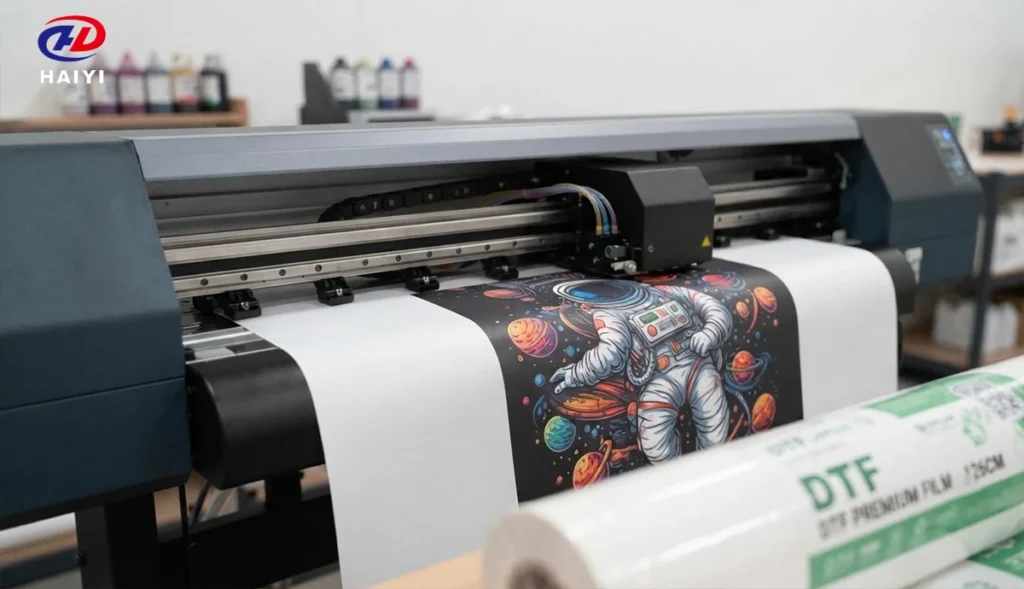
What Is DTF Film Coating?
DTF film is usually made from a PET (polyethylene terephthalate) base film with a specially engineered coating layer applied to the printing surface.
Unlike ordinary PET film, DTF film requires a functional coating system that allows:
- Ink to spread evenly
- White ink to maintain opacity
- Pigments to stay stable during printing
- Adhesive powder to attach correctly
- The final transfer to release smoothly after heat pressing
The coating acts as the connection between the printer and the garment. Without proper coating performance, even advanced printing equipment may not achieve consistent results.
Why DTF Film Coating Quality Matters for Print Results
1. Better Ink Absorption Creates Sharper Images
One of the biggest effects of DTF film coating is ink absorption control.
During printing, DTF ink needs to stay on the coating surface instead of spreading uncontrollably. A balanced coating structure allows ink droplets to remain where they are placed.
High-quality coating helps achieve:
- Clear image edges
- Fine text printing
- Smooth gradients
- Accurate graphic details
- Reduced ink bleeding
Poor coating uniformity can cause problems such as:
- Blurry images
- Uneven color density
- Ink pooling
- Missing details
For small logos, complex artwork, and detailed patterns, coating consistency becomes especially important.
2. DTF Film Coating Influences Color Brightness
Color performance depends not only on ink quality but also on how the film coating receives and holds the ink.
A suitable coating layer helps maintain:
- High color saturation
- Strong contrast
- Smooth color transitions
- Stable white ink coverage
When ink cannot properly bond with the coating surface, colors may appear:
- Faded
- Uneven
- Less vibrant
- Different from the original design
For commercial printing businesses, stable color output is essential because customers expect every batch to match previous production runs.
3. Coating Uniformity Improves White Ink Performance
White ink is a critical part of DTF printing because it creates the foundation layer for designs on dark fabrics.
The film coating affects how evenly white ink sits on the surface.
A consistent coating helps:
- Prevent white ink separation
- Maintain even coverage
- Improve image opacity
- Reduce surface defects
If the coating has inconsistent areas, white ink may react differently across the film, creating visible differences in the final transfer.
4. Proper Coating Improves Adhesive Powder Bonding
After printing, hot melt adhesive powder is applied to the printed film.
The coating surface affects how the powder attaches to the printed area.
A well-designed coating allows:
- Powder to stick mainly where ink exists
- Better adhesive distribution
- Cleaner transfer edges
- Reduced excess powder contamination
Poor coating performance may cause:
- Powder sticking to unwanted areas
- Uneven adhesive layers
- Rough transfer surfaces
- Weak bonding after pressing
The interaction between film coating, ink, and adhesive powder is one of the key factors determining transfer quality.
5. Film Coating Affects Peel Performance
The release layer of DTF film determines how easily the film separates from the transferred design.
A good release coating provides:
- Smooth peeling
- Complete image transfer
- Less residue
- Reduced risk of design damage
Incorrect coating performance can lead to:
- Partial transfer
- Image lifting
- Cracked edges
- Difficult peeling
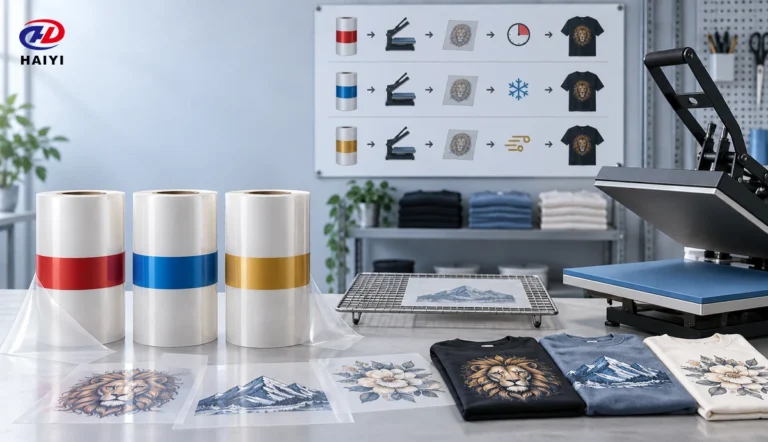
Different production environments may require different release characteristics, such as hot peel, warm peel, or cold peel film.
Common DTF Printing Problems Caused by Poor Film Coating
Ink Smearing
Possible causes:
- Poor ink absorption
- Uneven coating surface
- Incorrect coating formulation
Solutions:
- Use consistent quality DTF film
- Check coating compatibility
- Adjust printing parameters
Low Color Saturation
Possible causes:
- Weak ink absorption
- Poor coating uniformity
- Incorrect ink volume
Solutions:
- Choose film with optimized coating performance
- Test color output before mass production
Poor Adhesion After Transfer
Possible causes:
- Unstable release coating
- Uneven adhesive powder bonding
- Incorrect curing conditions
Solutions:
- Evaluate film coating quality
- Optimize powder application and curing process
Key Factors That Determine DTF Film Coating Quality
1. Coating Uniformity
A consistent coating thickness across the entire roll ensures stable printing from the first meter to the last.
For manufacturers and wholesalers, roll-to-roll consistency is essential because production issues often appear when film quality changes within the same batch.
2. Surface Energy Control
The coating must have the correct surface properties to allow ink droplets to spread evenly.
Balanced surface energy helps:
- Improve ink wetting
- Prevent ink rejection
- Maintain image sharpness
3. Coating Formulation
The coating formula affects:
- Ink absorption speed
- Drying behavior
- Powder adhesion
- Release performance
More coating layers do not automatically mean better performance. The formulation and precision of coating application are more important than simply increasing coating thickness.
4. Production Stability
For industrial DTF printing, stability is more important than occasional high-quality results.
Reliable DTF film should provide:
- Consistent printing performance
- Stable coating quality
- Predictable transfer results
- Lower production waste
How to Choose High-Quality DTF Film for Better Printing
When selecting DTF film, consider:
1. Coating Performance
Check whether the film provides:
- Smooth ink absorption
- Stable color reproduction
- Clean powder adhesion
2. Film Thickness
Common DTF films use different PET thickness options depending on application requirements.
Thickness affects:
- Film handling
- Printing stability
- Heat transfer behavior
3. Roll Consistency
For bulk production, consistency across the entire roll is critical.
A professional DTF film supplier should control:
- PET quality
- Coating process
- Surface treatment
- Quality inspection
Why Professional DTF Film Manufacturing Matters
DTF film is not simply a plastic carrier. It is an engineered printing material where coating technology determines final transfer performance.
A reliable DTF film manufacturer focuses on:
- Advanced coating technology
- Stable raw materials
- Precise coating control
- Strict quality inspection
- Consistent roll production
For wholesalers, distributors, and printing businesses, investing in stable DTF film helps reduce waste, improve production efficiency, and deliver better-quality finished products.
Conclusion: Coating Quality Is the Foundation of DTF Print Quality
DTF film coating plays a critical role in every stage of the printing process, from ink reception to final fabric transfer.
A high-quality coating improves:
✅ Color vibrancy
✅ Image sharpness
✅ White ink coverage
✅ Powder adhesion
✅ Peel performance
✅ Production consistency
Understanding how DTF film coating affects print quality helps printing companies choose better materials, reduce failures, and achieve reliable results for large-scale production.
When evaluating DTF film, do not only look at price or specifications — focus on coating technology, consistency, and long-term printing performance.