






DTF Roll Film Buying Guide: How to Choose the Right Film for High-Quality Transfers

Why Choosing the Right DTF Roll Film Matters
In Direct-to-Film (DTF) printing, many users focus on printers, inks, and adhesive powders, but the transfer film is equally important. The quality of the DTF roll film directly affects ink absorption, color reproduction, powder adhesion, peeling performance, and final transfer durability.
A high-quality DTF transfer film is not simply a regular PET film. It requires a specially engineered coating layer that allows pigment ink to print evenly, supports hot melt powder bonding, and releases smoothly during heat transfer.
For print shops, wholesalers, and garment manufacturers, selecting the right DTF roll film can reduce production failures, improve efficiency, and maintain consistent transfer quality.
What Is DTF Roll Film?
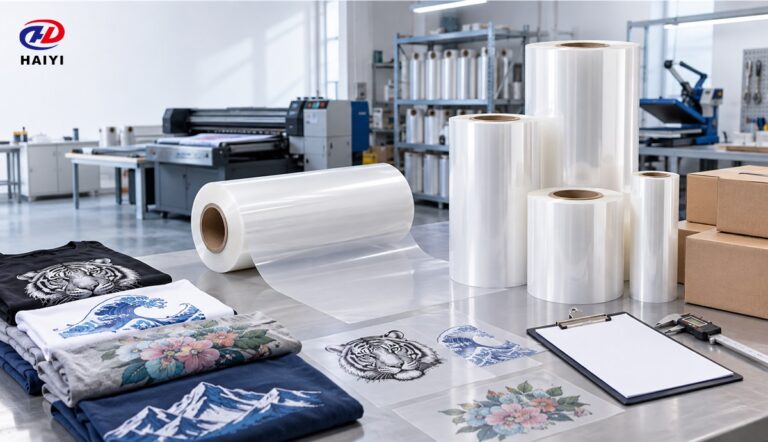
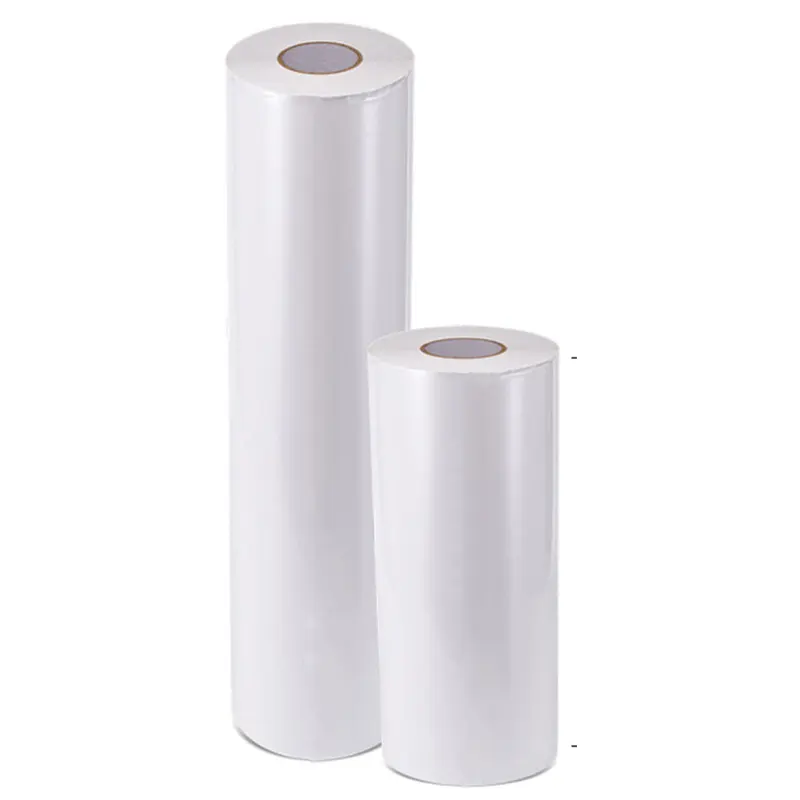
DTF roll film is a coated PET (Polyethylene Terephthalate) film used as the carrier material during the DTF printing process.
The printing workflow usually includes:
- Printing CMYK and white ink onto the coated film surface.
- Applying hot melt adhesive powder.
- Curing the powder and ink layer.
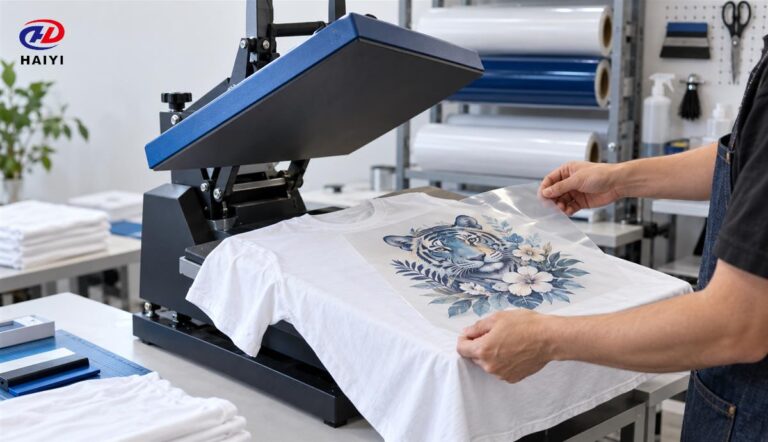
- Heat pressing the design onto fabric.
- Removing the film after the required peeling process.
Unlike ordinary PET materials, DTF film contains a special release coating designed for ink reception and clean transfer. Using unsuitable film may cause problems such as poor ink spreading, incomplete transfer, or uneven adhesion.
Key Factors to Consider When Buying DTF Roll Film
When choosing a DTF roll film supplier, buyers should evaluate several important specifications.
1. Film Coating Quality
The coating layer is one of the most important factors affecting printing performance.
A good DTF film coating should provide:
- Uniform ink absorption
- Sharp image details
- Stable white ink printing
- Good powder distribution
- Smooth release after pressing
Poor coating consistency can result in:
- Ink pooling
- Blurry edges
- Uneven colors
- Adhesive powder falling off
- Transfer defects
For commercial production, coating uniformity is often more important than simply choosing the lowest-cost film.
2. Single Matte vs Double Matte DTF Film
One common choice when purchasing DTF roll film is between single matte and double matte surfaces.
Single Matte DTF Film
Single matte film has a matte coating on one side, while the other side remains untreated.
Advantages:
- Lower material cost
- Suitable for standard DTF workflows
- Easy identification of printing side
- Good print quality when correctly loaded
However, operators need to ensure the coated side faces the printing direction to avoid printing errors.
Double Matte DTF Film
Double matte DTF film has matte coatings on both sides.
Advantages:
- Easier handling during production
- Reduced loading mistakes
- Better film stability
- Improved operator convenience
For high-volume production environments, double matte film can provide a more efficient workflow because operators do not need to constantly check film orientation.
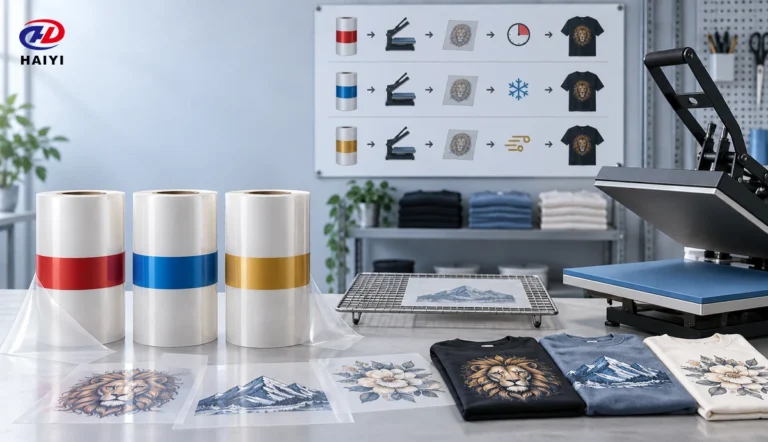
3. Hot Peel vs Cold Peel DTF Film

The peeling method is another important consideration when selecting DTF transfer film.
Hot Peel DTF Film
Hot peel film allows the carrier film to be removed shortly after heat pressing.
Benefits:
- Faster production speed
- Reduced waiting time
- Suitable for mass production
Hot peel film is commonly preferred by commercial printing businesses that need higher output efficiency.
Cold Peel DTF Film
Cold peel film requires the transfer to cool before removing the carrier.
Benefits:
- More forgiving pressing process
- Suitable for beginners
- Lower risk of lifting during peeling
Cold peel film can be a good choice when production conditions vary or when operators need more processing tolerance.
The best choice depends on your workflow, heat press settings, and production requirements.
4. Film Thickness and Stability
DTF roll film thickness affects feeding stability, handling, and transfer performance.
Common considerations include:
Thinner Film
Advantages:
- Lower material consumption
- Flexible handling
Possible disadvantages:
- More sensitive to tension changes
- Higher risk of wrinkles during production
Thicker Film
Advantages:
- Better dimensional stability
- Easier machine feeding
- More suitable for continuous production
Many commercial DTF applications use PET film in the range of approximately 75–100 microns because it provides a balance between stability and flexibility.
5. Choosing the Right DTF Film Roll Size
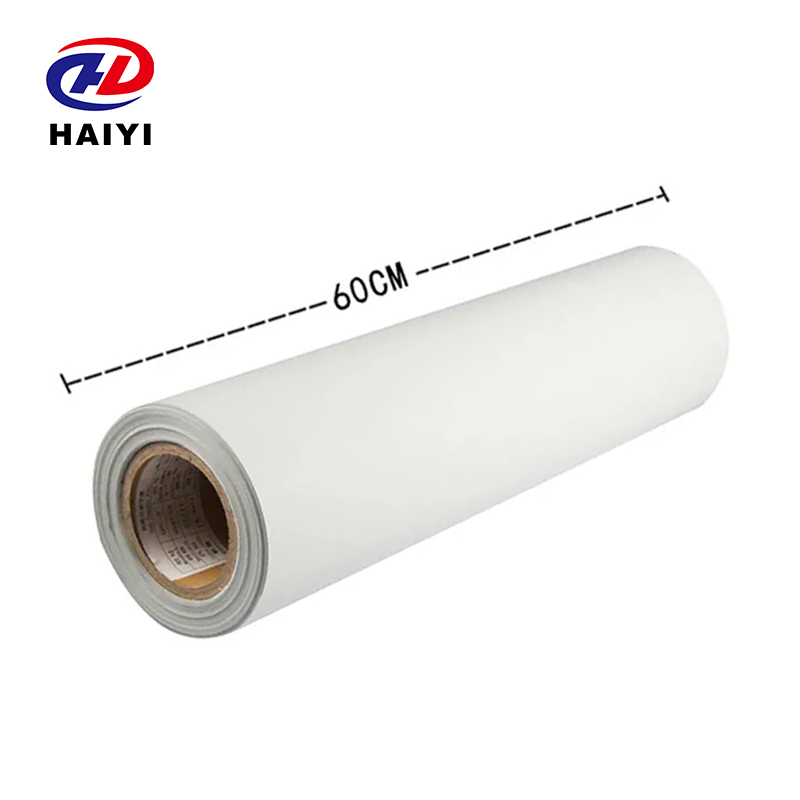
The correct roll size depends on your printer width and production volume.
Common roll widths include:
- 30cm DTF film roll
- 60cm DTF film roll
- 120cm DTF film roll
- Custom width DTF film rolls
A wider roll can improve material utilization for:
- Large garment graphics
- Multiple designs per print
- Industrial production workflows
Before purchasing, confirm:
- Printer compatible width
- Core size
- Roll length
- Machine feeding requirements
Choosing the correct roll specification helps reduce waste and improve production efficiency.
6. Check DTF Film Compatibility With Your Printing System
Not every DTF film performs the same with every production setup.
Before purchasing, test compatibility with:
- Your DTF ink type
- Printing speed
- White ink circulation system
- Powder application method
- Curing temperature
- Heat press settings
A reliable supplier should provide testing samples before large-volume orders.
Common Problems Caused by Low-Quality DTF Roll Film
Choosing inexpensive but unstable film may create production problems.
Poor Color Performance
Incorrect coating absorption can reduce color brightness and image sharpness.
Uneven White Ink Layer
White ink requires a stable coating surface. Poor film may cause:
- White ink separation
- Uneven coverage
- Weak opacity
Difficult Peeling
Poor release coating may cause:
- Film sticking
- Partial transfer failure
- Damaged graphics
High Material Waste
Unstable film increases:
- Failed prints
- Reproduction costs
- Production downtime
For businesses producing hundreds or thousands of transfers, film consistency directly affects profitability.
How to Select a Reliable DTF Roll Film Supplier
A professional DTF film supplier should provide:
Stable Manufacturing Capability
Look for suppliers with:
- Professional coating equipment
- Controlled production processes
- Consistent quality inspection
Customization Options
B2B buyers may require:
- Different roll widths
- Customized packaging
- Private label service
- OEM production
Quality Testing
A reliable supplier should test:
- Coating uniformity
- Printing performance
- Release performance
- Transfer durability
Why Work With a Professional DTF Roll Film Manufacturer?
For wholesalers, distributors, and printing businesses, working directly with a manufacturer provides advantages:
- More stable supply
- Better quality control
- Competitive factory pricing
- Custom product solutions
- Faster communication
A professional manufacturer can help customers select suitable DTF film specifications according to their printing equipment and production requirements.
DTF Roll Film Buying Checklist
Before placing a bulk order, check:
✓ PET film quality
✓ Coating uniformity
✓ Matte or double matte surface
✓ Hot peel or cold peel requirement
✓ Film thickness
✓ Roll width and length
✓ Printer compatibility
✓ Supplier production capability
✓ Sample testing results
Final Thoughts: How to Choose the Best DTF Roll Film
The best DTF roll film is not always the cheapest option. A suitable film should match your printer system, production speed, transfer requirements, and target application.
For professional printing businesses, investing in stable-quality DTF transfer film helps achieve consistent colors, smoother production, fewer failures, and better customer satisfaction.
Choosing an experienced DTF roll film manufacturer with reliable coating technology and customization capability is the key to building a stable long-term supply chain.