







What Is Printed Pes Reflective Heat Transfer Film

Read time: 12 minutes
Introduction
At night, a worker in dark clothing is virtually invisible to oncoming traffic. A child in an unlit street is nearly impossible for a driver to see. A cyclist without reflective gear disappears from headlights at 50 meters.
Printed PES reflective heat transfer film is the material that changes this — a heat-applicable reflective film that can be bonded to any compatible garment or textile using a heat press, transforming ordinary clothing into high-visibility safety apparel.
What makes the “printed” version different from standard silver reflective tape is the design freedom. Rather than a plain silver band, printed PES reflective film allows custom patterns, logos, brand marks, and decorative graphics to be applied using reflective material. In daylight, the design looks like a standard graphic. In darkness, any light source — vehicle headlights, a camera flash, a torch — sends the design back toward the light, making the wearer immediately visible.
This guide covers everything: what PES reflective heat transfer film is, how the retroreflection works, the difference between PES and TPU backing, technical specifications, pressing instructions, care requirements, certifications, and how to source reliably.
Key Takeaways
- PES stands for polyester (Polyester) — the backing material that gives PES reflective heat transfer film its compatibility with woven fabrics, polyester, cotton, nylon, and workwear textiles
- Reflective heat transfer film works through retroreflection: microscopic glass beads or microprismatic layers return light directly back toward its source, making the wearer visible to drivers at night
- The “printed” version allows custom patterns and logos on the reflective surface — the reflective performance remains active through the printed layer
- Standard PES reflective film has reflectivity above 380 to 420 cd/(lx·m²) — meeting EN ISO 20471 Class II and ANSI/ISEA 107-2020 standards for high-visibility safety garments
- PES backing is suitable for woven fabrics, polyester, cotton, polyester-cotton blends, nylon, and webbing — TPU backing is required for elastic or stretch fabrics
- Pressing parameters: 125 to 135°C (257 to 275°F), 8 to 15 seconds, 2 to 3 kg/cm² pressure — verify with the specific product specification
- Wash durability: minimum 25 wash cycles at 60°C per ISO 6330 for certified products; industrial wash variants survive 75°C industrial laundering
- Applications include safety workwear, sportswear and activewear, children’s clothing, fashion and streetwear, bags and accessories, and promotional branded merchandise
What Is PES Reflective Heat Transfer Film?
PES reflective heat transfer film is a multi-layer composite material applied to textiles using heat and pressure. It combines a retroreflective element — typically micro glass beads or a microprismatic array — with a heat-activated adhesive system, mounted on a PES (polyester) carrier backing.
Breaking down the name:
Printed: The reflective surface carries custom graphics, patterns, or logos printed on or into the film structure. Unlike plain silver reflective tape, printed variants can replicate brand marks, safety symbols, decorative patterns, or photographic artwork while maintaining full retroreflective performance.
PES: Polyester — the backing material. The PES backing layer provides the adhesive chemistry suited to non-stretch woven fabrics: polyester, cotton, polyester-cotton blends, nylon, and webbing. PES-based adhesive does not provide the elasticity of TPU (thermoplastic polyurethane) backing and is therefore not recommended for stretch fabrics.
Reflective: The film returns light to its source through retroreflection — a property distinct from regular reflection (which scatters light in all directions). Retroreflective materials send the majority of incident light back toward the exact point it came from. A car’s headlights illuminate a reflective garment and the driver sees a bright return — the pedestrian or worker becomes highly visible at distances where a non-reflective garment would be invisible.
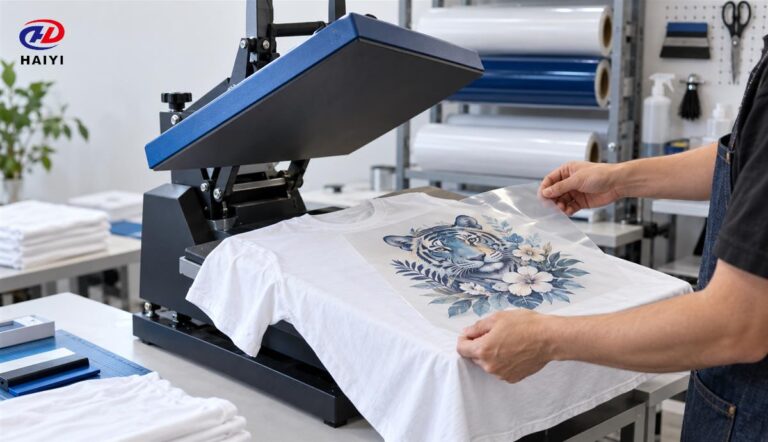
Heat Transfer Film: Application method. The film is bonded to the textile surface using heat and pressure from a heat press or iron — no sewing, no adhesive glue, no separate manufacturing step. Once applied and cooled, the bond is permanent and wash-durable.
How Retroreflection Works: The Science Behind the Glow
Standard reflective surfaces (mirrors, polished metal) scatter light at an angle equal to the angle of incidence — a light beam hitting the surface at 30 degrees bounces away at 30 degrees. A driver’s headlights would reflect away from the driver, not back toward them.
Retroreflective materials are engineered to do the opposite: return light back toward its source regardless of the angle of incidence.
Glass Bead Technology
The most common retroreflection mechanism in PES reflective heat transfer film uses millions of microscopic glass beads — each approximately 50 to 80 microns in diameter — embedded in or bonded to the film surface. Each glass bead acts as a tiny lens that refracts incoming light, bounces it off a reflective backing layer behind the bead, and returns it toward the light source.
The result: light from a car’s headlights at 100 meters illuminates the beaded surface, and the driver sees a bright point of light returned from the garment — making the wearer visible at distances that would be impossible with a non-retroreflective material.
Reflectivity is measured in candela per lux per square meter (cd/(lx·m²)) — also written as CPL. Higher values indicate more light returned to the source.
- Standard PES reflective film: 380 to 420 cd/(lx·m²) or above
- EN ISO 20471 Class II minimum: 330 cd/(lx·m²) at 5° observation angle
- Premium high-reflectivity film: above 600 cd/(lx·m²)
Microprismatic Technology
An alternative to glass beads, microprismatic reflective film uses an array of precisely engineered microscopic prisms on the film surface. The prism geometry achieves retroreflection through total internal reflection rather than lens refraction.
Microprismatic reflective film generally achieves higher reflectivity values than glass bead film at equivalent weight, with better wide-angle performance. However, the manufacturing cost is higher, and the surface has a different visual character — typically appearing with a more structured geometric pattern compared to the smooth appearance of glass bead film.
PES vs TPU Backing: Which Should You Choose?
The backing material is the most commercially important specification decision for buyers of reflective heat transfer film. PES and TPU backings serve different fabric substrates and have fundamentally different performance characteristics.
| Property | PES Backing | TPU Backing |
|---|---|---|
| Base material | Polyester film | Thermoplastic polyurethane |
| Elasticity | Non-elastic (rigid) | High elasticity |
| Recommended fabrics | Woven polyester, cotton, poly-cotton, nylon, webbing | Stretch fabrics, lycra, spandex blends, PU coated materials, elastic bands |
| Not recommended for | Stretch or elastic fabrics | Rigid woven workwear fabrics (less durable bond) |
| Wash durability | Good (25+ cycles at 60°C) | Good to excellent |
| Pressing temperature | 125–135°C | 130–150°C (higher than PES) |
| Surface feel | Slightly rigid | Soft, flexible |
| Typical applications | Safety workwear, uniforms, bags, nylon garments | Activewear, sportswear, leggings, swimwear |
| Pattern cutting | Plotter and laser cutter compatible | Plotter and laser cutter compatible |
The practical decision:
- Safety workwear, high-visibility vests, uniforms, bags, and rigid woven fabric garments → PES backing
- Athletic wear, yoga pants, stretch jerseys, and elastic fabric applications → TPU backing
What “Printed” Means: Custom Patterns on Reflective Film
Standard reflective heat transfer film is a uniform silver color. Printed reflective film adds design complexity while maintaining the retroreflective function.
How Printing on Reflective Film Works
Printing on reflective heat transfer film is applied through two main methods:
Screen printing on reflective surface: Custom ink patterns are screen-printed onto the reflective surface layer. The ink is formulated to be transparent to retroreflection — allowing the glass bead or microprismatic layer beneath to remain functional. In daylight, the printed colors are visible as a decorative or branded design. In low light with an active light source, the reflective layer beneath activates and the pattern becomes visible as a reflective graphic.
Lamination and overlay techniques: Custom printed films are laminated over or under the reflective layer using heat and pressure. This allows full-color photographic detail on the film surface while the reflective substrate provides the safety function.
Design Possibilities
- Brand logos and wordmarks: Corporate identity applied to workwear, creating branded high-visibility garments where the logo glows at night
- Safety symbols and compliance markings: Directional arrows, warning symbols, and text applied to specific garment areas
- Decorative patterns: Geometric designs, camouflage patterns, fashion graphics on reflective base — particularly popular for streetwear and activewear where safety and style combine
- Full-color custom artwork: Photographic and illustrated designs possible with advanced printing methods on reflective substrate
Design Considerations
Printed areas with opaque inks reduce the reflective return in those specific areas. For maximum reflective performance, designs should use transparent or semi-transparent inks where possible, or accept that heavily inked areas will have lower reflectivity than the clear reflective background.
For safety-critical applications — high-visibility workwear required to meet EN ISO 20471 or ANSI/ISEA 107 — the percentage of reflective area on the garment must meet minimum requirements. Printed designs that reduce reflective area below compliance minimums remove the garment from certification.
Technical Specifications: What the Numbers Mean
When evaluating PES reflective heat transfer film, these are the specifications that determine performance and compliance.
Reflectivity (cd/(lx·m²))
The primary performance specification. Measured under specific geometric conditions (observation angle and illumination angle). Standard test conditions: 5° observation angle, 5° entrance angle (EN ISO 20471).
- Minimum for EN ISO 20471: 330 cd/(lx·m²)
- Standard PES reflective film: 380 to 420 cd/(lx·m²)
- High-performance film: above 600 cd/(lx·m²)
Wash Durability
Tested per ISO 6330 (domestic laundering) and ISO 15797 (industrial laundering).
- Standard: 25 wash cycles at 60°C (domestic wash)
- Industrial wash grade: tested at 75°C industrial laundering temperature
- Premium: 50+ wash cycles with minimal reflectivity loss
Pressing Parameters
| Parameter | Standard Range |
|---|---|
| Temperature | 125 to 135°C (257 to 275°F) |
| Time | 8 to 15 seconds |
| Pressure | 2 to 3 kg/cm² |
| Peel | Cold peel — after cooling |
Always verify parameters with your specific product data sheet — different formulations have different optimal pressing conditions.
Width and Format
- Standard roll width: 50cm (20 inches) typical; custom widths available
- Roll length: 50m and 100m standard
- Pre-cut shapes: available for specific applications (strips, chevrons, custom logos)
- Custom shapes: cut by plotter or laser cutter from roll stock
Applications: Where Printed PES Reflective Film Is Used
Safety Workwear and High-Visibility (Hi-Vis) Garments
The primary application. Road workers, construction site workers, emergency service personnel, warehouse and logistics workers, port workers, and anyone in environments where vehicles operate require high-visibility garments meeting EN ISO 20471 or ANSI/ISEA 107 standards.
PES reflective heat transfer film applied in bands, chevrons, and panel stripes provides the retroreflective area required for garment compliance. Printed variants allow the reflective area to carry brand identity or company markings without sacrificing compliance — the logo itself becomes the reflective element.
Sportswear and Activewear
Night runners, cyclists, hikers, and outdoor fitness enthusiasts benefit from reflective elements on their athletic clothing. PES reflective film provides retroreflective visibility for:
- Running jackets and vests with reflective logos or chest panels
- Cycling jerseys and tights with reflective stripe details
- Outdoor apparel with reflective panel insertions
- Sports bags and backpacks with reflective brand marks
The printed format allows the reflective elements to integrate with the garment’s design aesthetic rather than appearing as utilitarian safety additions.
Children’s Clothing and School Uniforms
Children are particularly vulnerable as road users and pedestrians. Reflective elements on school bags, raincoats, and uniforms significantly improve child visibility in morning and evening commutes in low-light conditions.
Printed PES reflective film allows decorative motifs — stars, animals, patterns — to serve a safety function. The design engagement encourages children to accept and wear the reflective elements that standard silver tape might discourage.
Fashion and Streetwear
Reflective materials have become a strong aesthetic element in fashion, particularly in streetwear, athleisure, and designer sportswear. High-profile collaborations between fashion houses and reflective material suppliers demonstrate that reflective film is now a design choice, not only a safety requirement.
Printed PES reflective film with custom patterns, brand graphics, and artistic designs gives fashion designers a material with dual functionality: daytime decorative impact and nighttime spectacle when illuminated.
Promotional and Branded Merchandise
Companies across industries use printed reflective film to create branded merchandise where safety and promotion coincide: branded safety vests, company-logo work jackets, promotional bags with reflective brand marks. The reflective element amplifies brand visibility in low-light environments — an advertising impression that standard screen printing or embroidery cannot replicate.
Bags, Accessories, and Personal Protective Equipment
Beyond garments, PES reflective film is used on:
- Backpacks and school bags
- Cycling and running accessories (arm bands, ankle straps)
- Safety helmets and headgear
- Pet accessories (dog leashes, pet clothing, collars)
- Emergency equipment bags and cases
How to Apply PES Reflective Heat Transfer Film
PES reflective heat transfer film is applied using a heat press. The process is straightforward but requires precise parameter compliance for durability and adhesion.
Equipment Needed
- Heat press (commercial heat press strongly recommended; household iron possible for non-safety applications)
- Teflon sheet or parchment paper (protects the reflective surface during pressing)
- Scissors or craft knife (for pre-cut shapes)
- Plotter or laser cutter (for custom shape cutting from rolls)
- Clean work surface
Step-by-Step Application
Step 1 — Prepare the substrate Clean the garment area where the film will be applied. Remove all lint, dust, and surface oils. Pre-press the garment for 3 to 5 seconds to remove moisture and flatten any wrinkles in the application area. Moisture trapped beneath the film during pressing is a primary cause of adhesion failure.
Step 2 — Cut the film to shape If using roll stock, cut the reflective film to the required shape using scissors, a plotter cutter, or laser cutter. PES reflective film is compatible with both mechanical plotter cutting and laser cutting — laser cutting produces cleaner edges on complex designs.
Step 3 — Position the film Place the film reflective-side up on the garment (the reflective surface typically faces away from the garment; the PES adhesive side faces the fabric). Confirm orientation by checking that the shiny reflective surface is visible.
Step 4 — Cover with Teflon sheet Place a Teflon pressing sheet or silicon paper over the reflective film before pressing. Direct contact between the heat press platen and the reflective surface can damage the glass bead or microprismatic layer and degrade reflective performance.
Step 5 — Press Apply heat and pressure:
- Temperature: 125 to 135°C (257 to 275°F)
- Time: 8 to 15 seconds
- Pressure: 2 to 3 kg/cm² (firm, even pressure across the entire film area)
Step 6 — Cold peel Allow the film and garment to cool completely to room temperature before peeling. PES reflective film is a cold peel product — peeling while warm lifts the adhesive before it has fully bonded to the fabric and causes adhesion failure. Allow minimum 60 seconds of cooling.
Step 7 — Inspect and post-press (optional) After peeling, inspect the edges of the applied film for any lifting. If any edges are not fully bonded, cover with a Teflon sheet and press again for 5 to 8 seconds. Allow to cool fully before handling.
Household Iron Application
For non-safety applications where certification compliance is not required, a household iron can be used. Set to the cotton setting (no steam). Apply firm, consistent downward pressure — no sliding — for 20 to 30 seconds per section. Allow full cooling before peeling.
Note: iron application is significantly less consistent than heat press application in terms of pressure uniformity and temperature accuracy. For safety workwear or certified applications, a calibrated heat press is required.
Compatible Fabrics and Surfaces
PES reflective heat transfer film is compatible with:
Best compatibility:
- 100% polyester woven fabric
- Polyester-cotton blends (65/35 and 50/50)
- 100% cotton woven fabric
- Nylon (polyamide) woven fabric
- Polyester webbing and strapping
- Canvas (cotton or polyester)
Acceptable with testing:
- Flame-retardant treated polyester and cotton
- PVC-coated fabrics (adhesion test recommended)
- Waterproof-treated outer shell fabrics
Not recommended:
- Stretch fabrics with spandex or lycra content above 5% (use TPU backing instead)
- Heavily textured or terry cloth surfaces (uneven contact reduces adhesion)
- Loose knit fabrics
- Very low melting point synthetics
Care and Washing Instructions
PES reflective heat transfer film is designed for repeated washing when applied correctly. Following care instructions protects reflective performance and adhesion over the garment’s lifetime.
Washing
- Machine wash: cold to warm water, maximum 60°C (140°F)
- Turn garments inside out before washing — protects the reflective surface from abrasion against other garments and drum surfaces
- Use mild, phosphate-free detergent
- Do not use bleach or oxidizing agents — these degrade the adhesive and glass bead coating
- Do not use fabric softener — softener residue reduces adhesive bond strength over time
Drying
- Tumble dry on low heat (below 60°C) or hang to air dry
- Do not use high-heat tumble drying — heat above 70°C accelerates adhesive degradation
- Do not wring or press the reflective area
Ironing
- Do not iron directly on the reflective surface
- If pressing is necessary, turn the garment inside out and iron on the reverse side only
- Do not apply dry cleaning solvents to the reflective area
Industrial Wash
For safety workwear subjected to industrial laundering (ISO 15797 protocol), select specifically certified industrial wash grades of PES reflective film. Standard grades tested to ISO 6330 domestic wash are not validated for industrial laundering conditions. Industrial wash grade film maintains reflective performance through 25 to 50 industrial wash cycles at 75°C.
Industry Certifications: EN ISO 20471, ANSI/ISEA 107, OEKO-TEX
For safety workwear applications, certification compliance is not optional — it is a legal and contractual requirement in most markets.
EN ISO 20471 (Europe)
The primary European standard for high-visibility safety clothing. Specifies minimum requirements for reflective tape and garment construction including:
- Minimum retroreflectivity: 330 cd/(lx·m²) at 5° observation angle and 5° entrance angle
- Minimum reflective area per garment class (Class 1, 2, or 3)
- Wash durability testing: 5 cycles per EN ISO 6330 at 40°C minimum
For PES reflective heat transfer film to contribute to EN ISO 20471 compliance, it must be certified under this standard by an accredited third-party testing body.
ANSI/ISEA 107-2020 (United States and Canada)
The North American standard for high-visibility safety apparel. Similar requirements to EN ISO 20471 with some differences in minimum reflectivity values and garment classification. Requires third-party certification for compliance claims.
OEKO-TEX Standard 100
Certifies the product has been tested for harmful substances above threshold limits — important for skin-contact applications, children’s garments, and buyers with chemical compliance requirements (particularly EU market imports). Confirms the film does not contain heavy metals, formaldehyde, or other regulated substances above permitted levels.
ISO 6330 Wash Testing
Tests domestic wash durability at specified conditions. Products certified to ISO 6330 have validated reflective performance after a defined number of wash cycles — typically 25 or 50 cycles at 60°C. This certification distinguishes products with tested durability from products with manufacturer wash claims only.
How to Choose a Printed PES Reflective Film Supplier
Verify Certification Status
For safety workwear applications, request copies of EN ISO 20471 and ANSI/ISEA 107 certification documentation for the specific product you are buying — not just a general company certification. Verify the certificate covers the product size, color, and format you require.
Test Multi-Batch Consistency
Request samples from two separate production batches and measure retroreflectivity if you have access to appropriate test equipment, or press and wash both samples 10 times and compare appearance. Consistent performance across batches indicates production quality control.
Confirm OEM and Custom Printing Capability
For branded or printed designs, confirm the supplier’s printing method, minimum order quantities for custom prints, and whether the custom print has been validated to maintain reflective performance after printing. The printing process can reduce reflectivity if poorly executed.
Evaluate Export Experience
For international buyers, a supplier with established export experience to your market reduces logistics friction, documentation complexity, and customs issues. Chinese manufacturers with 10 or more years of export history have navigated the import requirements for EU, US, and Latin American markets and can provide compliance documentation proactively.
Haiyi manufactures reflective heat transfer film as part of its full heat transfer consumables product range, alongside DTF film, sublimation paper, and crystal label film. Factory-direct wholesale pricing, OEM capability, and export experience serving international buyers makes Haiyi a practical single-supplier option for buyers sourcing multiple heat transfer film types.
FAQ
What is PES in PES reflective heat transfer film? PES stands for Polyester — the backing material used in this type of reflective heat transfer film. The PES backing provides the heat-activated adhesive chemistry suited to woven fabrics including polyester, cotton, polyester-cotton blends, nylon, and webbing. It is distinct from TPU (thermoplastic polyurethane) backing, which is used for stretch and elastic fabrics.
How is printed PES reflective film different from plain reflective tape? Plain reflective tape is a uniform silver color with no graphic content. Printed PES reflective film has custom patterns, logos, or designs applied to the reflective surface using screen printing or lamination techniques. In daylight, the printed design is visible as a decorative graphic. In darkness with a light source, the retroreflective layer beneath activates and the design becomes a visible reflective element. Reflective performance is maintained through transparent or semi-transparent printing inks.
What fabrics can PES reflective heat transfer film be applied to? PES reflective film is compatible with woven polyester, cotton, polyester-cotton blends, nylon, webbing, and canvas. It is not suitable for stretch or elastic fabrics — use TPU backing for fabrics containing spandex or lycra. Always test on the specific fabric before production application.
What are the pressing parameters for PES reflective heat transfer film? Standard pressing parameters: 125 to 135°C (257 to 275°F), 8 to 15 seconds, 2 to 3 kg/cm² pressure, cold peel (allow full cooling before removing carrier film). Always verify with the specific product data sheet — formulations vary. Use a Teflon sheet or silicon paper between the press platen and the reflective surface to protect the glass bead or microprismatic layer.
How many washes can PES reflective heat transfer film survive? Certified PES reflective film tested per ISO 6330 maintains reflective performance for a minimum of 25 wash cycles at 60°C. Industrial wash grade products are tested at 75°C per ISO 15797 and maintain performance through 25 to 50 industrial wash cycles. Always wash garments inside out in cold to warm water using mild detergent — avoid bleach, fabric softener, and high-heat drying to maximize wash durability.
Does PES reflective heat transfer film meet EN ISO 20471? PES reflective heat transfer film certified under EN ISO 20471 meets the retroreflectivity requirements (minimum 330 cd/(lx·m²)) and wash durability requirements of the standard. Not all PES reflective film is certified — request specific certification documentation from your supplier and verify the certificate covers the exact product, size, and color you are purchasing.
Can I use an iron instead of a heat press for PES reflective film? An iron can be used for non-safety decorative applications. Set to cotton temperature (no steam), press firmly without sliding for 20 to 30 seconds per section, and allow full cooling before peeling. Iron application is less consistent than heat press application — uneven pressure and inaccurate temperature make adhesion less reliable. For safety workwear or certified applications requiring consistent bond strength, a calibrated commercial heat press is required.
What is the reflectivity of standard PES reflective heat transfer film? Standard PES reflective film achieves reflectivity above 380 to 420 cd/(lx·m²) measured at 5° observation angle. EN ISO 20471 requires a minimum of 330 cd/(lx·m²). High-performance grades can exceed 600 cd/(lx·m²). Reflectivity decreases over wash cycles — certified products specify the minimum reflectivity retained after the required number of wash cycles.
Conclusion
Printed PES reflective heat transfer film combines two distinct functions in one material: decorative design freedom and retroreflective safety performance.
The PES backing makes it applicable to the majority of workwear and apparel fabrics — woven polyester, cotton, blends, nylon, and webbing — using a standard heat press process that requires no special skills or tooling. The printed surface allows brand identity, safety symbols, and decorative designs to serve a functional role.
The five things worth remembering:
- PES backing is for non-stretch fabrics — choose TPU backing for elastic or stretch applications
- Cold peel is mandatory — allow full cooling before peeling or the adhesive bond will be compromised
- Teflon sheet always — direct platen contact damages the glass bead surface
- Certification matters for safety workwear — EN ISO 20471 and ANSI/ISEA 107 require third-party certified products, not supplier claims
- Washing inside out in mild detergent extends service life — high heat, bleach, and fabric softener are the primary causes of premature reflective degradation
For sourcing, the most important verification is whether the supplier’s reflective film is third-party certified for your market requirements — and whether the printing process has been validated to maintain reflective performance through the product’s service life.