






DTF Film
HaiYi Material is a professional manufacturer and supplier of DTF film. We produce regular DTF film and special DTF film, like jumbo roll and cut roll both available. We can offer kinds of different size and specifications with competitive price. We have rich production and exportation experience. Apart from DTF film, but also supply other heat transfer film materials. Welcome to contact us.
Description
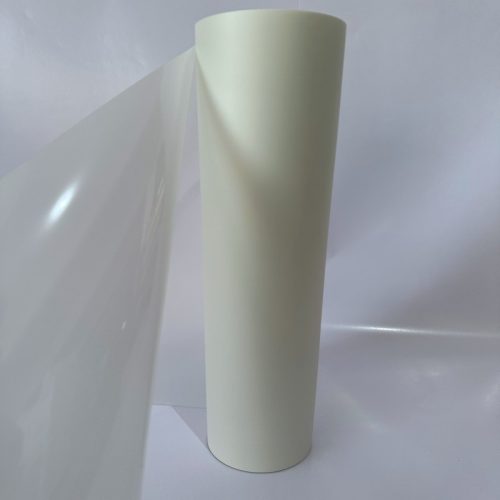
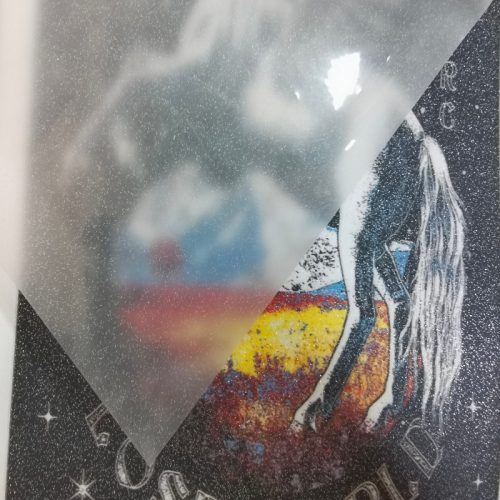
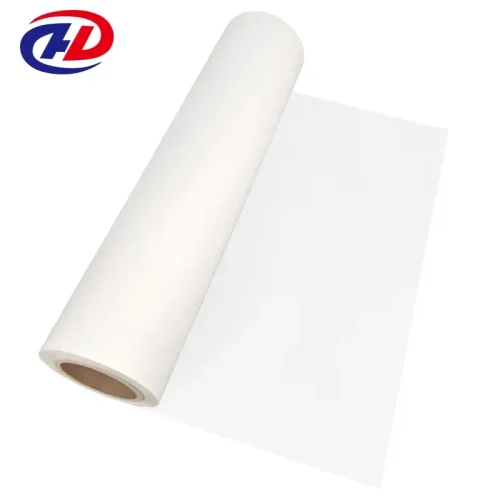
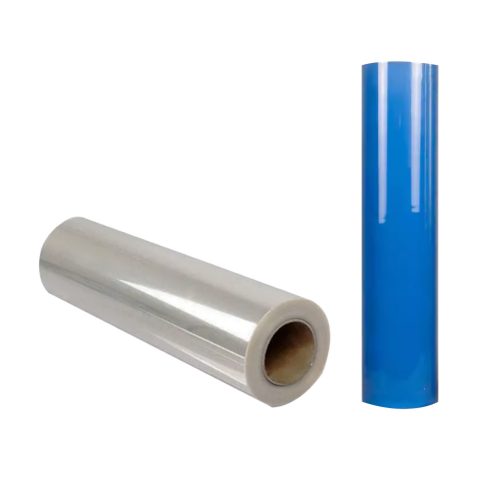
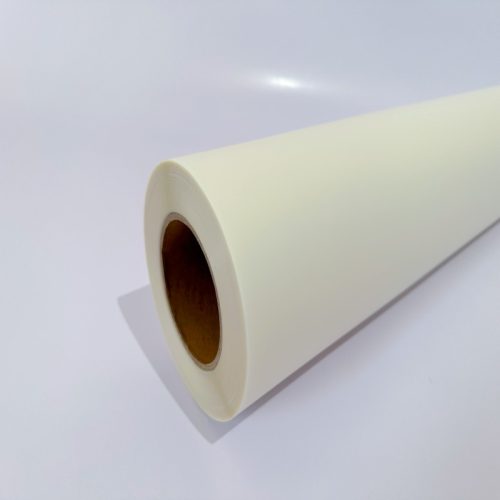
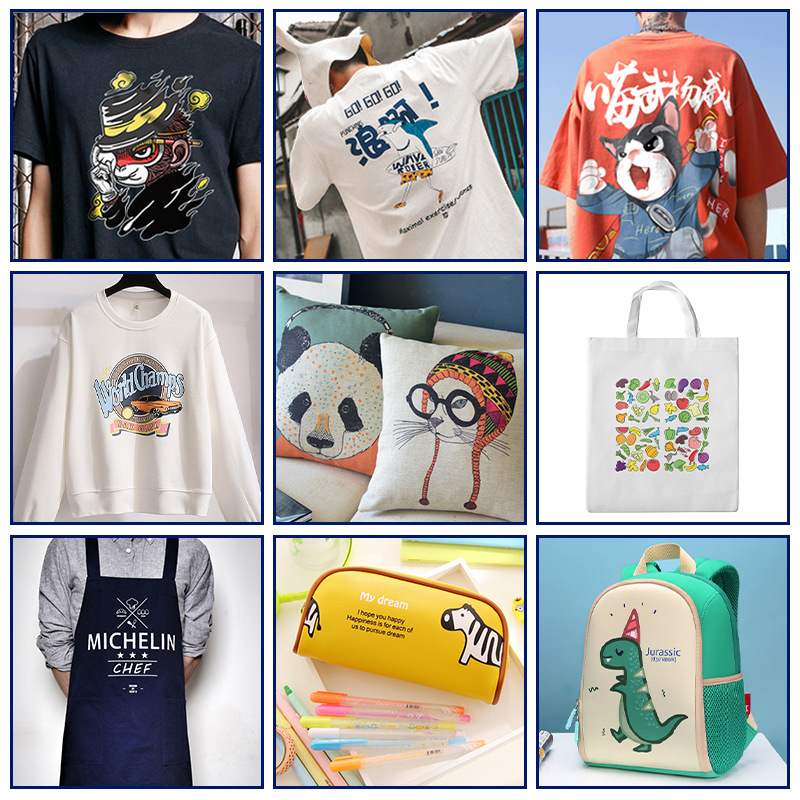
DTF film, also known as DTF transfer film or PET film, is a special film with coating, which is specially used in DTF printing process. It transfers the pattern directly to fabric or other materials through thermal transfer technology, and has the advantages of high definition, bright colors, washability and wear resistance.
HaiYi DTF film Advantages
Bright colors: DTF film can present rich colors, ensuring that the printed pattern is full of color and clear details.
High definition: With advanced printing technology, DTF film can achieve high-precision pattern printing to meet application scenarios with high requirements for details.
Washability and wear resistance: DTF film has good wash fastness and wear resistance, ensuring that the pattern can still maintain clarity and color vividness after multiple washings.
Wide applicability: DTF film is suitable for a variety of fabrics and materials, including pure cotton, polyester, nylon, leather, etc., and can even be used on hard surfaces such as glass, wood and metal.
Personalized customization: DTF film can be customized according to customer needs to meet the market demand for personalized products.
Specifications
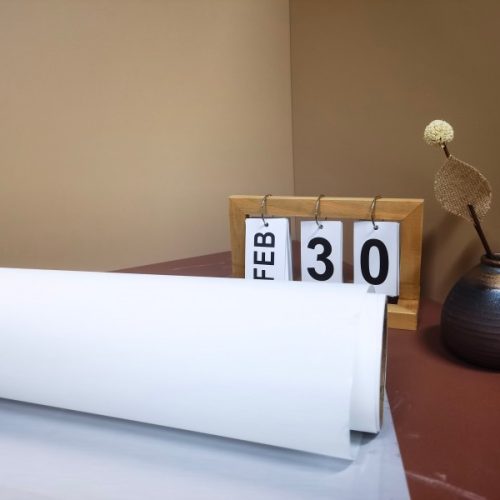
HaiYi DTF film has various specifications. Common width specifications include A3, A4 and specific sizes such as 430MM*40M/roll, 610MM*40M/roll, etc. The length can be customized according to needs. In addition, there are different thicknesses to choose from to adapt to different application scenarios and substrate characteristics.
Applied fabrics
Cotton fabric: It has good moisture absorption and breathability and is a common fabric for T-shirts, shirts and other clothing.
Polyester fabric: It has the characteristics of wear resistance and wrinkle resistance and is often used in sportswear, outdoor clothing, etc.
Nylon fabric: It has the characteristics of high strength, wear resistance and good elasticity, and is suitable for swimsuits, sportswear, etc.
Special fabrics: such as tarpaulin, coated cloth, canvas, flannel, etc. These fabrics have enough time to restore adhesion and flatness after hot pressing, and are suitable for printing with DTF film.
Use process
The use process of DTF film usually includes the following steps:
Design pattern: Use design software to outline the pattern to be printed and adjust it to the appropriate size and resolution.
Printing to film: Print the designed pattern directly onto the DTF film through a DTF printer. During the printing process, it is necessary to ensure that the printer settings match the specifications of the DTF film.
Drying: After printing, let the DTF film dry naturally or use a drying device to accelerate the drying process to ensure that the ink is completely cured.
Preheating and starting: Adjust the temperature of the thermal transfer machine to an appropriate range (usually 140~170°C) and preheat for a period of time to ensure that the machine reaches a stable working state.
Fabric preparation and film alignment: Lay the fabric to be printed flat to ensure that there are no wrinkles and impurities. Then place the DTF film accurately on the fabric with the pattern facing down to ensure that the alignment is correct.
Hot pressing and shaping: Send the fabric and DTF film together into the thermal transfer machine for hot pressing and shaping. The hot pressing time is adjusted according to the specifications of the DTF film and the characteristics of the substrate, usually ranging from a few seconds to tens of seconds.
Cooling and curing: After the hot pressing is completed, let the pattern cool naturally or cool it quickly so that the pattern is more firmly attached to the fabric.
Peel off the film: After cooling, gently peel off the backing layer of the DTF film and you can see that the pattern has been perfectly transferred to the fabric.