







Wie man das Gewicht und die Gleichmäßigkeit der DTF-Filmbeschichtung misst
Ein praktischer Messleitfaden für die Gewichtsmessung und Gleichmäßigkeit von DTF-Filmbeschichtungen, der gravimetrische Proben, passende PET-Referenzproben, Probenahmeraster, Statistiken und die Chargenfreigabe umfasst.

Geschätzte Lesezeit: 13 Minuten
Das Beschichtungsgewicht einer DTF-Folie ist die Trockenmasse einer definierten Beschichtungsschicht, dividiert durch die beschichtete Fläche, und wird üblicherweise in Gramm pro Quadratmeter angegeben. Die Beschichtungsgleichmäßigkeit beschreibt, wie gleichmäßig dieser Wert über die Rollenbreite, entlang der Rollenlänge und zwischen verschiedenen Produktionschargen verteilt ist. Die zuverlässigste Messmethode ist die gravimetrische Differenz zwischen einem fertig beschichteten Coupon und einem entsprechenden unbeschichteten PET-Referenzcoupon gleicher Fläche. Ein sinnvoller Kontrollplan definiert außerdem die Konditionierung, Probenahmestellen, Waagenkapazität, Berechnungen, Abnahmeregeln und eine Funktionsprüfung des Drucks.
Die Dicke der fertigen Folie allein reicht nicht aus, um das Beschichtungsgewicht zu bestimmen. Der Messwert berücksichtigt die PET-Basisfolie, die vordere Farbauftragsschicht und jegliche Behandlungen der Rückseite. Abweichungen in der Basisfolie können größer sein als das vom Käufer gewünschte Beschichtungssignal. Dieser Leitfaden zeigt DTF-Folienherstellern, -händlern, -importeuren, Eigenmarken und Qualitätssicherungsteams, wie sie ein reproduzierbares Messsystem aufbauen, ohne Messschieber, Basismasse und Beschichtungsmasse zu verwechseln.
Was genau sollte gemessen werden?
Vor der Probenentnahme muss die Messgröße definiert werden, also die Größe, die mit der Methode bestimmt werden soll. Oft werden vier zusammenhängende Werte verwechselt:
| Wert | Was es beinhaltet | Typische Verwendung | Wichtigste Einschränkung |
|---|---|---|---|
| PET-Basisdicke | Nur das Kunststoffsubstrat | Zuführung, Steifigkeit, Wärmeverhalten und Basisspezifikation | Misst nicht die Beschichtungsmasse |
| Fertiger Filmmessschieber | PET plus alle Beschichtungen | Schneller Prozesstrend und Rollenvergleich | Ebenen können nicht ohne übereinstimmende Referenzen getrennt werden. |
| Fertige Grundmasse | Gesamtmasse von PET und Beschichtungen pro Flächeneinheit | Wareneingangsidentifizierung und Gesamtmaterialtrend | Nicht gleich dem Beschichtungsgewicht |
| Trockenbeschichtungsgewicht | Definierte Trockenbeschichtungsmasse pro Flächeneinheit (Vorder-, Rückseite oder kombiniert). | Prozesskontrolle der Beschichtung und Produktfreigabe | Benötigt eine gültige Tara- oder Prozessstufenreferenz. |
Bei einseitiger Folie kann die Zielschicht die vordere, tintenaufnehmende Beschichtung sein. Bei doppelseitiger, matter oder antistatischer Folie muss der Käufer angeben, ob der Wert die vordere Schicht, die hintere Schicht oder eine Kombination beider Beschichtungen darstellt. Leitfaden für DTF-Tintenabsorptionsbeschichtungen Die Messspezifikation erläutert die Funktion der Schicht. Sie muss jedoch noch einen Schritt weiter gehen und genau angeben, welche Schicht einbezogen wird.
Warum ist die Gleichmäßigkeit der Beschichtung wichtig?
Eine Walze kann ein akzeptables durchschnittliches Beschichtungsgewicht aufweisen und dennoch ein unzulässiges Muster enthalten. Ein starker Rand und eine schwache Mitte können im Durchschnitt dem Zielwert entsprechen, obwohl sich beide Bereiche beim Drucken unterschiedlich verhalten. Auch eine allmähliche Verschiebung entlang der Maschinenrichtung kann unentdeckt bleiben, wenn das Labor nur eine Stelle nahe der Walzenoberfläche prüft.
Die Beschichtungsverteilung kann die Tintenaufnahme, die Punktverteilung, die Weißtintendeckung, das Pulververhalten, die Trocknung und die Ablösung beeinflussen. Diese Ergebnisse hängen auch von der Chemie, der Oberflächenbehandlung, der Tinte, dem Pulver, den Druckereinstellungen, der Aushärtung, dem Pressvorgang und der Lagerung ab. Das Beschichtungsgewicht ist daher ein Prozessindikator, kein vollständiges Qualitätsurteil. Der Artikel über wie sich die DTF-Beschichtung auf die Druckqualität auswirkt behandelt diese Leistungsbeziehungen; dieser Leitfaden konzentriert sich darauf, wie die Massenverteilung gemessen wird.
Eine aussagekräftige Gleichmäßigkeitsprüfung stellt drei Fragen: Ist das Profil quer zur Bahn von links über die Mitte nach rechts gleichmäßig? Ist der Wert vom Anfang über die Mitte bis zum Ende der Rolle konstant? Entspricht die Charge den freigegebenen Produktvorgaben? Für jede Fragestellung ist ein anderes Probenlayout erforderlich.
Welche Beschichtungsgewichtsmethode ist am praktischsten?
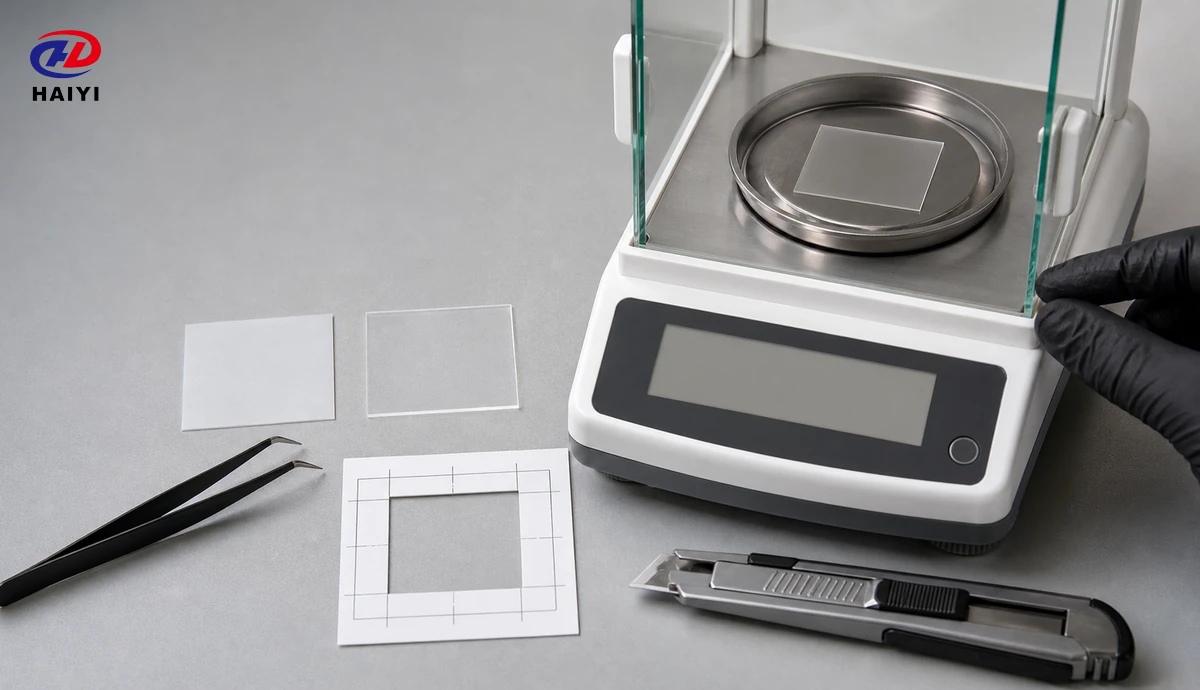
Für die Werksprüfung ist die Differenzmethode mit exakt dimensionierten Proben und einem entsprechenden Taragewicht der direkteste praktische Ansatz. Der beschichtete Coupon und die Referenzprobe müssen hinsichtlich PET-Basismaterialaufbau, Breite, Position, Zustand und Fläche identisch sein. Stammt die Referenzprobe aus einer anderen Charge der Basisfolie, können normale Substratschwankungen fälschlicherweise als Beschichtungsschwankungen interpretiert werden.
Die grundlegende Berechnung lautet:
Beschichtungsgewicht = (Masse des beschichteten Coupons – entsprechende Referenzmasse) / Couponfläche
Um die Masse in Gramm und die Fläche in Quadratmetern zu berechnen, verwenden Sie Gramm für die Masse und Quadratmeter für die Fläche. Haben beide Proben die gleiche Fläche, subtrahieren Sie zunächst ihre Massen und teilen Sie das Ergebnis durch die gemeinsame Fläche. Achten Sie bei der Berechnung auf ausreichend Nachkommastellen und runden Sie erst das Endergebnis gemäß dem Messverfahren.
Wie sieht eine Berechnung des Beschichtungsgewichts aus?
Betrachten wir einen hypothetischen Coupon mit den Maßen 100 mm × 100 mm. Seine Fläche beträgt 0,01 Quadratmeter. Wenn ein fertig beschichteter Coupon eine Masse von 1,57 Gramm und sein entsprechendes PET-Referenzcoupon eine Masse von 1,37 Gramm aufweist, beträgt die Differenz 0,20 Gramm. Dividiert man 0,20 Gramm durch 0,01 Quadratmeter, erhält man 20 Gramm pro Quadratmeter. Dieses Beispiel dient lediglich der Veranschaulichung der Berechnung; es ist kein empfohlenes Ziel für jede DTF-Folie.
Wiederholen Sie die Berechnung für jede kartierte Position, anstatt nach der Untersuchung einen durchschnittlichen Referenzwert abzuziehen. Falls das Basismaterial ein messbares Breitenprofil aufweist, ordnen Sie jeder beschichteten Position die entsprechende Referenzposition zu. Bewahren Sie die ungerundeten Einzelwerte für die statistische Auswertung auf und dokumentieren Sie alle aufgrund von Beschädigung, Verunreinigung oder falscher Fläche zurückgewiesenen Proben.
Diese Methode ist am effektivsten, wenn die Beschichtungslinie Proben aus verschiedenen Prozessphasen liefert. Eine unbeschichtete PET-Probe kann als Referenz für die Gesamtbeschichtung dienen. Eine nach der Vorder- und eine nach der Rückseitenbeschichtung entnommene Probe ermöglichen die Bestimmung der einzelnen Schichten, sofern Prozess und Probenahme einen aussagekräftigen Vergleich zulassen. Sämtliches Referenzmaterial muss bis zum Produktionslauf rückverfolgbar bleiben.
Lässt sich der fertige Film auch ohne unbeschichtete Referenz messen?
Ein Labor kann die Gesamtmasse einer unbekannten Fertigfolie bestimmen, indem es eine bekannte Fläche ausschneidet und wiegt. Dieses Ergebnis ist nützlich für die Produktidentifizierung und Konsistenzprüfung, gibt aber nicht direkt das Gewicht der Beschichtung an. Um die Beschichtungsmasse zu ermitteln, benötigt das Verfahren verlässliche Informationen über die Masse des PET und aller anderen Schichten des Teststreifens.
Eine nominelle PET-Dicke und eine angenommene Dichte ermöglichen zwar eine technische Abschätzung, die Unsicherheit kann jedoch für die Chargenfreigabe zu groß sein. Dickenschwankungen, Messkraft, Oberflächenbeschaffenheit, Dichteschwankungen und die Rückseitenbeschichtung beeinflussen die Abschätzung. Verwenden Sie diesen Ansatz daher nur für Voruntersuchungen, es sei denn, eine Messstudie belegt, dass er die erforderlichen Prozessabweichungen erfassen kann.
Manche Labore erwägen, die Beschichtung zu entfernen und das verbleibende Substrat zu wiegen. Dieses Verfahren sollte jedoch erst nach Validierung für die jeweilige Beschichtung und das PET-System angewendet werden. Lösungsmittel- oder mechanische Entfernungsprozesse können Additive extrahieren, das PET aufquellen lassen, die Rückseitenschicht entfernen, Rückstände hinterlassen oder den Träger beschädigen. Ein nicht validiertes Abstreifergebnis kann zwar präzise erscheinen, aber eine falsche Massenänderung messen.
Wie kann die Nassbeschichtungsaufnahme die Prozesssteuerung unterstützen?
Beim Beschichten kann der Hersteller die Substratmasse vor dem Auftragen mit der Masse unmittelbar nach dem Nassauftrag vergleichen. Die Nassaufnahme pro Fläche kann mit dem gemessenen Feststoffanteil der Beschichtungsmischung kombiniert werden, um das zu erwartende Trockengewicht der Beschichtung abzuschätzen. Die Berechnung erfolgt wie folgt:
Geschätztes Trockenbeschichtungsgewicht = Nassaufnahme pro Fläche x Feststoffanteil der Beschichtung
Dieses Verfahren ermöglicht eine schnelle Reaktion auf Anwendungsänderungen, jedoch ist der Zeitpunkt entscheidend. Da die Verdunstung sofort einsetzt, muss das Intervall zwischen Probenahme und Wägung genau eingehalten werden. Die Beschichtungsmischung muss repräsentativ sein, die Feststoffmessung aktuell und der Coupon darf an den Rändern keine Flüssigkeit verlieren oder Verunreinigungen aufnehmen. Das Ergebnis gibt die Trockenmasse an; es ersetzt jedoch nicht die Überprüfung des fertigen Films, sofern der Zusammenhang nicht nachgewiesen wurde.
Fertigungsübersicht wie DTF-Film hergestellt wird Die Standardarbeitsanweisung (SOP) erläutert, wo im Gesamtprozess die Beschichtung aufgetragen und getrocknet wird. Sie sollte die Nassaufnahme, die Anlageneinstellungen, die Trocknungsbedingungen und die abschließenden gravimetrischen Ergebnisse miteinander verknüpfen, sodass eine Abweichung auf einen bestimmten Prozessschritt zurückgeführt werden kann.
Kann man mit einem Mikrometer das Beschichtungsgewicht messen?
Ein Mikrometer misst die Dicke, nicht die Masse. Misst das Labor ein passendes unbeschichtetes Substrat und einen beschichteten Film unter kontrolliertem Anpressdruck, kann die Differenz der Messwerte als Näherungswert für die Schichtdicke dienen. Um diese Differenz in Masse umzurechnen, benötigt man die Trockendichte der Beschichtung. Eine speziell entwickelte poröse Schicht besitzt jedoch möglicherweise keine einheitliche Schüttdichte, die für alle Produkte konstant ist.
Die mechanische Dickenmessung ist ein anerkanntes Verfahren zur Bestimmung der Dicke von Kunststofffolien, trennt jedoch die Beschichtung nicht automatisch vom PET. Verwenden Sie ein Messgerät mit geeigneten, flachen Kontaktflächen und kontrollieren Sie die Anpresskraft. Scharfe Kanten, zu hoher Druck, Falten, Staub und Messungen an Kanten können das Ergebnis verfälschen. Geben Sie an, ob sich die Spezifikation auf die PET-Basisfolie oder die fertige Folie bezieht. DTF-Filmdickenleitfaden liefert weitere Details zu dieser Unterscheidung.
Messdaten mit dem Messschieber sind wertvoll, wenn sie mit gravimetrischen Ergebnissen korreliert werden. Bewegen sich beide Werte in dieselbe Richtung, kann eine schnelle Dickenmessung helfen, Abweichungen zwischen vollständigen Labortests zu erkennen. Korrelieren sie nicht, sollte nicht eine Methode durch die andere ersetzt werden.
Wie sollten Gutscheine zugeschnitten und gehandhabt werden?
Die Fläche des Coupons fließt direkt in die Berechnung ein, daher führen inkonsistente Abmessungen zu inkonsistenten Ergebnissen. Verwenden Sie eine gewartete Matrize, einen Präzisionsschneider oder eine validierte Schablone, die saubere Kanten ohne Dehnung der Folie erzeugt. Ermitteln Sie die tatsächliche Couponfläche anhand der kontrollierten Abmessungen. Eine größere Fläche führt im Allgemeinen zu einer größeren Differenz zwischen Beschichtung und Masse und kann das Signal im Verhältnis zur Waagenauflösung verbessern, vorausgesetzt, die Probe bleibt repräsentativ und einfach zu handhaben.
Verwenden Sie zum Anfassen der Coupons saubere Handschuhe oder eine antistatische Pinzette. Fingerabdrücke, Puder, Staub, lose Fasern, Tinte und Feuchtigkeit erhöhen das Gewicht. Beschriften Sie nicht den Testbereich. Bewahren Sie jeden Coupon in einem sauberen, gekennzeichneten Behälter auf und schützen Sie die beschichtete Oberfläche vor Abrieb. Falls die Folie statisch aufgeladen ist, neutralisieren Sie sie vor dem Wiegen mit einem zugelassenen Verfahren und vergewissern Sie sich, dass die Behandlung den Zustand der Probe nicht verändert.
Beschichtete und Referenzproben werden gemeinsam unter denselben dokumentierten Bedingungen konditioniert. Das Verfahren sollte Temperatur, relative Luftfeuchtigkeit, Konditionierungszeit und die maximale Zeitspanne zwischen Konditionierung und Wiegen festlegen. Die Waagentüren werden geschlossen, bis sich eine stabile Anzeige ergibt, und für jeden Coupon wird die gleiche Tara-Prozedur angewendet.
Welche Ausgleichsfähigkeit wird benötigt?
Die zu erwartende Differenz der Beschichtungsmasse bestimmt die erforderliche Waagenleistung. Berechnen Sie die ungefähre Massendifferenz für die gewählte Probenfläche, bevor Sie ein Messgerät auswählen. Ablesbarkeit, Wiederholgenauigkeit, Linearität und Umweltstabilität der Waage müssen im Verhältnis zur Prozessstreuung und dem vom Labor zu erfassenden Toleranzbereich ausreichend gering sein.
Eine Waage mit vielen angezeigten Stellen ist nicht automatisch geeignet. Luftbewegungen, Vibrationen, statische Aufladung, Temperaturänderungen, ein instabiler Unterbau und Probenbewegungen können die letzten Stellen beeinflussen. Überprüfen Sie den Kalibrierungsstatus, verwenden Sie geeignete Kontrollgewichte, nivellieren Sie das Instrument und überwachen Sie die Wiegeumgebung. Eine einfache Messsystemstudie sollte wiederholte Messungen desselben Probenkörpers, das Entnehmen und Wiedereinsetzen des Probenkörpers, die Durchführung durch mehrere Bediener sowie stabile Kontrollproben umfassen.
Ist das Messrauschen zu hoch, verbessern Sie die Umgebungsbedingungen, vergrößern Sie die Probenfläche, optimieren Sie die Handhabung oder verwenden Sie ein leistungsfähigeres Messgerät. Eine schlechte Wiederholgenauigkeit darf nicht durch Mittelung vieler instabiler Messwerte verschleiert werden. Der Abschlussbericht sollte die Waagenbezeichnung, die Auflösung, den Kalibrierungsstatus sowie alle für die Entscheidung relevanten Messunsicherheiten oder Methodenbeschränkungen enthalten.
Wie sollte ein Probenahmeraster zur Überprüfung der Beschichtungsgleichmäßigkeit gestaltet sein?
Eine praxisorientierte Rollenstudie kombiniert Messungen quer zur Bahn und in Maschinenrichtung. Quer zur Bahn sollten mindestens die linke, mittlere und rechte Zone beprobt werden, wobei beschädigte Beschnittkanten ausgespart werden, es sei denn, die Kantenqualität wird explizit untersucht. Längs zur Rolle sollten Positionen erfasst werden, die Anfang, Mitte und Ende repräsentieren. Dadurch entsteht ein Raster mit neun Zellen, anhand dessen das Team feststellen kann, ob die Abweichungen von der Breite, der Laufzeit oder beidem abhängen.
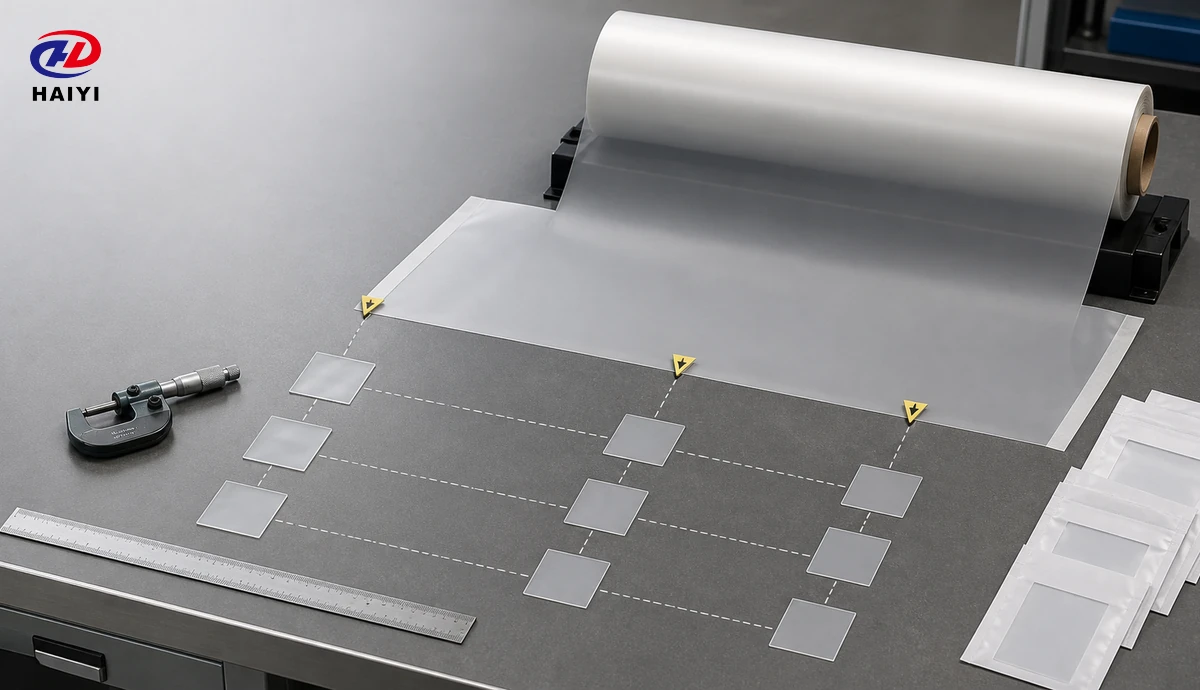
Das Raster kann erweitert werden, wenn Risiko, Breite, Produktionshistorie oder Kundenanforderungen zusätzliche Positionen rechtfertigen. Für die routinemäßige Chargenfreigabe darf ein reduzierter Plan erst dann verwendet werden, wenn die vollständige Studie die Repräsentativität der ausgewählten Standorte bestätigt. Die Beziehungen zwischen Coupon, Jumborolle, Schlitzrolle, Bahnseite, Maschinenrichtung und Produktionszeit müssen erhalten bleiben.
Die Probenplatzierung sollte eine klar definierte Fragestellung beantworten. Eng beieinander liegende Coupons geben Aufschluss über die lokale Wiederholbarkeit. Weit auseinander liegende Positionen geben Aufschluss über die Gleichmäßigkeit der Walzen. Coupons von mehreren Walzen geben Aufschluss über die Variation innerhalb einer Charge. Proben aus verschiedenen Chargen geben Aufschluss über die Reproduzierbarkeit zwischen verschiedenen Chargen. Werden alle Werte in einer unbeschrifteten Liste zusammengefasst, geht das Muster verloren, das die Studie eigentlich aufdecken soll.
Welche Gleichmäßigkeitsberechnungen sind sinnvoll?
Beginnen Sie mit dem Mittelwert, Minimum, Maximum, der Spannweite und der Standardabweichung der definierten Stichprobe. Der Variationskoeffizient gibt die Standardabweichung als Prozentsatz des Mittelwerts an und ermöglicht relative Vergleiche, wenn der Mittelwert positiv ist und dieselbe Methode angewendet wird. Geben Sie sowohl die Einzelwerte als auch die zusammenfassenden Statistiken an, damit Positionsmuster erkennbar bleiben.
| Berechnung oder Ansicht | Was es offenbart | Was es verpassen kann |
|---|---|---|
| Bedeuten | Gesamtbeschichtungsgrad | Gegenüberliegende Hoch- und Tiefzonen können sich aufheben. |
| Reichweite | Gesamtstreuung im Stichprobenset | Zeigt nicht, wo die Variation aufgetreten ist. |
| Standardabweichung | Gesamtstreuung um den Mittelwert | Kann ein systematisches Breitenprofil verbergen |
| Variationskoeffizient | Relative Streuung für vergleichbare Datensätze | Kann irreführend sein, wenn sich Methoden oder Mittel unterscheiden |
| Webübergreifendes Profil | Links-Mitte-Rechts-Tendenz | Zeigt keine Veränderung entlang der Rollenlänge |
| Laufdiagramm | Drift, Sprungänderungen und Zyklen im Laufe der Zeit | Benötigt nachvollziehbare Sequenzinformationen |
Verwenden Sie die prozentuale Gleichmäßigkeit nicht ohne Angabe der Formel. Verschiedene Teams berechnen möglicherweise die prozentuale Spannweite, die Abweichung vom Zielwert oder den Variationskoeffizienten und verwenden für alle drei die gleiche Bezeichnung. Geben Sie die Formel, die Einheiten, die Stichprobengröße und die einbezogenen Positionen im Bericht an.
Wie sollten Akzeptanzkriterien festgelegt werden?
Es gibt keine universelle Zielvorgabe für die Beschichtungsstärke oder eine Toleranz für die Gleichmäßigkeit, die für alle DTF-Folien gilt. Heiß-, Warm- und Kaltabziehfolien, einseitig, doppelseitig matt, druckerspezifische und kundenspezifische Produkte können unterschiedliche Beschichtungsarchitekturen aufweisen. Die Akzeptanzgrenzen sollten sich aus der genehmigten Produktspezifikation und einer Methode ergeben, die mit der Druck- und Transferleistung korreliert ist.
Ermitteln Sie eine Basislinie anhand von Entwicklungs- oder freigegebenen Produktionschargen, die den vollständigen Anwendungstest bestehen. Messen Sie das Beschichtungsgewicht gemäß der vorgesehenen Standardarbeitsanweisung (SOP), erfassen Sie die Gleichmäßigkeit und verknüpfen Sie die Daten gegebenenfalls mit Farbauftrag, Detailgenauigkeit, Pulveraufnahme, Aushärtungsverhalten, Schälverhalten, Aussehen, Haftung und Waschbeständigkeit. Leitfaden zur Qualitätskontrolle beim DTF-Druck erklärt, warum Filmdaten zusammen mit anderen Prozessvariablen interpretiert werden müssen.
Eine Regel für die Chargenfreigabe sollte Mittelwert und Lageverteilung berücksichtigen. Sie kann auch Warnschwellenwerte enthalten, die eine Überprüfung auslösen, bevor ein formeller Fehler auftritt. Definieren Sie die Aktionen „bestanden“, „zurückstellen“ und „nicht bestanden“, einschließlich Wiederholungstestregeln. Wiederholte Tests sollten nicht dazu dienen, nach einem unerklärlichen Fehler ein positives Ergebnis zu erzielen.
Wie sollten abnormale Befunde untersucht werden?
Ein niedriger Wert über die gesamte Breite kann auf Probleme mit der Auftragsrate, dem Feststoffgehalt, der Referenzauswahl, der Trocknung oder der Berechnung hinweisen. Ein hoher Wert über die gesamte Breite kann auf die entgegengesetzte Richtung oder Verunreinigungen hindeuten. Ein durchgehend hoher Wert an einer Kante kann auf Probleme mit der Materialzufuhr quer zur Bahn, Lücken, der Ausrichtung oder dem Kantenfluss hinweisen. Eine allmähliche Änderung entlang der Walze kann auf Viskosität, Feststoffgehalt, Temperatur, Geschwindigkeit, Druck oder Trocknungsdrift zurückzuführen sein.
Vor Produktionsanpassungen die Messung überprüfen. Prüfen Sie die Couponfläche, die Probenidentität, die Tara-Auswahl, den Nullpunkt der Waage, die statischen Eigenschaften, die Konditionierung, die Handhabung, die Rezeptur, die Einheiten und die Dateneingabe. Wiegen Sie denselben Coupon erneut und testen Sie eine zurückbehaltene Kontrollprobe. Wenn das Messsystem stabil ist, überprüfen Sie die Beschichtungs- und Trocknungsaufzeichnungen der jeweiligen Walzenposition.
Daten zum Beschichtungsgewicht sollten nicht zur Diagnose jeder Ablöseproblematik herangezogen werden. Das Ablöseverhalten hängt auch von der Beschichtungschemie und dem gesamten Druckübertragungsprozess ab. Verwenden Sie die Leitfaden zur Prüfung der Ablösekraft von DTF-Filmen wenn es um die Schälkraft, die Kurvenabweichung oder die Konsistenz des Ablösefensters geht.
Was sollte ein Chargenbeschichtungsbericht enthalten?
Ein aussagekräftiger Bericht ermöglicht es einer anderen qualifizierten Person, die Messungen nachzuvollziehen und die Entscheidung zu wiederholen. Er sollte Produktcode, Beschichtungsaufbau, Chargen- und Rollenidentifikation, Produktionsdatum, Probenpositionen, Couponfläche, Referenzmaterial, Konditionierung, Waage, Bediener, Methodenrevision, Einzelmassen, berechnete Beschichtungsgewichte, zusammenfassende Statistiken, Akzeptanzgrenzen, Abweichungen und die endgültige Entscheidung enthalten.
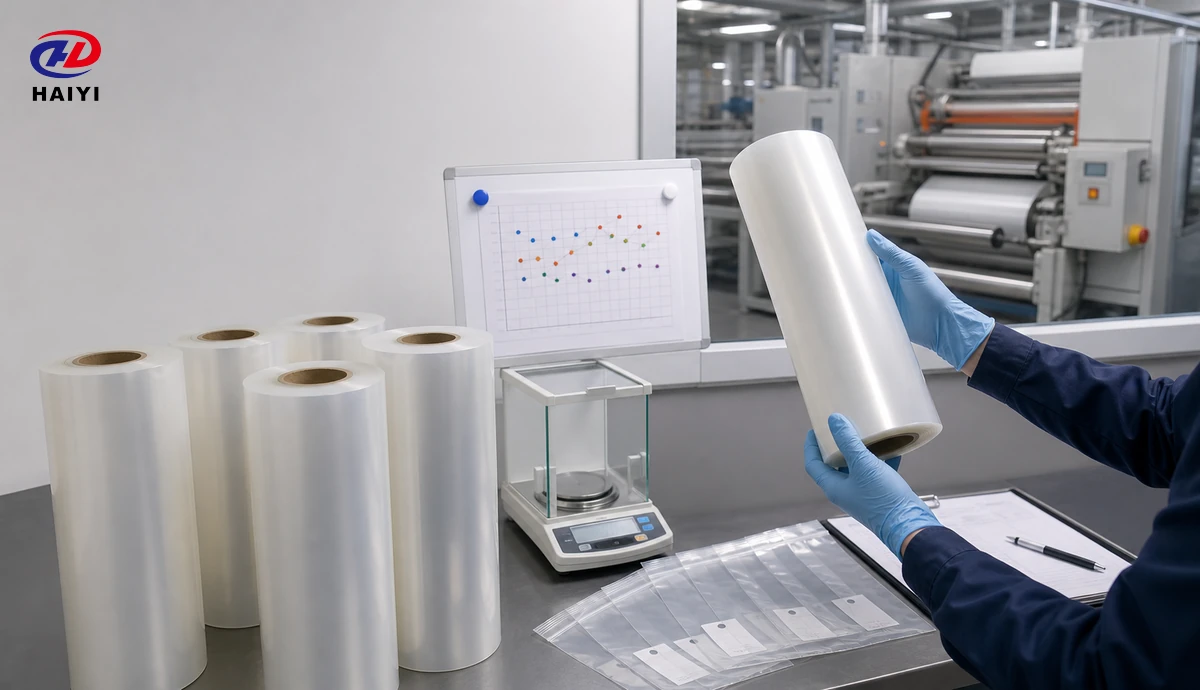
Wenn möglich, sollten repräsentative Filmstreifen von denselben Standorten aufbewahrt werden. Eine solche Probe dient der späteren Untersuchung, falls ein Händler nach der Auslieferung eine Abweichung meldet. Die Aufzeichnungen sollten das Testergebnis mit geschnittenen Rollen und Kundenchargen verknüpfen. Diese Rückverfolgbarkeit ermöglicht es dem Hersteller außerdem, festzustellen, welcher Bestand von einer Prozessabweichung betroffen ist.
Erkundigen Sie sich während der Lieferantenqualifizierung, wie das Werk Referenzen, Waagen, Kalibrierung, Probenidentifikation, Berechnungen, nichtkonformes Material und Änderungsfreigabe kontrolliert. Checkliste für die Lieferantenprüfung von DTF-Filmen bietet einen umfassenderen Rahmen für die Überprüfung dieser Systeme.
Wie sollten Händler Beschichtungsdaten nutzen?
Händler müssen nicht jeden Werkslabortest reproduzieren, sollten aber die Methodik hinter einem Zertifikat verstehen. Fragen Sie nach, ob ein angegebener Wert die Vorder-, Rückseiten-, Gesamt- oder Fertigmasse der Beschichtung abdeckt. Bestätigen Sie Probenahmestellen, Einheiten, Methodenrevision und Akzeptanzkriterien. Ein einzelner Durchschnittswert ohne Angabe der Probenahmeanzahl oder Walzenpositionen liefert nur bedingt Belege für die Gleichmäßigkeit.
Für die Wareneingangskontrolle ist eine freigegebene Referenzrolle bereitzuhalten und ein reduzierter Prüfplan mit Bezug zur Chargenidentität anzuwenden. Dieser umfasst Sichtprüfung, Prüfung der fertigen Basismasse oder ausgewählter Beschichtungen, Trendmessung mit dem Messschieber und einen kontrollierten Drucktest. Der Prüfplan ist zu verschärfen, wenn ein neuer Lieferant, eine neue Rezeptur, eine geänderte PET-Basis, eine neue Beschichtungslinie, ein ungewöhnliches Ergebnis oder eine Kundenreklamation das Risiko erhöht.
Bei Private-Label-Programmen sollte klar definiert sein, wer die Spezifikationen festlegt, Änderungen genehmigt, Chargenberichte prüft und Muster aufbewahrt. Der Leitfaden dazu Private-Label-DTF-Film für Vertriebshändler erläutert, wie die technische Steuerung mit Markenbildung, Verpackung, Bestellwesen und wiederkehrender Belieferung zusammenhängen sollte.
Häufig gestellte Fragen
Entspricht das Beschichtungsgewicht der DTF-Filmdicke?
Nein. Das Beschichtungsgewicht ist die Masse pro beschichteter Fläche. Die fertige Dicke umfasst die PET-Basis und alle Beschichtungsschichten. Eine Dickendifferenz kann erst nach Korrelation und Validierung des Messsystems als sinnvoller Näherungswert dienen.
Kann ein Käufer das Beschichtungsgewicht anhand eines fertigen Probestücks berechnen?
Ein Käufer kann die fertige Flächenmasse anhand eines Probenstücks bekannter Fläche berechnen. Die direkte Beschichtungsgewichtsbestimmung erfordert eine gültige PET- oder Prozessstufenreferenz oder eine andere validierte Trennmethode.
Sollte für einseitige und doppelseitige Mattfolie die gleiche Methode verwendet werden?
Das gleiche gravimetrische Prinzip kann angewendet werden, jedoch ist die Messgröße eine andere. Da Dual-Matte-Folie eine Rückseitenschicht besitzt, muss die Standardarbeitsanweisung (SOP) angeben, ob die Masse der Vorder-, Rückseiten- oder der kombinierten Beschichtung angegeben wird.
Wie viele Positionen sollten gemessen werden?
Die Anzahl hängt von der Rollenbreite, dem Prozessrisiko, der Methodenleistung, den Spezifikationen und der jeweiligen Entscheidung ab. Ein Raster von links nach mittig nach rechts bzw. von Anfang nach Mitte nach Ende ist eine praktische Charakterisierungsmethode, aber kein universelles Minimum für jeden Freigabeplan.
Ist eine gleichmäßige Beschichtung automatisch eine hochwertige Beschichtung?
Nein. Auch bei gleichmäßiger Applikation können die falsche chemische Zusammensetzung oder Beschichtungsstärke verwendet werden. Für die Zulassung müssen Daten zur Gleichmäßigkeit mit Prüfungen zu Druck, Aushärtung, Transfer, Trennverfahren und Haltbarkeit, die für das jeweilige Produkt relevant sind, kombiniert werden.
Erstellen Sie eine messbare DTF-Folien-Großhandelsspezifikation
Haiyi bietet Großhandel und kundenspezifische DTF-Folien für Distributoren, Importeure, Hersteller von Druckverbrauchsmaterialien, Verarbeiter und Großabnehmer. Individuelle Programme koordinieren Folienformat, Ablöseverhalten, Beschichtungsaufbau, Rollen- oder Bogenabmessungen, Verpackung, Etiketten, Eigenmarken, Musterfreigabe und Chargendokumentation gemäß den bestätigten Geschäftsanforderungen.
Für ein neues B2B-Programm benötigen wir von Haiyi Informationen zu Druckerplattform, Tinten- und Pulversystem, Folienbreite und -länge, Präferenz für ein- oder beidseitige Mattierung, Abziehart, monatlichem Volumen, Zielmarkt, Verpackungsplan und Anforderungen an Qualitätsberichte. Haiyi erstellt Ihnen gerne passende DTF-Folienmuster und bespricht mit Ihnen eine Großhandels- oder kundenspezifische Spezifikation mit definierten Beschichtungs- und Leistungskontrollen. Besuchen Sie die Haiyi-Website, um Muster, technische Informationen, OEM-Verpackungen oder ein Händlerangebot anzufordern.