

UV DTF Crystal Labels: Applications, Surfaces, and Buying Guide
Learn how UV DTF crystal labels work, which hard surfaces suit them, how to apply them, and what wholesale buyers should inspect.

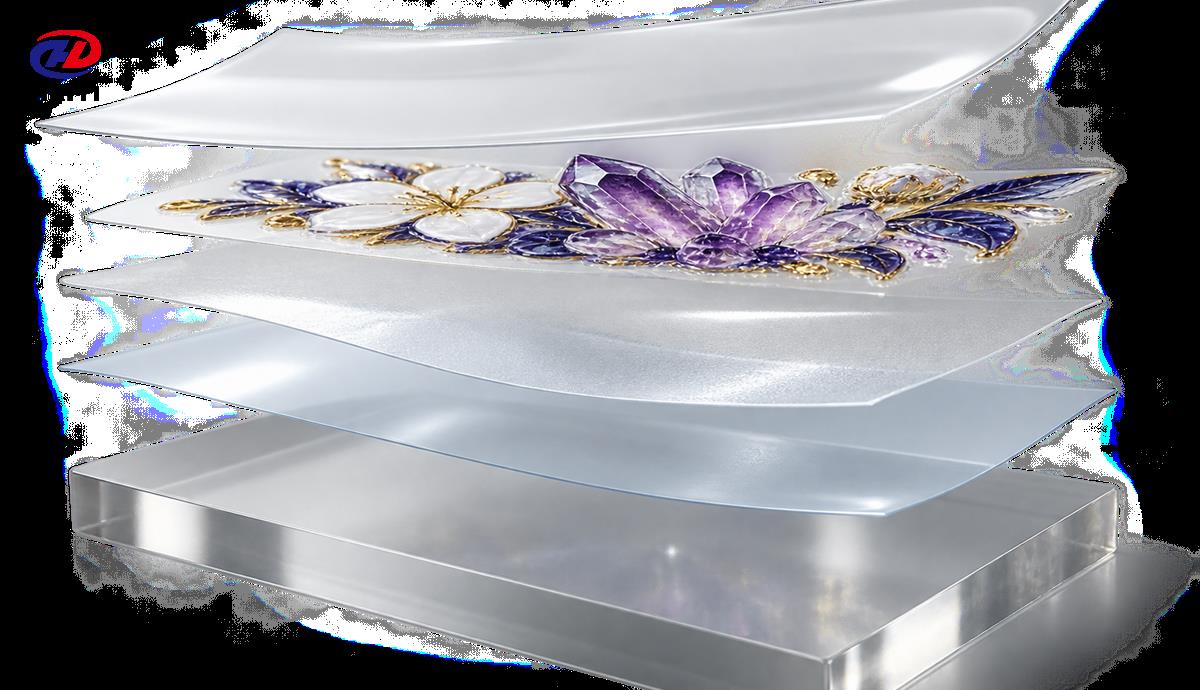
UV DTF crystal labels are full-color, slightly raised transfers for smooth, rigid products. A design is printed with UV-curable ink on A film, laminated with B film, and applied by pressure to glass, metal, ceramic, acrylic, or compatible hard plastic. No heat press and no weeding are required, but surface preparation, film compatibility, and careful application determine adhesion and appearance.
What Are UV DTF Crystal Labels?
UV DTF crystal labels are also called UV transfer stickers, UV DTF decals, or crystal stickers. The finished decoration contains the printed color, white underbase where required, protective varnish, and pressure-sensitive adhesive. Transparent gaps in the artwork remain open, so a detailed logo can appear directly on the product without a visible rectangular label background.
UV DTF should not be confused with textile DTF. Standard DTF uses hot-melt powder and a heat press to bond a flexible design to fabric. UV DTF uses UV-cured ink and a pressure-sensitive transfer system for rigid objects. For a broader introduction, read what UV DTF film is.
How Do A Film and B Film Work Together?
A film receives the printed design and holds it through UV curing. B film laminates over the cured print, supports the design during handling, and carries it to the final surface. The two films have different coating, release, and adhesion functions; they are not interchangeable.
Which Surfaces Are Suitable for Crystal Labels?
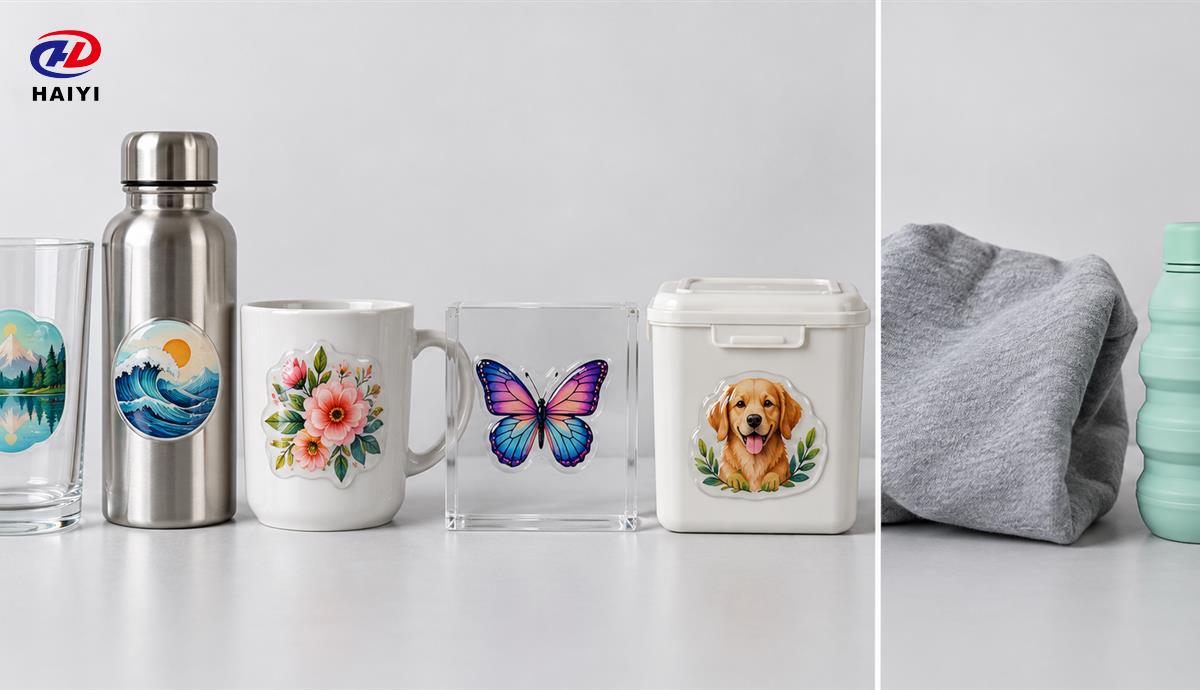
The best candidates are smooth, clean, dry, rigid, and non-porous. Typical uses include drinkware, cosmetic containers, glass bottles, metal tools, acrylic displays, hard plastic housings, ceramic items, packaging accents, and promotional products. A test is still necessary because coatings, plasticizers, release agents, waxes, and low-surface-energy plastics can reduce adhesion.
| Surface condition | Expected suitability | Buyer action |
|---|---|---|
| Smooth glass, metal, acrylic, ceramic | Generally strong when clean | Degrease, dry, and test the complete design |
| Painted or coated product | Depends on coating bond and chemistry | Test adhesion without damaging the finish |
| Textured, porous, dusty, or oily surface | Higher risk of incomplete contact | Select another method or qualify carefully |
| Fabric, silicone, rubber, flexible item | Usually unsuitable for rigid UV-cured graphics | Use a textile or flexible-decoration process |
What Advantages Do UV Transfer Stickers Offer?
UV DTF supports full color, fine details, gradients, white ink, and a raised varnish effect without contour cutting every internal element. Separate letters and small shapes stay aligned on the carrier during application. These properties make crystal labels useful for short runs, multiple SKUs, personalized products, prototypes, and irregular objects that are difficult to print directly.
The process also has limits. The cured graphic has a firmer hand than a textile transfer, aggressive scraping can damage it, and permanent adhesion depends on the surface. Drinkware should be evaluated for its real cleaning conditions; harsh chemicals, soaking, high heat, and dishwasher cycles can shorten service life. Do not advertise universal outdoor, dishwasher, food-contact, or chemical resistance without product-specific evidence.
How Should Artwork Be Prepared?
Use a transparent background when the product surface should show through. Supply high-resolution raster artwork or clean vector files, check small text and isolated elements, and include enough separation for cutting individual decals. White underbase and varnish behavior should be previewed on the actual product color because transparency and gloss change perceived color.
How Are UV DTF Crystal Labels Applied?
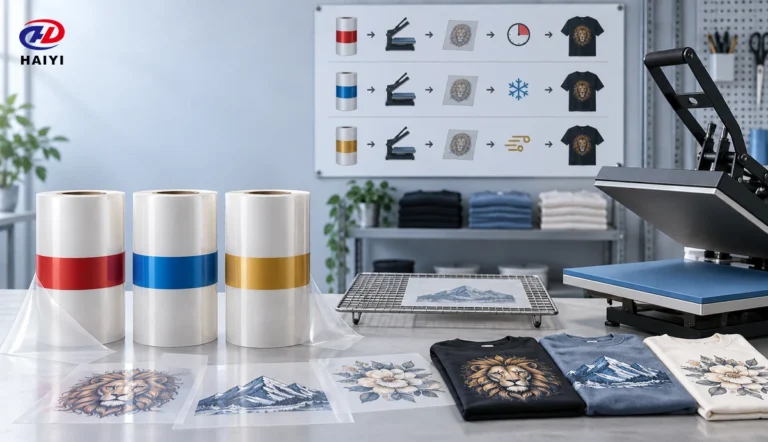
- Clean the surface to remove dust, oil, wax, fingerprints, and moisture.
- Position the transfer before the adhesive touches the product.
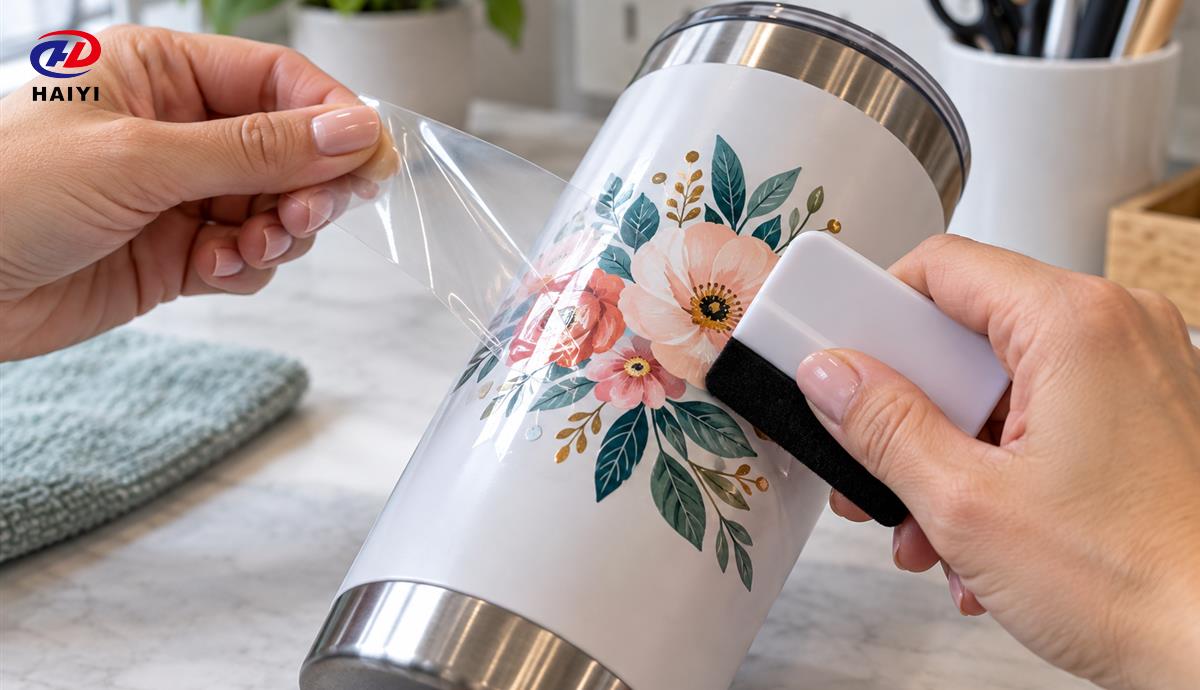
- Lower one edge and apply firm, even pressure from the center outward.
- Burnish detailed areas with a suitable squeegee.
- Peel the carrier back slowly at a shallow angle.
- If a detail lifts, return the carrier, press again, and re-peel rather than pulling harder.
What Quality Problems Should Buyers Check?
Inspect print sharpness, white-to-color registration, varnish uniformity, unwanted adhesive around the artwork, bubbles, wrinkles, A-to-B release, final transfer completeness, edge lift, odor, roll flatness, and storage stability. Test small text and isolated dots because they reveal release and adhesion weaknesses sooner than large solid graphics.
Wholesale buyers should qualify the film with their printer, UV ink, curing intensity, laminator, artwork style, and target surfaces. The UV DTF quality standards guide provides an importer-focused inspection framework, while the UV DTF film satın alma rehberi covers formats and supplier comparison.
How Can Haiyi Support Custom UV DTF Film Programs?
Haiyi provides wholesale and customizable transfer-film solutions for distributors, printers, and private-label customers. Haiyi ile iletişime geçin with your printer type, A/B film format, roll or sheet size, UV ink system, laminator, target surfaces, packaging needs, and forecast volume to arrange compatibility samples and a purchasing plan.