
5 Garment Printing Methods Compared: DTF, Screen, DTG, HTV, and Sublimation
Compare five garment printing methods by fabric, artwork, order mix, setup, hand feel, durability, personalization, and accepted-piece cost.

Reading time: 10 minutes
The five mainstream garment printing methods are direct-to-film (DTF), screen printing, direct-to-garment (DTG), heat transfer vinyl (HTV), and dye sublimation. No method is best for every order. The correct process is the one that matches the garment fiber and color, artwork, quantity per identical design, personalization, required hand feel, performance standard, equipment, and total accepted-piece cost.
This guide gives apparel buyers, print shops, distributors, and brand teams a decision framework. It also explains why fixed quantity rules often fail: a 500-piece order with 500 names is structurally different from 500 identical one-color shirts.
How do the five garment printing methods differ?
| Yöntem | How the image reaches the garment | Strongest fit | Ana sınırlama |
|---|---|---|---|
| DTF | Digital image is printed on coated film, powdered, cured, and heat pressed | Full color, mixed fabrics, short and variable runs, transfers produced in advance | Transfer layer can affect hand and breathability on large solid areas |
| Serigrafi baskı | Ink passes through a prepared mesh stencil directly onto the garment | Stable bulk runs, spot colors, controlled ink deposits and specialty effects | Setup increases with colors, designs, and changes |
| DTG | Inkjet prints directly onto a prepared garment | Detailed short-run graphics, especially on suitable cotton garments | Garment pretreatment, fabric limits, and one-at-a-time printing affect workflow |
| HTV | Colored film is cut, weeded, positioned, and heat pressed | Names, numbers, simple logos, small quantities, special vinyl finishes | Detailed or multi-color artwork increases cutting, weeding, and layering time |
| Süblimasyon | Heat turns dye into gas that bonds with polyester or a polymer coating | Light polyester, sportswear, all-over patterns, soft no-layer feel | No white ink and limited performance on dark or low-polyester garments |
What is DTF printing best for?
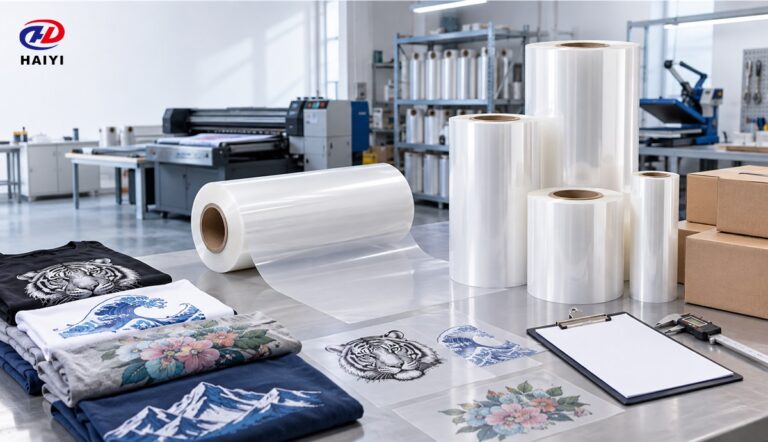
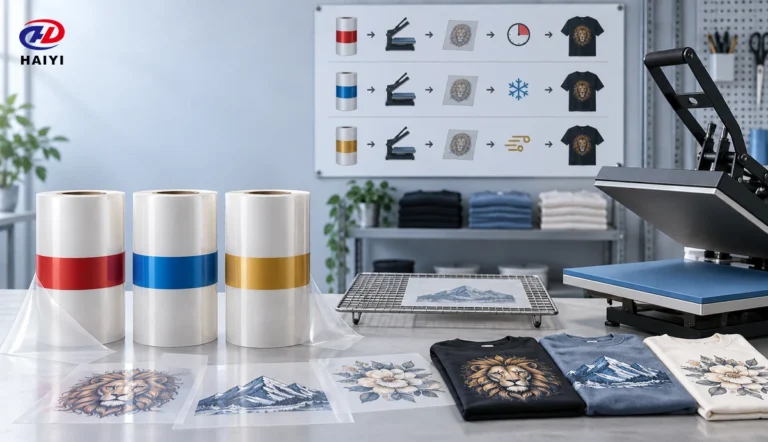
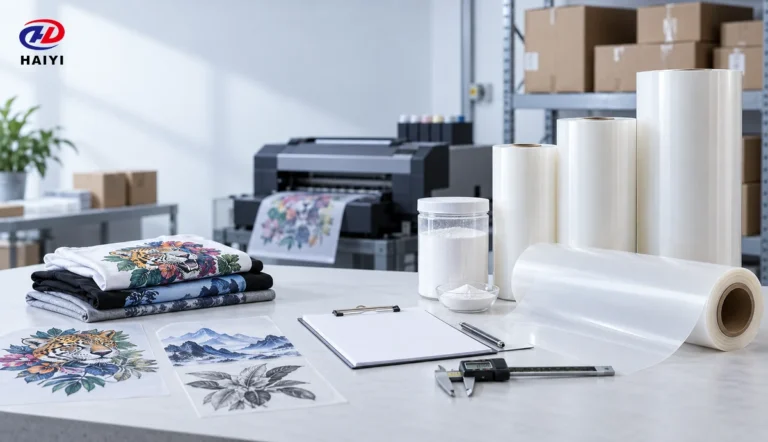
DTF is best for orders that combine full-color artwork, short or medium runs, frequent design changes, dark and light garments, mixed fabric types, or personalization. The image is created on transfer film, so printing and garment application can be separated in time and location.
DTF reduces artwork-dependent setup because a multi-color image does not need a physical screen for every color. Gang sheets can combine many designs on one film width. The process still requires control of the film coating, ink, white layer, powder, cure, heat press, peel timing, and garment. A digital file alone does not guarantee a durable transfer.
DTF is less attractive when a very large solid graphic requires an extremely soft or breathable hand, when a long identical run strongly favors screen-print economics, or when the garment cannot tolerate the application heat. For the complete material and approval decision, read Haiyi’s DTF film buying guide.
What is screen printing best for?
Screen printing is best for repeatable production of one design when setup can be spread over many pieces. Each color normally requires its own separation, screen, registration, and ink station. After setup and approval, a suitable press can reproduce the design efficiently.
The process offers broad control over ink deposit and special effects, but its economics weaken when orders contain many unrelated designs, frequent changes, or one-off personalization. Screen printing and DTF are often complementary. Haiyi’s focused DTF vs screen printing comparison explains the cost and order-structure decision in more detail.
What is DTG printing best for?
DTG is best for detailed digital artwork on garments that are compatible with the ink and pretreatment system, commonly cotton-rich products. The image is printed directly onto the garment, which can create a soft result when the artwork, fabric, ink deposit, pretreatment, and cure are well controlled.
DTG avoids transfer film and powder, but it introduces garment pretreatment and direct garment loading. Fabric surface, absorbency, lint, garment color, pretreatment uniformity, and cure all affect the result. It is usually strongest in short runs and print-on-demand workflows where each garment can move through the printer without screen setup.
What is HTV best for?
HTV is best for simple names, numbers, lettering, logos, and specialty finishes in small quantities. A cutter creates the design from colored vinyl, unwanted material is weeded away, and the remaining shape is heat pressed onto the garment.
HTV is accessible and predictable for bold shapes, but detailed artwork, tiny elements, many colors, and large quantities add labor. Every color may require separate material, cutting, weeding, alignment, and pressing. HTV should not be confused with printed DTF film; Haiyi’s guide to the difference between DTF film and heat transfer vinyl explains the material and workflow distinction.
What is sublimation best for?
Dye sublimation is best for white or light polyester garments and polymer-coated products. Heat converts the dye into gas, and the dye bonds within the polymer. On suitable fabric, the result has no added surface layer, preserves breathability, and supports vivid all-over patterns.
Sublimation has no white ink, so the garment color becomes part of the image. It is not the normal choice for dark cotton. Polyester content, coating, heat tolerance, color management, and migration behavior must be approved. The DTF vs sublimation guide gives a more detailed business comparison.
Which printing method fits each fabric?
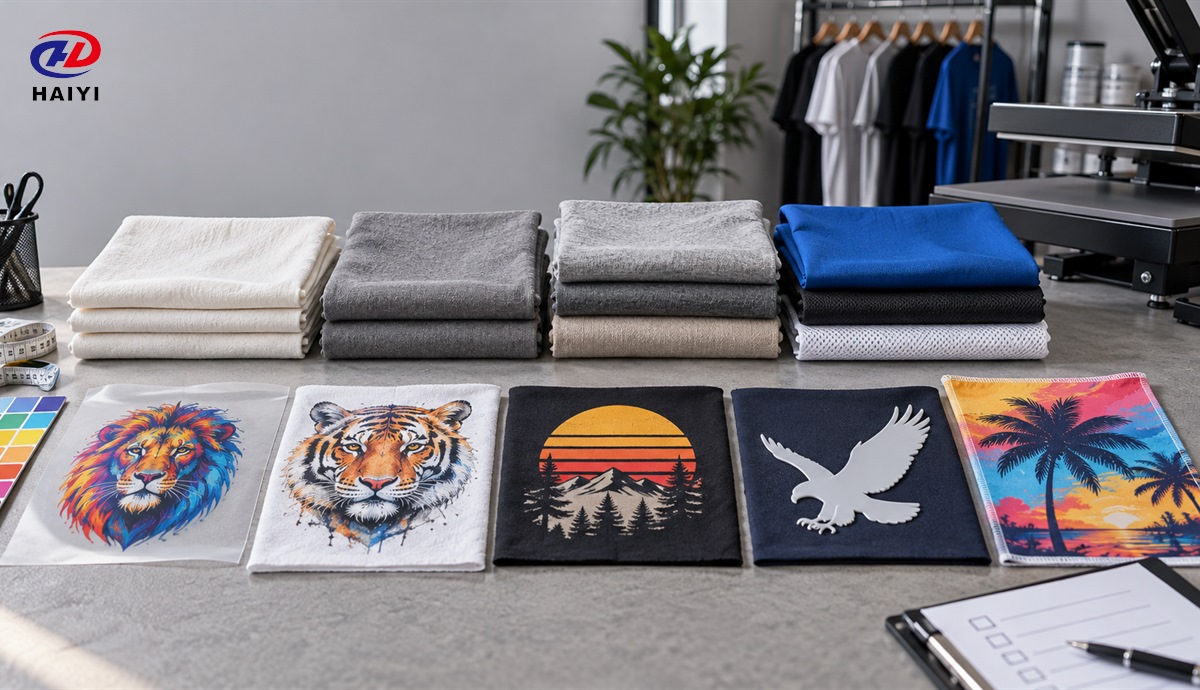
The fabric specification should be the first filter. DTF can work across cotton, polyester, and blends when the complete system is tested. DTG commonly favors suitable cotton-rich garments. Sublimation requires sufficient polyester or a compatible polymer coating and normally a light base. Screen-print inks and HTV materials must be selected for the fabric, stretch, finish, and cure or press condition.
Do not approve by fiber label alone. A black polyester shirt may migrate dye under heat. A coated nylon bag may resist adhesive. A stretch blend may recover differently after washing. A heavy seam may prevent uniform pressure. Test the actual garment color, construction, finish, and supplier lot.
Which method fits complex artwork?
DTF and DTG usually simplify photographs, gradients, fine detail, and many colors because both are digital. Sublimation also reproduces complex color well on its compatible light polyester base. Screen printing can reproduce sophisticated artwork, but separation, screens, registration, and production skill rise with complexity. HTV is usually most efficient for clean shapes, names, and numbers.
Artwork coverage matters as much as color count. A large DTF transfer creates a larger film-and-adhesive area. A DTG print on dark cotton may need pretreatment and white ink. A sublimated image has no white channel. A screen print may use halftones to simulate tonal detail. Approve the final-size artwork on the target garment.
How does order volume change the choice?
Order volume matters, but quantity per identical design matters more. Screen printing can distribute setup cost over a long stable run. DTF and DTG avoid screen setup and therefore handle short runs or many designs efficiently. HTV remains practical for low-volume personalization. Sublimation can scale well when products, presses, and cutting or sewing operations are designed for it.
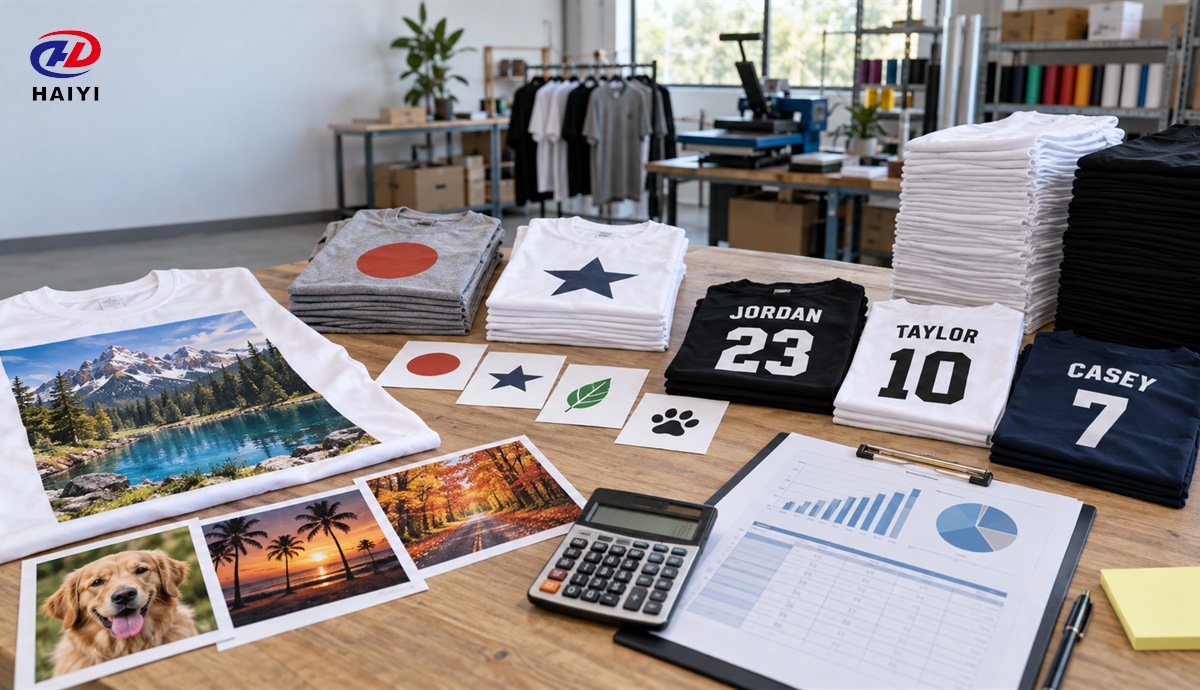
Do not use a copied break-even quantity as a purchasing rule. Calculate setup, consumables, machine time, labor, waste, maintenance, rework, and quality control for the actual job. A method is economical only if it produces accepted garments at the promised quality and deadline.
Which method has the best hand feel?
Sublimation has no added layer on compatible polyester, so it normally creates the least noticeable surface change. DTG can feel soft on a suitable garment and artwork. Screen printing ranges widely depending on ink chemistry and deposit. DTF and HTV create a transfer layer, so coverage, material, finish, and artwork geometry affect feel and breathability.
There is no useful single ranking without an actual sample. A small DTF logo can feel less intrusive than a large heavy screen print, while a large solid DTF rectangle can feel more noticeable than a soft direct print. Define the acceptable hand, stretch, and drape for the application.
Which garment printing method is most durable?
Durability depends on process control and end use. DTF requires compatible film, ink, powder, cure, press, peel, and garment. Screen printing requires correct ink, deposit, cure, and fabric compatibility. DTG requires pretreatment, ink, cure, and garment control. HTV requires material compatibility and pressing. Sublimation requires a compatible polymer substrate and colorfast dye system.
Compare approved samples using the same wash method, dry method, abrasion, stretch, and exposure conditions. Record failure mode rather than only counting cycles. Edge lifting, cracking, color loss, dye migration, distortion, and garment damage point to different causes.
How should a business choose the final method?
- Define the garment. Record fiber, color, finish, stretch, texture, seams, and heat tolerance.
- Define the artwork. Record size, coverage, colors, detail, gradients, placement, and personalization.
- Define the order pattern. Separate total pieces from pieces per identical design and expected reorder size.
- Define the approved experience. Set requirements for color, opacity, hand, breathability, stretch, and special effects.
- Calculate total accepted-piece cost. Include setup, labor, consumables, machine time, waste, rework, and inspection.
- Test the actual system. Produce samples on the target garment and perform the required durability tests.
- Keep more than one method available. Route each job to the process that fits instead of forcing every job through one machine.
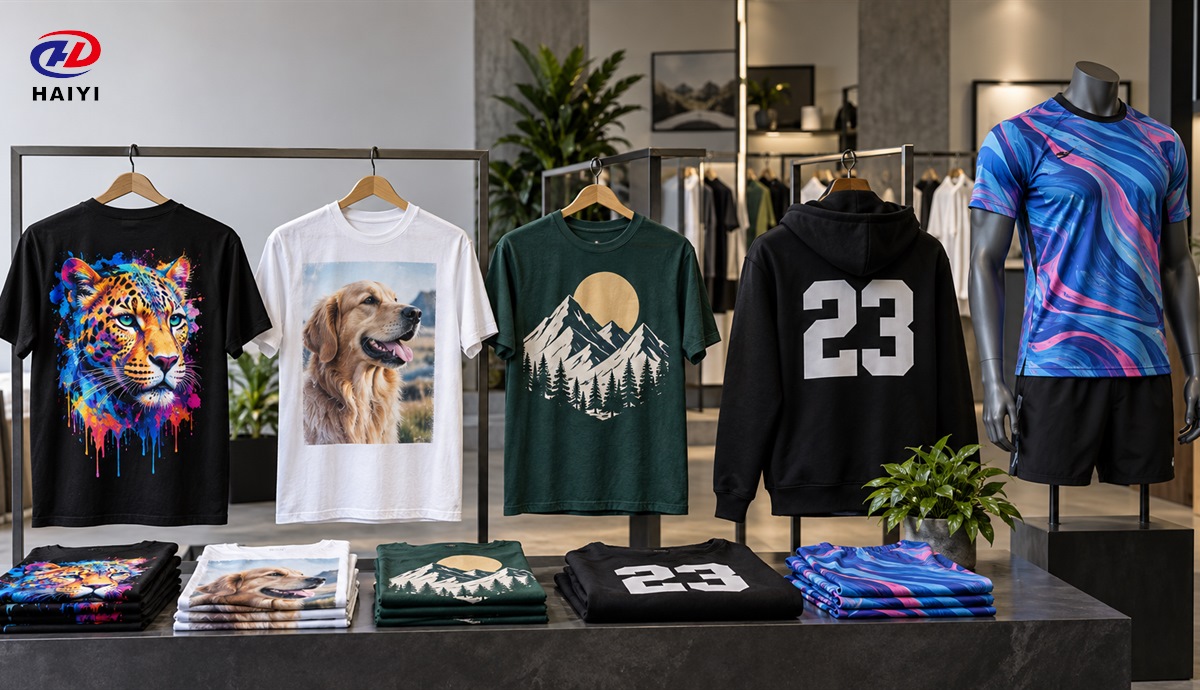
Frequently asked questions about garment printing methods
Which method is best for a small clothing brand?
DTF or DTG often fits small, full-color, and changing orders, while HTV fits simple personalized work. The best choice depends on fabric, artwork, equipment access, and the approved finish. A brand can outsource more than one method before buying equipment.
Which method is best for sportswear?
Sublimation is strong for light polyester and all-over designs. DTF, screen printing, or compatible HTV may fit names, numbers, dark garments, or mixed fabrics. Test stretch, dye migration, abrasion, and repeated washing.
Can one garment use more than one printing method?
Yes. A bulk logo may be screen printed while names and numbers use DTF or HTV. Mixed methods are useful when each decoration has a different quantity, artwork, placement, or performance need.
Does the most expensive method produce the best result?
No. Price reflects setup, material, labor, equipment, and order structure. The best result is the method that meets the defined sample and durability standard with controlled repeatability.
Source DTF film for a flexible garment-decoration portfolio
Haiyi supplies wholesale and customizable DTF film for distributors, print shops, and private-label programs. Buyers can evaluate film width, coating, peel behavior, feed stability, curing, pressing, packaging, and repeat-lot consistency within their own production system. Review the heat transfer film buying guide, then Haiyi ile iletişime geçin with your printer, film format, garment mix, monthly volume, peel workflow, and private-label requirements.