




DTF Printers in the USA: A Buyer and Service Checklist
A practical buyer checklist for US DTF printers: real output, service, maintenance, total cost and film compatibility.

For a buyer in the USA, the best DTF printer is the system that can repeatedly meet the shop’s output, service and film-compatibility requirements. Headline speed or purchase price alone cannot predict uptime. A sound buying decision compares the complete production line, the local support arrangement and a witnessed sample run using the materials the business intends to sell.
Estimated reading time: 8 minutes.
What should a US buyer define before comparing DTF printers?
Start with expected saleable transfer area per day, common artwork dimensions, garment mix, available floor space and operator skill. Daily order count alone is not enough: ten large gang sheets can demand more print area than fifty small chest logos. Define peak volume and the maximum acceptable downtime before asking suppliers for equipment proposals.
Specify whether the business will print transfers only, press finished apparel or both. A transfer-only operation needs consistent film output and packing controls; a finished-garment shop must also account for press capacity and garment handling. If current demand is uncertain, compare in-house ownership against outsourcing samples before committing to a full line.
Which printer specifications matter most?
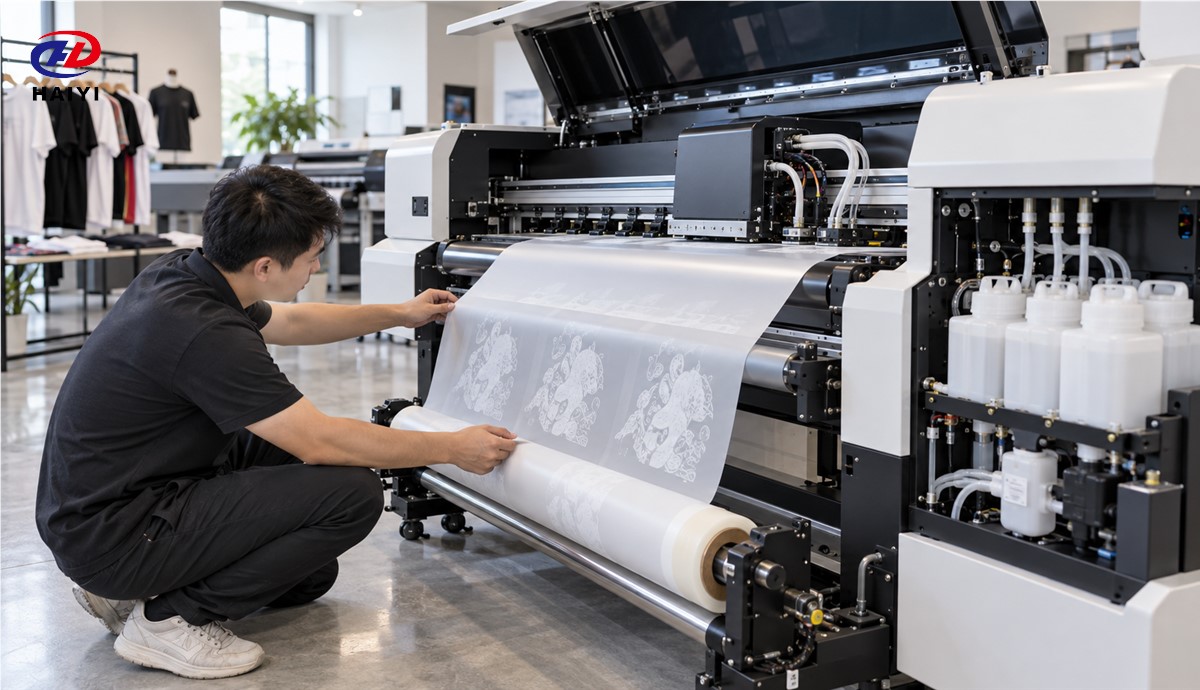
Usable media width determines the actual artwork and gang-sheet layout that can pass through the printer. Advertised machine width may differ from printable width after side margins. Stable white ink management matters because sedimentation and maintenance can affect opacity and uptime. Film feed control matters because skew, curl and static can turn a nominally fast printer into a high-waste line. Software support matters because RIP settings, underbase control and color profiles must be workable for the shop’s designs.
Ask for sustained production output on the buyer’s artwork, not only a peak-speed figure. A demonstration should disclose print mode, ink coverage, film width, cleaning time and rejected sheets. Compare usable output after finishing, not the motor’s theoretical square-foot rate.
How should local service be evaluated?
For a US print shop, “support available” is too vague to be a procurement criterion. Ask who answers technical calls, what hours they cover, which components are stocked domestically, how replacements are shipped, when on-site service is offered and what the warranty excludes. Get these terms in writing. A low purchase price can become expensive when an essential part has no predictable arrival time.
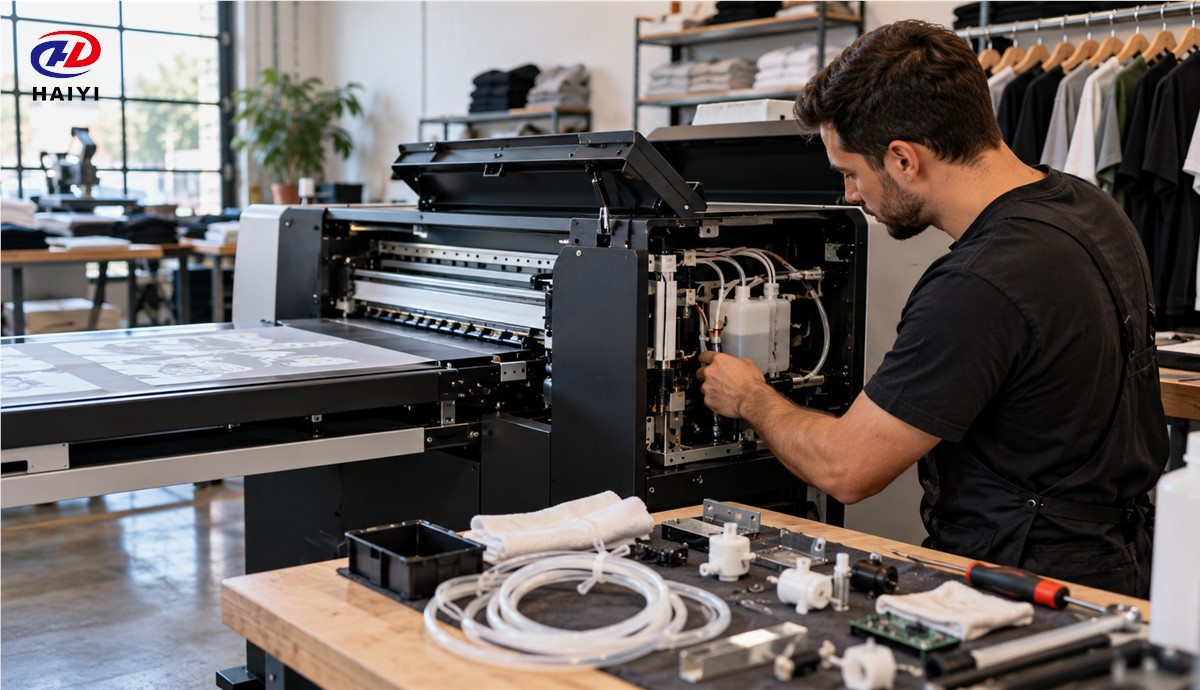
Request operator training and a maintenance schedule. White-ink circulation, nozzle checks, humidity control and cleaning supplies create ongoing labor and cost. The supplier should explain how the machine is stored or shut down when idle and how support diagnoses film-related defects separately from printer faults.
What belongs in the total cost of ownership?
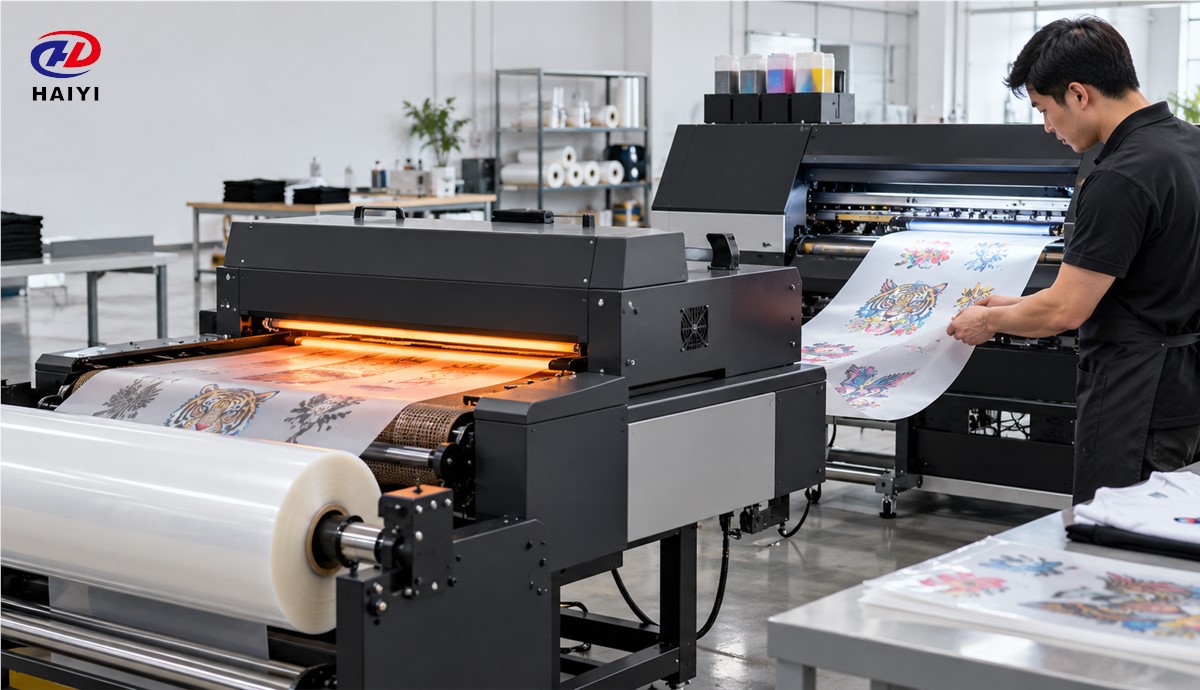
A DTF line normally involves a printer, RIP, ink, PET film, adhesive powder, powder application and curing, ventilation as required by the equipment, a heat press, labor, maintenance parts, utilities and waste. Freight, installation and training may be separate charges. Calculate cost per accepted transfer rather than cost per blank sheet, because misfeeds, cleaning cycles and reprints are commercial costs.
Use a spreadsheet with conservative daily output, realistic ink coverage, labor per shift and an allowance for rejected work. Do not assume every published running-cost estimate applies to your artwork or local electricity rates. A trial using your files provides a better basis for comparison than a generic vendor claim.
How should film compatibility be proven?
Ask the printer provider to test the intended film format and peel type on the proposed printer. Check feed stability, static behavior, print edge quality, powder shake-off, curing response and transfer release. Test an entire roll section or multiple sheets, not just one perfect sample. The DTF consumables compatibility test protocol can guide a controlled trial.
Film is not a passive commodity. Coating and backside treatment affect wetting and feeding, while roll width and winding affect machine handling. Learn how to identify the printable side E what the film layers do before approving a substitute material.
What should be on the equipment RFQ?
State target output, intended film widths or sheet formats, artwork examples, required white opacity, available power, facility conditions, software workflow and after-sales expectations. Request an itemized quote for every module, installation, training, consumables, spare parts, warranty, service escalation and delivery. Ask whether the buyer can use a qualified third-party film without voiding support.
For US purchasing, confirm the equipment’s applicable electrical configuration and documentation with the seller and local authority before installation. Do not infer compliance from a marketing photo or an overseas model number. The shop should plan ventilation and operator safety around the actual curing and powder equipment supplied.
How should two offers be compared?
Score both offers against the same pass/fail trial and service checklist. A system with slightly lower rated speed may be economically preferable if its accepted output is higher and its parts arrive faster. A wider machine may be unnecessary if the shop’s actual orders fit a smaller media path. The right purchase is the one whose verified output and support match the buyer’s workload.
Film supply for US distributors and print shops: Haiyi provides wholesale and customizable DTF film. To qualify a film for your planned printer line, send Haiyi your printer model, media width, ink system and target volume. We can discuss sample formats and a practical evaluation plan.
FAQ
Is a higher advertised speed always better?
No. Compare accepted transfer output after maintenance, finishing and rejects under the same artwork and print mode.
Should film be selected only after the printer is purchased?
No. Film format and coating behavior should be part of the equipment trial because they affect feed, image quality and release.
What is the most important support question?
Ask who fixes a production-stopping fault, how quickly the required part can arrive and what the written warranty covers.