







How to Acclimate DTF Film After Cold or Hot Transportation
A receiving-to-release procedure for DTF film after cold or hot transport, including sealed acclimation, inspection, print testing and lot disposition.

How should DTF film be acclimated after cold or hot transportation? Move the shipment into a clean, climate-controlled receiving area, keep every roll or sheet pack sealed, and let the material approach the printing-room conditions before opening it. Inspect the outer cartons first, then check a representative pack for condensation, distortion, blocking, or coating damage. Release the batch to production only after a small print-and-transfer test passes. Cold film is most vulnerable to condensation when opened in warm, humid air; overheated film may have permanent coating or roll-shape damage that waiting cannot reverse.
This guide is for unused PET-based DTF print film arriving at a printer, distributor, or garment-decoration plant. It is not a storage-life promise for already printed and powdered transfers. The exact temperature and relative-humidity limits should come from the purchased film specification and the printer process window. The procedure below supplies a decision method when a truck, aircraft hold, warehouse, or final-mile vehicle has been much colder or hotter than the production room.
Why does a transportation temperature change matter?
DTF film is a coated printing material, not merely a plastic sheet. The PET carrier provides dimensional support, while its printable and release surfaces must behave consistently during ink laydown, powdering, curing, pressing, and peeling. A sharp environmental change can affect the surface conditions seen by the printer even when the film itself appears intact. The main receiving risks are surface condensation, excess humidity, static, curl, telescoping, deformation, and heat-related blocking between layers.
A cold roll taken directly from transport and opened in a warm room can sit below the room’s dew point. Water vapor then condenses on the cooler exposed surfaces. Visible droplets are an obvious warning, but a thin moisture film can be harder to see. A hot roll creates a different problem: the carton may cool safely, yet the coating may already have softened, transferred, or become tacky during a long hot journey. Acclimation reduces a temperature mismatch; it does not repair a damaged coating.
Temperature alone does not describe the risk. A roll arriving at 10掳C into a dry 20掳C room is not the same as a roll arriving at 10掳C into a humid 28掳C room. The second room has a higher condensation risk because its air contains more water vapor. For the receiving decision, record the production-room temperature and relative humidity, not just the outdoor weather or the temperature shown by a truck display.
Film-related symptoms can also be caused by ink, powder, printer settings, platen heating, or a contaminated printing environment. A shipment should not be blamed for every print defect that happens after delivery. Separate transport evidence from process evidence: record the receiving condition, compare with a known-good roll, and change one variable at a time. Haiyi’s existing DTF film moisture-control guide covers the broader humidity and troubleshooting picture; this article focuses on the first hours after a temperature-exposed delivery.
The short answer: a receiving-to-release workflow
- Receive and document. Record batch numbers, carton condition, arrival time, room temperature and relative humidity, and any available shipment temperature record.
- Move to the controlled area. Keep the material out of direct sun, near-press heat, damp floors, and cold external walls. Do not open a cold pack to “help it warm up.”
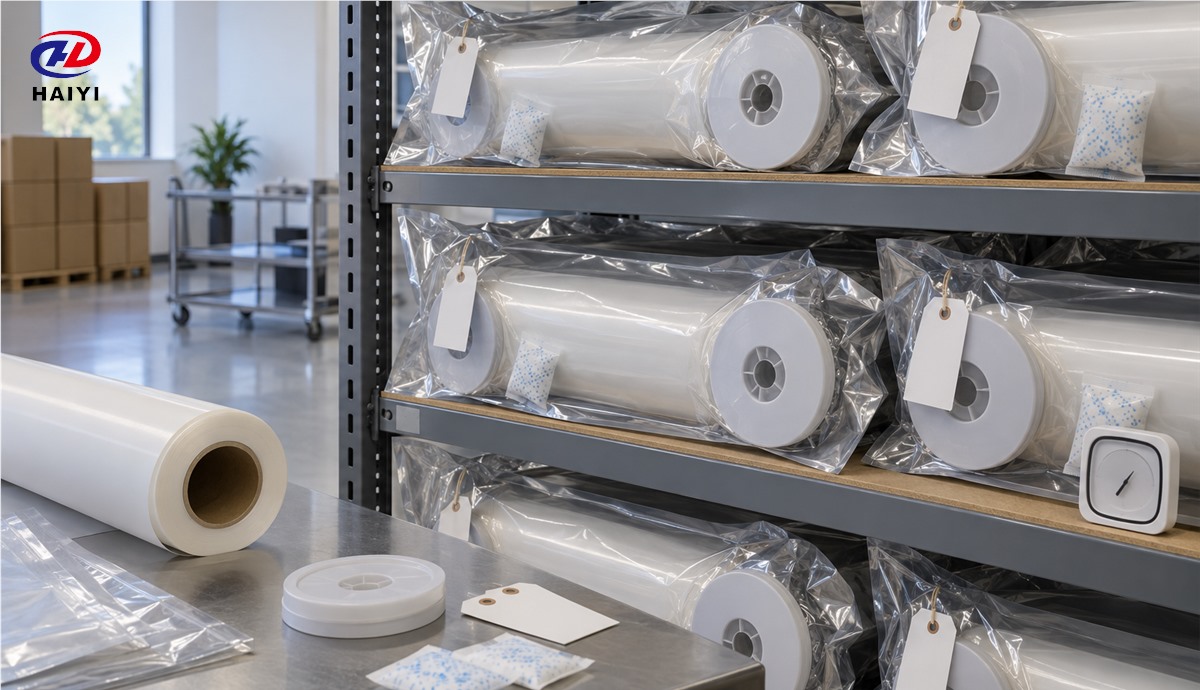
- Keep the moisture barrier intact. Leave the original sealed bag or wrap closed while the film approaches room temperature. A dry outer carton can be opened for inspection without breaking the inner film seal.
- Check temperature stability. Use the manufacturer’s instructions first. For an unfamiliar shipment, monitor the outside of a representative roll pack until its temperature is close to the stable production room and no longer changing quickly.
- Open one sample pack. Inspect the film, core, edges and coating under clean light. If moisture or damage appears, quarantine the affected lot.
- Run a controlled print test. Print, powder, cure, transfer and peel using approved settings. Compare the result with a retained known-good film sample.
- Release or escalate. Document the decision before distributing the rest of the batch or loading it into continuous production.
This sequence is more reliable than a universal “wait two hours” rule. A small sealed pack, a wide roll, and a pallet of tightly packed cartons do not equalize at the same rate. The temperature of the outer carton can also differ from the roll center. Use time as a scheduling estimate, not as proof that the film is ready.
What should you do after cold transport?
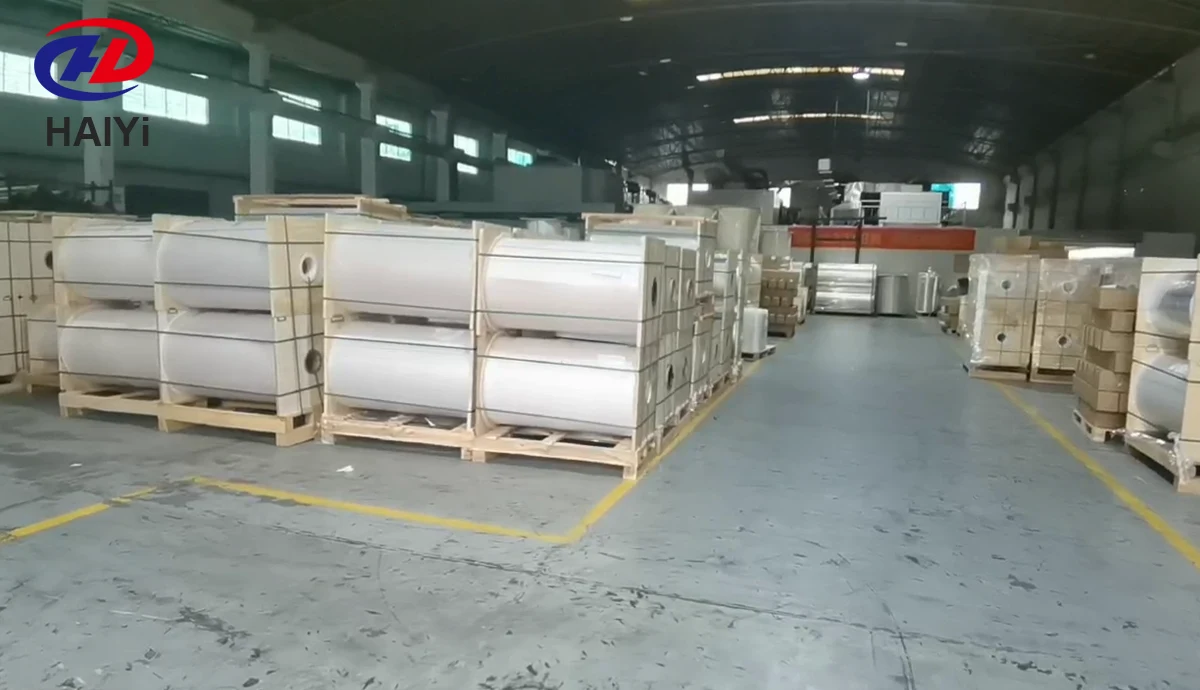
Keep cold film sealed while it warms. The highest-risk mistake is removing a cold roll from its moisture-barrier bag as soon as it reaches a warm print room. If the exposed roll surface is below the room dew point, condensation can form on or near the coating. A closed pack limits contact between the cold material and room air while the temperature difference narrows. This is a prevention step, not a way to dry a roll that is already wet.
Place the sealed cartons in the same controlled room where production will occur, or in a nearby room with comparable conditions. Keep them off damp concrete, away from heaters and direct sunlight, and leave enough space for room air to circulate around the cartons. Do not aim a hot-air gun or space heater at a cold roll. Rapid local heating creates uneven expansion and may stress the coating or roll winding while the center remains cold.
If the outer carton is damp but the inner barrier is intact, separate the wet cardboard from the sealed film only when this can be done without exposing the film. Record the condition and replace damaged outer packaging. If the inner barrier has torn, treat the pack as a higher-risk exception: move it into a clean, dry controlled area, document the tear, inspect for moisture, and test it before release. A damaged seal should not be hidden by rewrapping the roll without a quality decision.
A room thermometer and hygrometer are useful, but they do not tell you the roll’s internal temperature. A contact thermometer on the sealed pack, an infrared reading on the same exterior location over time, or a non-saleable witness roll can help establish whether the material is stabilizing. Infrared readings depend on surface emissivity and reflective packaging, so use them as trends rather than precise core-temperature proof. Never pierce a saleable moisture barrier just to insert a probe.
Open only one representative pack after the outer pack temperature has stabilized near the production room. Check the film surface, edges, liner contact, core and inner wrap for moisture or unusual tack. If any condensation is present, do not load the roll into a printer. Quarantine it and follow the supplier’s disposition process. Wiping the coated side can contaminate or abrade it and does not establish that the coating or winding is unaffected.
What should you do after hot transport?
Let hot film cool under controlled conditions while still protected. Move the cartons away from a hot loading dock, vehicle, or sun-exposed entrance. Keep the inner packages sealed and allow them to approach the stable printing-room temperature naturally. Do not put a hot roll straight in a refrigerator, freezer, or powerful cold-air jet. A sudden temperature gradient can distort winding, and later opening in humid air can create a new condensation problem.
Hot-transit inspection should look for more than simple temperature mismatch. Examine carton compression, flat spots on cores, shifted roll edges, telescoping, blocked layers, sticking between wraps, coating transfer, unusual odor, or visible haze. These findings are more meaningful than the statement that the roll has now cooled. If a pack shows blocking or coating damage, hold it for supplier review rather than assuming a long acclimation period will restore performance.
Film that looks normal after heat exposure still needs a representative print test. Compare ink wetting, drying, powder retention, release, and final transfer quality with a known-good sample on the same printer. If both samples fail, troubleshoot the machine, ink, powder, and room before condemning the shipment. If only the transport-exposed sample fails, quarantine that lot and preserve the evidence.
How long should a DTF film shipment acclimate?
There is no defensible fixed duration for every film shipment. A sealed sheet pack may approach room conditions faster than a dense jumbo roll, and a pallet center may change more slowly than its outer cartons. Start with the film supplier’s written handling guidance. If that guidance specifies a waiting period, treat it as a minimum process instruction and still inspect for condensation, deformation, and abnormal test results.
For a shipment with no documented waiting time, set a local release rule based on measurable conditions: the receiving room is stable, the sealed sample pack has stopped changing rapidly in temperature, the pack is close to room conditions, the inner surface is dry when opened, and the sample print meets the approved control. The word “close” should be defined in the buyer’s own standard operating procedure using the film specification and measurement method. This avoids turning an illustrative number from another product into an unsupported universal limit.
What is the correct receiving inspection?
A receiving inspection begins before the film is opened. Compare the purchase order, packing list, film type, roll width, length, peel type, batch number and carton count. Photograph crushed corners, water marks, broken pallet wrap or missing labels before material is moved into stock. Those records help distinguish a transport claim from a later storage problem. For a wholesale order, preserve batch traceability from carton to customer or production line.
Check the inner pack only after the acclimation condition is met. Look for punctures, failed seals, missing desiccant where specified, dampness, and changes in winding. For rolls, check core shape and edge alignment; for sheets, check flatness and interleaving. The inspection should be clean and brief. Leaving the entire lot open while one technician photographs it defeats the purpose of the moisture barrier.
Use a sampling plan that fits the shipment risk. A routine delivery from a controlled route may require fewer sample packs than a delivery with a temperature alarm, wet carton, or long customs delay. Record why the sample size was chosen. An importer should not promise that one opened roll proves every roll in a large mixed pallet is sound. Where the order has several production batches, treat each batch as a separate decision unit.
A certificate of analysis can support traceability, but it cannot replace arrival inspection. The certificate describes tests performed on the manufactured lot under defined conditions; transport may occur afterward. Haiyi’s DTF film certificate-of-analysis checklist explains how to request comparable lot data. The receiving record should connect that lot data to the physical cartons in front of the buyer.
How should the sample print test be run?
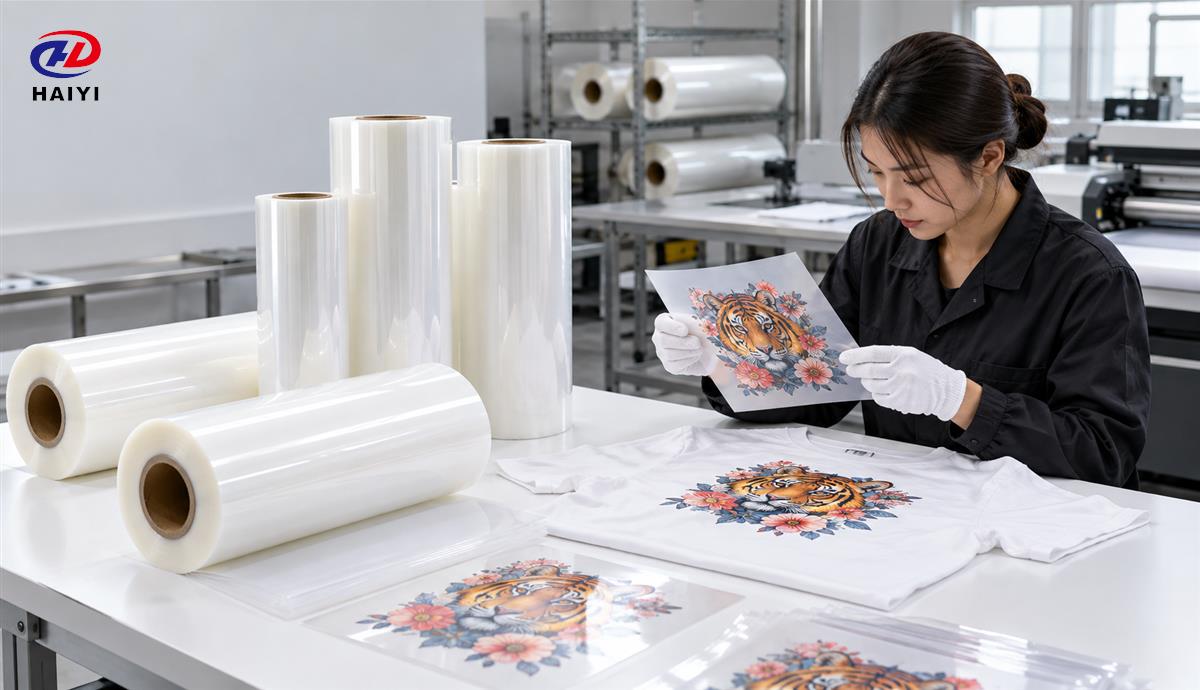
A sample test should keep the production process constant so that the film is the main variable. Use the same printer, ink, powder, RIP settings, cure settings, heat press, garment substrate, and operator for the transport-exposed film and the known-good control. Print a test design with solid color, fine lines, white underbase, gradients and a small text area. This layout exposes wetting, registration, powder retention and release problems more effectively than a single large logo.
Record observations at each stage. During printing, note feeding, static, edge lift, ink spread and dot definition. During powdering and curing, note clumping, gaps, excess sticking and uneven melt. During pressing and peeling, note release behavior, residual ink on the carrier, edge lifting, surface uniformity and wash-test results when required. A visually acceptable unpressed print is not a complete release test.
If a tested roll fails, repeat the comparison before changing several settings. A nozzle check and a control-film print can reveal a printer issue. If both materials fail identically, inspect ink, powder, humidity, cure and press settings. If the exposed roll alone fails, retain labelled samples and contact the supplier with batch number, arrival conditions, photographs and test settings. Haiyi’s consumables compatibility test protocol provides a broader framework for controlled comparisons.
When is film ready, on hold, or rejected?
| Decision | Evidence | Action |
|---|---|---|
| Ready for production | Sealed pack stabilized; no moisture or physical damage; sample print and transfer pass | Record batch release and store under specified conditions |
| Hold for investigation | Missing temperature history, damaged barrier, uncertain surface condition, or an isolated test defect | Quarantine, expand sampling, compare with control, contact supplier if needed |
| Reject or request supplier disposition | Visible condensation, blocking, coating transfer, serious roll deformation, or repeatable film-only failure | Do not put material into saleable production; preserve evidence and agree remedy |
A “hold” decision is not a failure of the receiving team. It is a way to prevent uncertain material from becoming hundreds of defective transfers or a distributor claim. Release decisions should be signed by a named quality or production owner. If a customer requires an urgent shipment, do not silently bypass the hold; use an approved deviation process that states the risk, extra tests and authorizing person.
Not every defect can be fixed by drying. A surface that is visibly wet should not be rubbed and returned to stock as if it were new. Heat-related blocking, permanent curl and coating transfer may be irreversible. A supplier may recommend a controlled reconditioning step for a specific film, but that instruction must be product- and lot-specific. Buyers should never improvise oven heating or chemical wiping on a coated DTF film.
How should distributors protect film after release?
Keep released stock in its protective packaging until it is picked for an order. Store it away from direct sunlight, damp walls, floor moisture and heat from dryers or presses. Maintain a stable room environment within the film supplier’s specified range. Avoid repeated moves between a cold warehouse and a warm packing room; each move creates another temperature transition. First-in, first-out rotation and lot labels help reduce unnecessary long storage.
Wholesale buyers should define packaging and transport requirements before an order ships. Specify inner moisture barrier, end protection, carton strength, pallet wrap, batch labels and whether desiccant or a temperature indicator is appropriate. For sensitive lanes, agree on how excursions will be reported and what evidence is required for a claim. Haiyi’s DTF film buying guide for distributors covers broader purchasing considerations; the shipment procedure here turns those requirements into a receiving check.
Provide downstream customers with a short handling note. A distributor may acclimate a pallet correctly, then a print shop may open one cold carton immediately after final-mile delivery. The note should tell the recipient to keep inner packs sealed until they stabilize in the printing room, inspect for moisture, and test a small print if the shipment experienced an extreme temperature swing. A clear handoff reduces preventable complaints and protects batch traceability.
Cold and hot shipment mistakes to avoid
Opening cold film immediately: A warm room can deposit moisture on a cold coated surface. Leave the inner pack sealed until the material approaches the room condition. A visible dry outer carton does not prove the roll itself is warm.
Heating film to save time: Direct heaters, heat guns and sunny windows create uneven temperatures. Controlled room acclimation is slower but more repeatable and less likely to distort a roll or damage a coating.
Cooling a hot roll abruptly: A refrigerator or freezer is not a receiving tool for overheated DTF film. Protect the film, move it to a suitable room, allow a gradual transition and inspect for permanent heat damage before testing.
Using a fixed waiting time as proof: The same number of hours cannot describe every pack size, pallet geometry, starting temperature and room humidity. A stable measured condition plus inspection and test is stronger evidence than elapsed time alone.
Confusing raw film with finished transfers: Unprinted film and printed, powdered transfers have different exposed layers and storage risks. Instructions for ready-to-press transfers should not be copied into a raw-film receiving specification without checking the film maker’s requirements.
Changing process settings before comparing a control: If a new roll feeds poorly, changing ink, cure, humidity and press temperature at once destroys the diagnostic value of the test. Keep a known-good film sample and isolate the variable first.
Domande frequenti
Can a DTF roll be used as soon as the outer carton feels warm?
No. The outer carton may reach room temperature before the roll center, particularly in a tightly wound or palletized shipment. Keep the inner pack sealed, allow the material to stabilize, inspect a sample pack, and run the agreed print test. The buyer’s film specification should define any mandatory conditioning period.
Should a cold roll be opened to let it breathe?
No. Opening the pack exposes cold film to warmer room air and raises the risk of condensation. The pack should remain sealed while the film warms in a controlled room. Once the risk has passed, open only the sample needed for inspection and testing.
Can desiccant replace acclimation?
No. Desiccant helps manage moisture inside a correctly sealed package, but it does not make the roll temperature equal to the print room or repair damage from heat. A torn pack, visible droplets, blocked film layers or a failed print test still requires a hold decision.
Does hot transport always ruin DTF film?
No. A hot shipment is a risk signal, not automatic proof of failure. Compare the actual exposure with the purchased film’s specification, inspect for physical changes, and perform a controlled print-and-transfer test. Reject or seek supplier disposition when damage is visible or test failure is repeatable.
What information should a buyer send the supplier after an excursion?
Send the film type and lot number, shipment route and arrival time, temperature record if available, carton and seal photographs, receiving-room conditions, representative roll position, and test settings and results. Clear evidence allows the supplier to distinguish transport, material and process causes faster than a general statement that the film “does not print well.”
Build a more reliable wholesale DTF film supply chain
Haiyi supplies DTF film for wholesale and custom B2B programs. Buyers can share their film format, roll width, peel behavior, ink and powder system, shipping route, packaging requirements and expected order volume to discuss a suitable specification and receiving plan. Explore Haiyi’s DTF film products and services and contact the team through the website for samples, customization and a project quotation.