






DTF Hot Melt Adhesive Powder: Selection and Process Guide
Understand how DTF hot melt powder chemistry, particle size, curing, application, storage, and compatibility affect transfer performance.

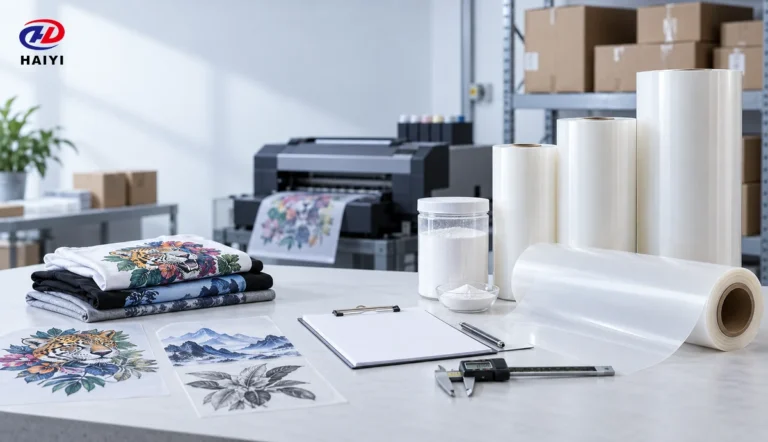
DTF hot melt adhesive powder is the thermoplastic bonding layer that connects the printed ink to textile fibers during heat pressing. Powder selection should be based on polymer chemistry, particle-size distribution, melt behavior, fabric, artwork, production equipment, hand feel, and wash target. A powder that works well in one system may perform poorly when the film, ink, curing, or fabric changes.
What Does DTF Hot Melt Powder Do?
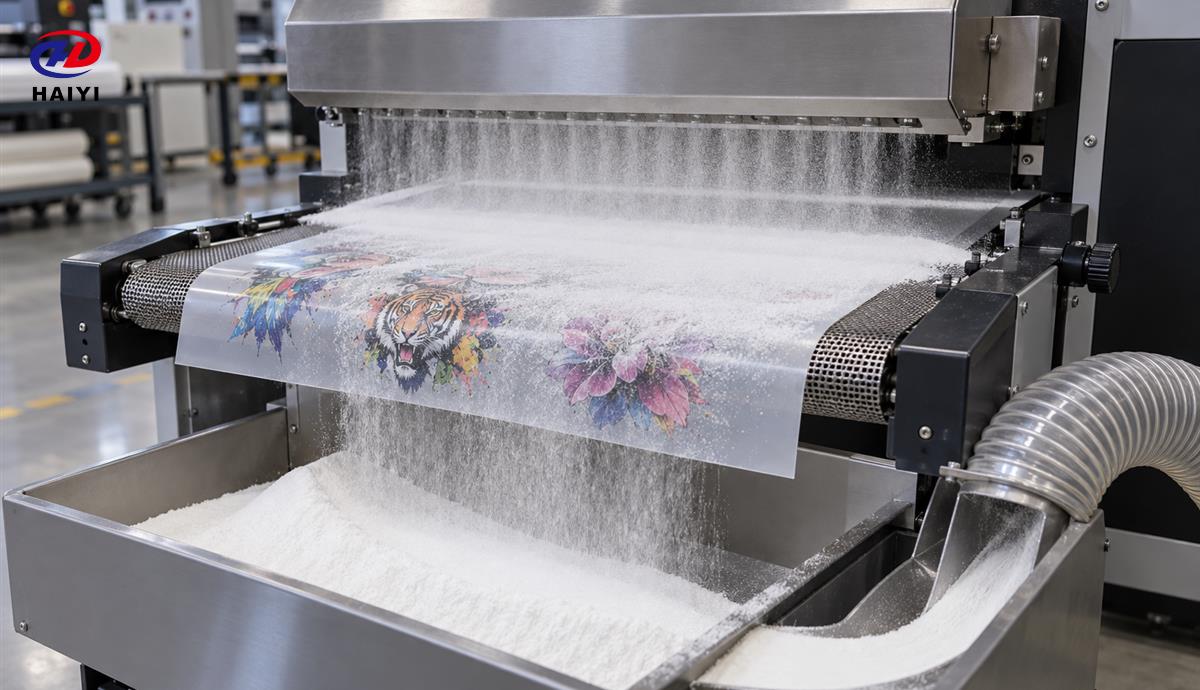
The powder is applied while the printed ink on DTF film is still receptive. Excess material is removed, and controlled heating melts the particles into a continuous adhesive layer. During the final press, that layer softens again, contacts the textile structure under pressure, and solidifies after cooling. The bond therefore depends on both curing and application.
Why Is TPU Common in DTF Printing?
Thermoplastic polyurethane, or TPU, is commonly used because it can combine flexibility, adhesion, and wash resistance. Other formulations may be designed for particular textiles or heat requirements. Buyers should request a technical data sheet and verify the supplied chemistry rather than treating every white powder as equivalent.
How Does Particle Size Affect the Transfer?
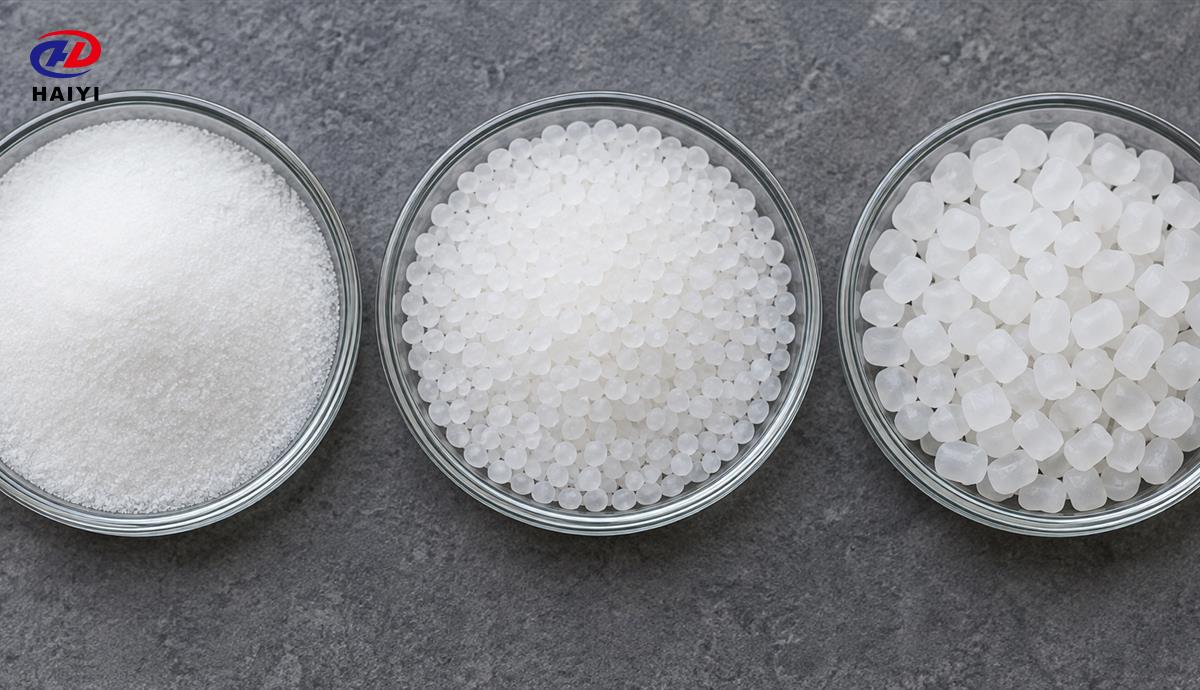
Fine powder can support small details and a smoother hand, but it may create dust, static, or unwanted residue when the system is poorly controlled. Medium grades often balance application stability, coverage, and flexibility. Coarser particles can build a stronger adhesive layer for bold graphics or heavier textiles, but may reduce fine-edge definition and create a firmer feel.
| Selection factor | What to compare | Perché è importante |
|---|---|---|
| Artwork | Fine text, halftones, solid blocks | Changes required coverage and edge definition |
| Fabric | Weight, texture, stretch, heat sensitivity | Affects penetration, flexibility, and press window |
| Attrezzatura | Manual powdering or shaker | Different grades flow and recover differently |
| Performance | Hand feel, stretch, washing, low-temperature bond | Defines the actual acceptance target |
How Should Powder Be Applied?
Cover all wet printed areas evenly and remove loose excess from non-image zones. Automatic shakers require stable vibration, recirculation, sieving, and web speed. Manual application requires repeatable quantity and thorough removal of excess. Powder near printer electronics can create contamination and maintenance risk, so application and dust control should follow equipment safety instructions.
What Does Correct Curing Look Like?
Correctly cured powder forms a continuous, stable adhesive surface without loose dry particles, yellowing, smoke, scorched areas, or brittle edges. Visual appearance can help, but the final approval must include transfer and wash testing. Cure temperature and time vary widely by powder, oven design, airflow, film speed, and ink load; use the supplier’s starting range and verify the actual film temperature.
Under-curing can leave incomplete melt and weak bonding. Over-curing can reduce flexibility, distort film, discolor the adhesive, or make the transfer brittle. The high-temperature curing guide explains why simply adding heat is not a safe universal correction.
How Do Moisture and Storage Affect Powder?
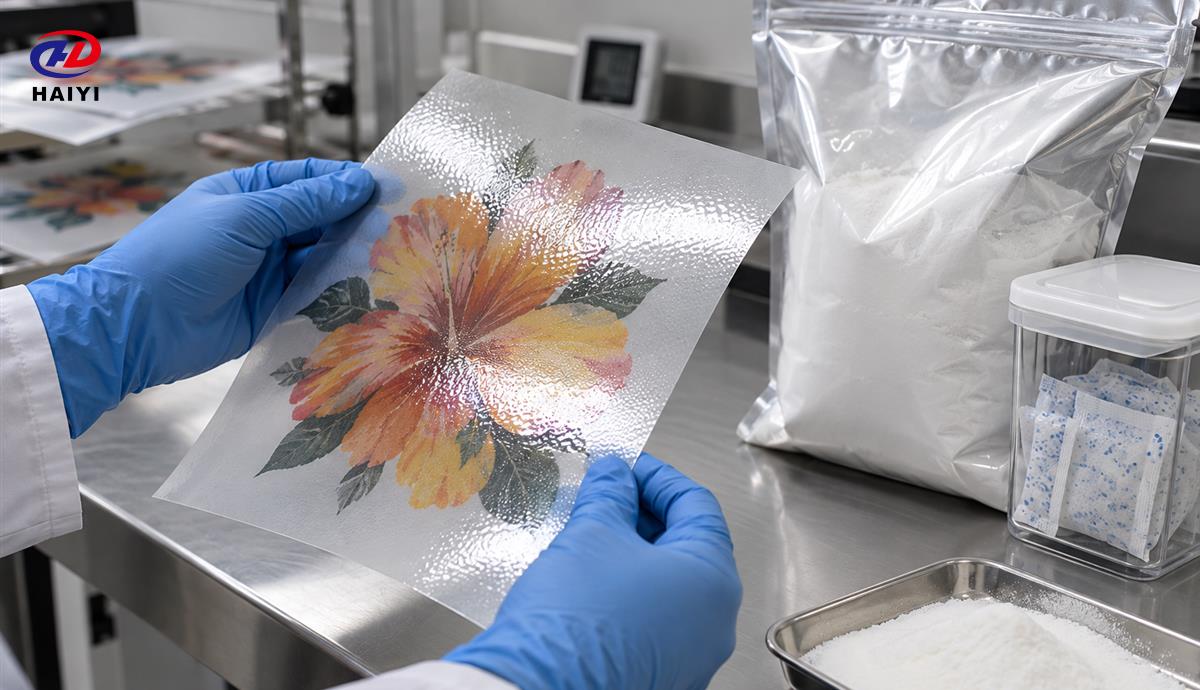
Many adhesive powders are sensitive to moisture. Absorbed humidity can cause clumping, uneven flow, poor recovery, inconsistent melting, and variable adhesion. Keep material sealed in the original or approved airtight packaging, protect it from direct heat and sunlight, use first-in-first-out rotation, and limit the time an opened batch remains exposed to the production environment.
How Are Common Powder Problems Diagnosed?
- Powder remains in blank film areas: check static, film condition, excess ink, humidity, and powder removal.
- Transfer peels after washing: verify coverage, cure, press contact, fabric preparation, and compatibility before blaming one material.
- Print feels stiff: compare powder deposit, ink load, curing, pressure, and particle grade.
- Clumps appear in the shaker: isolate moisture exposure, storage, sieving, and material age.
- Edges lose detail: compare particle size, wet-ink boundary, powder removal, and artwork design.
What Should Wholesale Buyers Put in a Powder Specification?
Define polymer type, color, particle-size range, melt or cure guidance, compatible fabrics, application equipment, storage, packaging, lot identification, and performance tests. Approve the powder with the actual film and ink; the DTF compatibility test protocol provides a step-by-step method.
Haiyi provides wholesale and customizable DTF film solutions and can support system-level sample evaluation with the buyer’s intended consumables. Contatta Haiyi with your film, ink, powdering method, curing equipment, fabric range, required hand feel, wash target, packaging needs, and forecast volume.