


A3 vs A4 DTF Film: Size, Yield and Buying Differences
Compare A3 and A4 DTF film dimensions, usable print area, gang-sheet yield, printer compatibility and cost per accepted transfer.

A3 DTF film offers twice the physical sheet area of A4, but not necessarily twice the saleable output. A4 measures 210 × 297 mm and A3 measures 297 × 420 mm. The better format depends on printer feed limits, required margins, artwork nesting, sheet cost, operator handling and order mix. Choose by usable printed area and accepted transfer cost rather than by the size label alone.
Estimated reading time: 8 minutes.
How different are A3 and A4 dimensions?
An A4 sheet has a nominal area of 62,370 mm², or 0.06237 m². An A3 sheet has 124,740 mm², or 0.12474 m². Therefore A3 is exactly twice A4 by nominal area, and its long and short sides are each larger. This is a sheet-area comparison; a printer’s non-printable margins and media grips reduce usable design area on both formats.
| Формат | Nominal dimensions | Nominal area | Typical planning use |
|---|---|---|---|
| A4 | 210 × 297 mm | 62,370 mm² | Small motifs, testing and low-volume orders |
| A3 | 297 × 420 mm | 124,740 mm² | Larger graphics or multiple motifs on one sheet |
The nominal dimensions are standardized; usable print dimensions are equipment-specific. Request the actual printable width and required lead/trail margins from the printer supplier before promising a transfer size to a buyer.
When is A4 film the sensible choice?
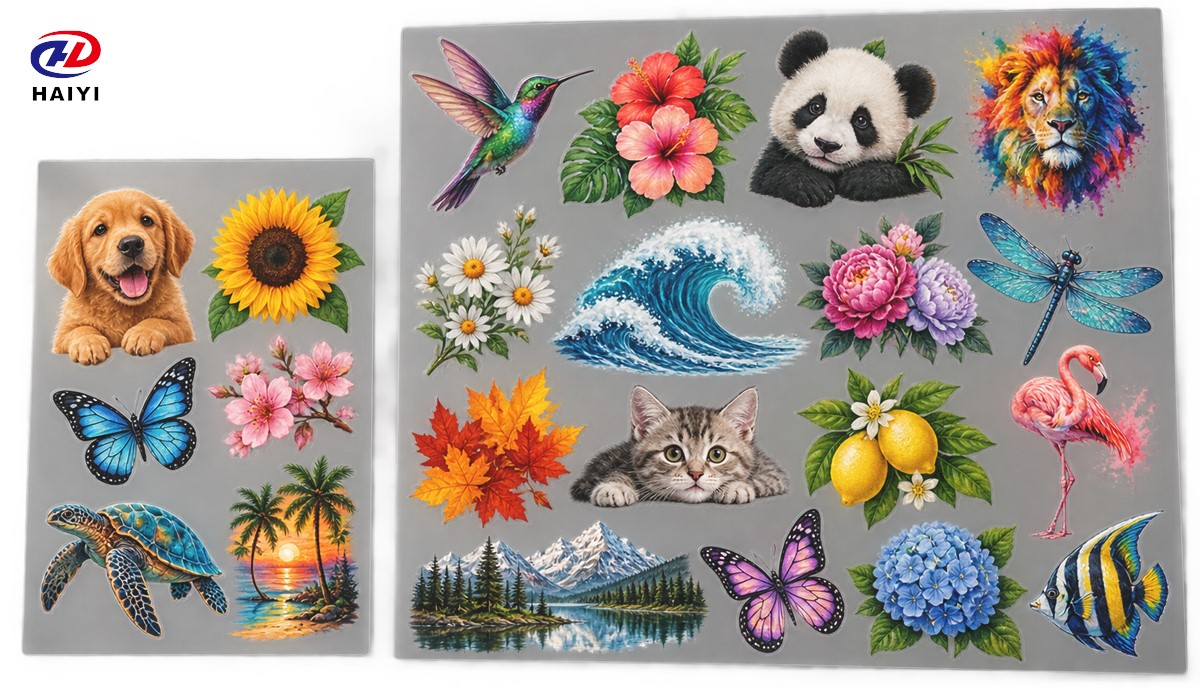
A4 can be efficient for small chest logos, sample packs, test targets and short mixed orders when a shop owns an A4-capable printer. The smaller sheet reduces unused film when a job has just one compact motif. It also simplifies manual handling in a small workspace. A4 is not automatically cheaper per graphic, however: a dense gang sheet on A3 may yield a lower cost per accepted motif.
When does A3 improve yield?
A3 becomes attractive when a motif does not fit within A4’s usable image area or when multiple repeated designs can be nested on one larger sheet. It may reduce setup and handling events for larger batches. The gain is conditional: if orders are irregular and leave large gaps, the extra film is wasted. The gang sheet utilization guide explains how spacing, rotation and margins affect yield.
How do you calculate the true cost per transfer?
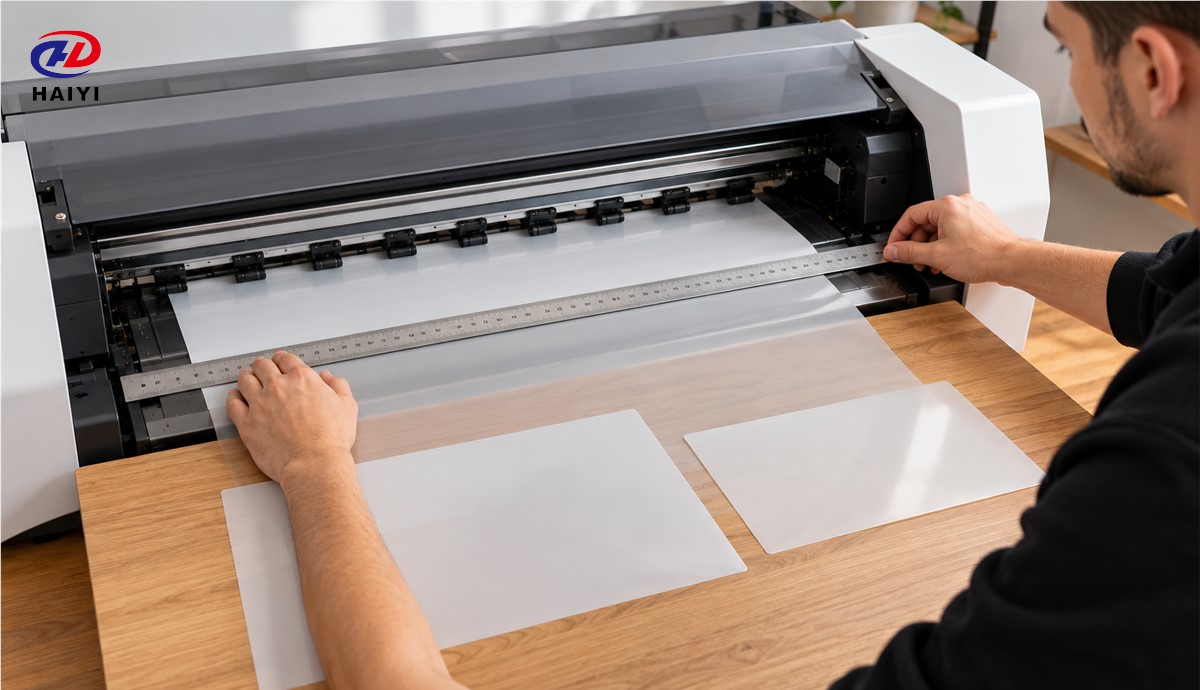
Use (film cost + ink + powder + labor + finishing + expected waste) ÷ accepted transfers. Run the same artwork set on A4 and A3 with actual print margins and minimum spacing. Count only motifs that can be cut, cured and transferred without clipping. For example, if a small design yields three accepted pieces on A4 and seven on A3, A3 delivers more than twice the pieces; if a large design yields one on either sheet, the economic result can reverse depending on material and handling costs.
Do not equate nominal area with capacity. A leading edge held by feed rollers may not be printable, and a cutter may need extra clearance. The required spacing between graphics is a finishing decision as well as a software decision.
Will any A3 DTF sheet fit an A3 printer?
No. Confirm physical feed width, sheet length, thickness range, coating orientation and whether the equipment accepts the sheet’s stiffness and curl. Some products sold as “A3+” are larger than standard A3, and the plus sign does not have one universal dimension. Ask for dimensions in millimeters rather than relying on a format nickname. Likewise, a printer described as A3-capable may not print edge to edge on an A3 sheet.
Do coating and peel requirements change with sheet size?
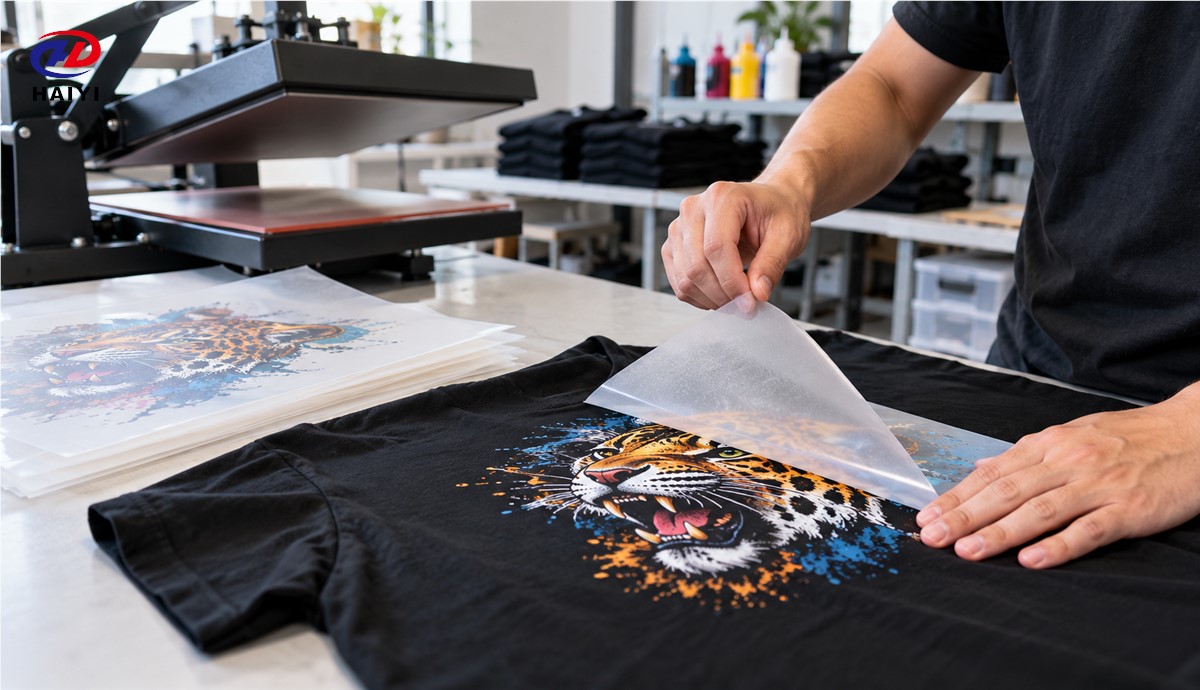
Size does not define coating or release behavior. Two films with the same A3 dimensions may have different ink-receiving coats, peel windows, anti-static treatments or surface finishes. Keep those specifications in the RFQ and test the chosen sheet with the exact printer, ink and powder system. Our DTF film material guide explains which film properties matter beyond dimensions.
What should distributors stock?
Stocking both sizes makes sense only when order data supports both. Review the last several months of design dimensions and quantities, then model accepted graphics per sheet for each format. Establish separate SKUs with exact metric size, sheet count, printable face and peel type so a buyer does not confuse an A3 sheet with an A3+ or a differently coated product. Sample both formats to key accounts before committing to bulk inventory.
Source DTF sheets with Haiyi: Haiyi supplies wholesale and customizable DTF film. If you are building an A3/A4 product range, contact us with your printer feed specification, sheet dimensions, peel preference and target monthly volume to discuss the right sample and packaging options.
Часто задаваемые вопросы
Is A3 exactly twice A4?
Yes in nominal sheet area: 124,740 mm² versus 62,370 mm². Usable print area and transfer yield may not be exactly double.
Does A3+ mean standard A3?
No. Request exact width and length in millimeters because A3+ is a commercial format label rather than the standard A3 dimensions.
Which size is best for a distributor?
Choose based on customer equipment, artwork sizes and measured accepted-transfer cost; many distributors need both formats as separate SKUs.