






Can You Reuse DTF Film? What to Do with Used Carrier Film
DTF carrier film is single use after printing and pressing. Learn what counts as reuse, how to handle fresh offcuts, and how to reduce film waste.

Estimated reading time: 5 minutes
DTF film is a single-use transfer carrier: a printed and heat-pressed area should not be printed and transferred again. The first cycle changes the coated surface and removes the printed transfer from the carrier. Reusing that pressed area creates unpredictable ink acceptance, powder adhesion, flatness, and release.
“Single use” does not mean every clean offcut must be discarded immediately. Untouched film can sometimes be planned as a separate test piece if it has never been printed, powdered, cured, pressed, contaminated, creased, or exposed to unsuitable storage. A production team must distinguish fresh offcut utilization from reusing a spent carrier.
What happens to DTF film during one transfer cycle?
DTF film temporarily carries a mirrored ink image and hot-melt adhesive powder. After curing, the assembly is pressed against fabric so the adhesive bonds the printed layer to the textile. The carrier then releases from the transferred design at the film’s specified peel condition.
The used carrier may contain residue, surface changes, curl, pressure marks, or heat distortion that are not visible from a distance. These changes make the surface unsuitable for a controlled second print. A carrier that peeled cleanly has completed its function; clean appearance is not proof that the functional coating has returned to its original state.
Can the same printed DTF transfer be pressed twice?
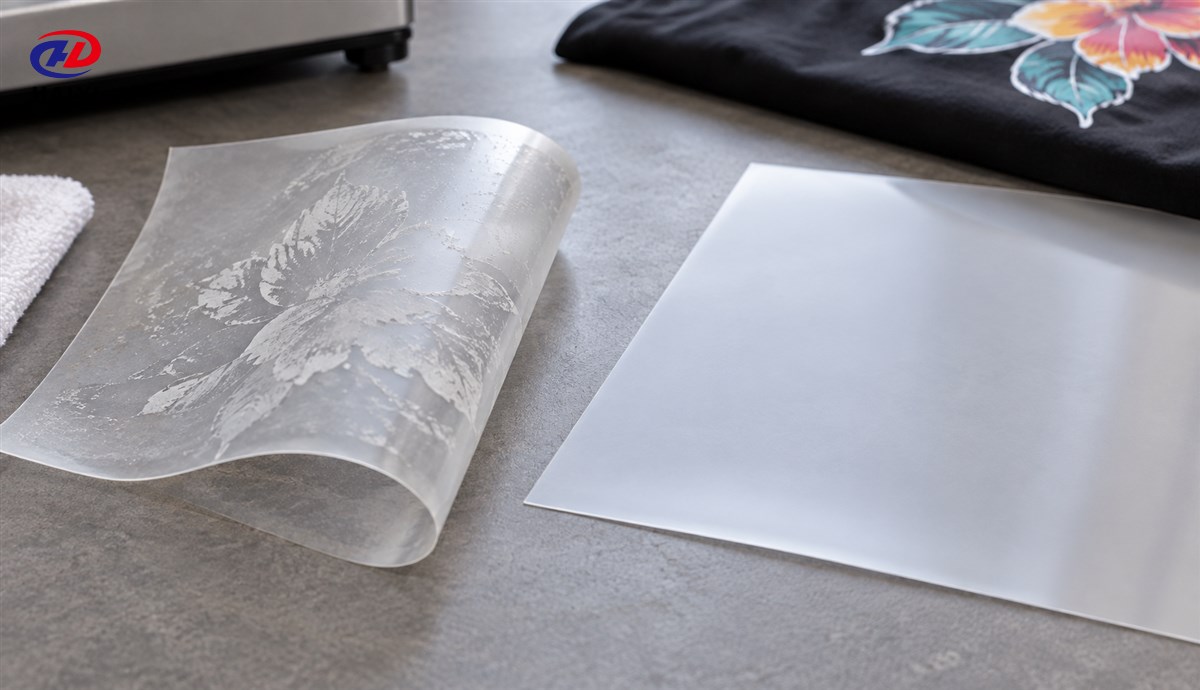
A DTF transfer is designed to apply its printed image once. After the design bonds to the first garment, the carrier no longer holds a complete transferable image for a second garment. A post-press of the design already on the garment is a different operation: it may be specified to finish the surface, but it does not reuse the film or create another transfer.
If a first application is incomplete, do not assume that placing the partly released carrier onto another garment will recover value. Isolate the item, document the defect, and follow the approved troubleshooting or rework rule. Partial transfers can create missing detail, adhesive contamination, and inconsistent durability.
Can unprinted blank space on a sheet be used later?
Blank space that has passed through the heat press with a transfer should be treated cautiously because the whole carrier may have received heat, pressure, curl, or contamination. It should not be fed back through a printer unless the equipment and film instructions expressly permit that practice. A printhead strike caused by curled film costs more than the saved area.
A clean offcut taken from fresh, unprocessed film is different. It may be useful for a small process test if it remains flat, dust-free, correctly oriented, large enough for safe printer handling, and compatible with the printer’s loading method. Never tape irregular scraps into a feed path unless the equipment manufacturer authorizes the method.
What are the main risks of attempting reuse?
| Risk | Possible result | Better control |
|---|---|---|
| Changed coating | Beading, weak image hold, or poor release | Use fresh approved film |
| Curl or shrinkage | Feed error or printhead contact | Reject distorted material |
| Ink, powder, or lint residue | Contamination and defects | Keep fresh film sealed and clean |
| Unknown thermal history | Inconsistent second-cycle behavior | Record and control each process stage |
Used carrier film should never be presented as a lower-cost equivalent to new DTF film for customer work. The financial comparison must include possible damage to a garment, ink, powder, labor, downtime, and printer maintenance, not only the price of a small piece of film.
How can a print shop reduce film waste without reuse?
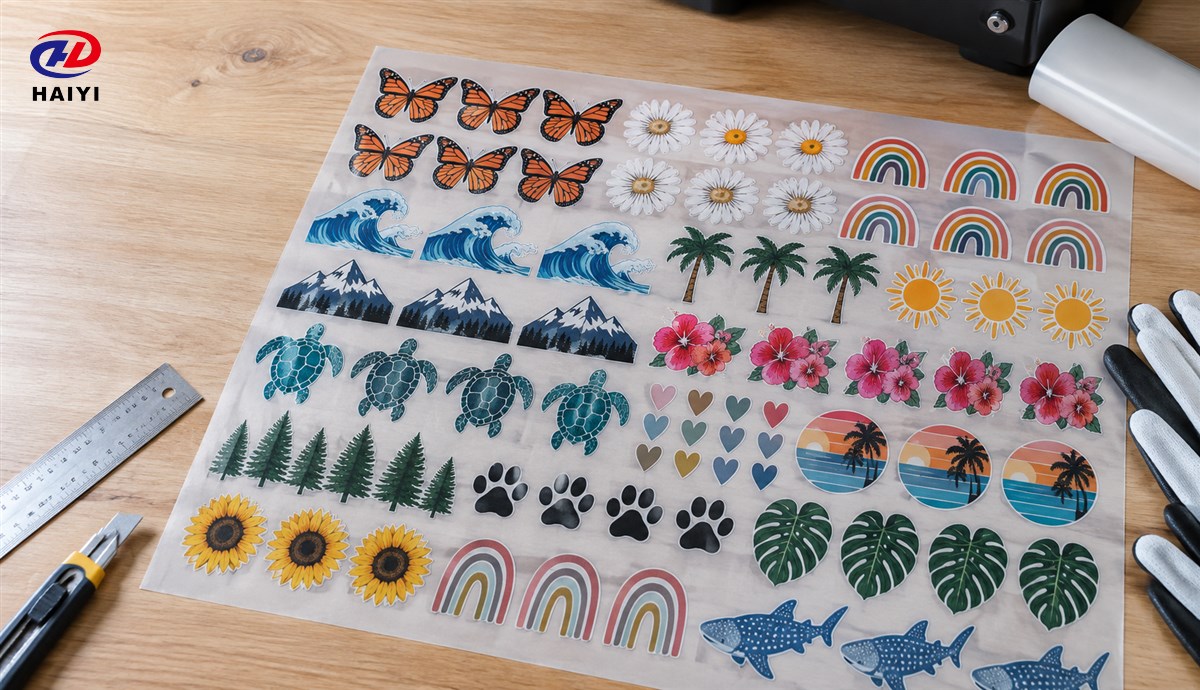
Layout planning is the strongest waste-control method because it reduces blank area before printing. Group compatible jobs, use consistent spacing, match sheet or roll width to the order, and avoid unnecessary margins while respecting the printer and curing process. The DTF gang sheet layout guide explains how to measure usable area rather than relying on visual fullness.
First-pass yield also matters. Keep film sealed until use, control dust and humidity, verify the printable side, maintain the printer, standardize ink and powder, and approve press settings before a large run. Preventing a failed meter is more dependable than trying to recover a carrier after it has been processed.
Can used DTF carrier film be recycled?
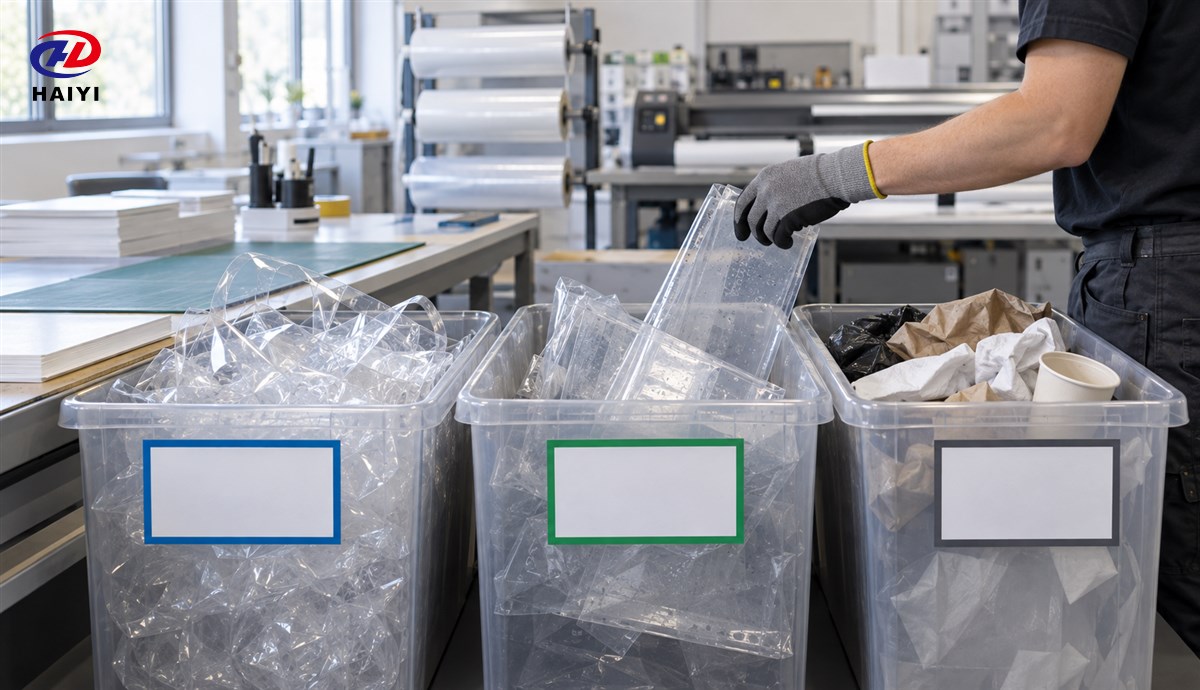
Recycling acceptance depends on the local processor, material stream, coating, ink, adhesive residue, contamination, and quantity. A PET base does not automatically mean a local curbside program accepts used DTF carrier. Ask the waste contractor or recycler for written acceptance criteria and describe the actual industrial film waste.
Keep clean unused trim separate from printed or adhesive-contaminated carrier if the recycler requests separation. Record weights by waste type when reduction is a business objective. Do not label a disposal route as recyclable, biodegradable, or environmentally safe without documented acceptance for that exact material and location.
What should distributors tell customers about film use?
A distributor data sheet should state that the film is a single-use transfer carrier and identify the printing side, peel method, storage conditions, and process compatibility. It should also distinguish a second finishing press on the garment from reuse of the carrier. Clear instructions reduce waste caused by incorrect expectations.
For a complete production sequence, use the step-by-step DTF film guide. For purchasing decisions, the DTF film buying guide for distributors covers specification, samples, quality control, and commercial planning.
Request wholesale DTF film from Haiyi
Haiyi supplies wholesale and customizable DTF film for distributors and production buyers. Send the printer type, film width, peel requirement, ink and powder system, volume, packaging, and destination when requesting a sample or quotation. A matched consumable test can reduce rejects more effectively than attempting to reuse processed film.
Contact Haiyi to discuss DTF film samples and wholesale supply.