






DTF Print Parameter Test Matrix for New Film Batches
Use a controlled DTF film batch test matrix to qualify ink load, powder, curing, pressing, peeling, repeatability, and production release.

A new DTF film batch should not enter production because one sample looks acceptable. The reliable approach is a controlled qualification matrix that separates film behavior from ink load, powder application, curing, pressing, peeling, and operator variation. A good matrix produces a documented operating window, not a single lucky setting.
Quick answer: qualify a new DTF film batch with a known printer, ink, powder, artwork, garment, and press. Change one variable at a time, score print quality and transfer behavior, repeat the best conditions, then release the lot only when it meets written acceptance limits.
Why does a new DTF film batch need qualification?
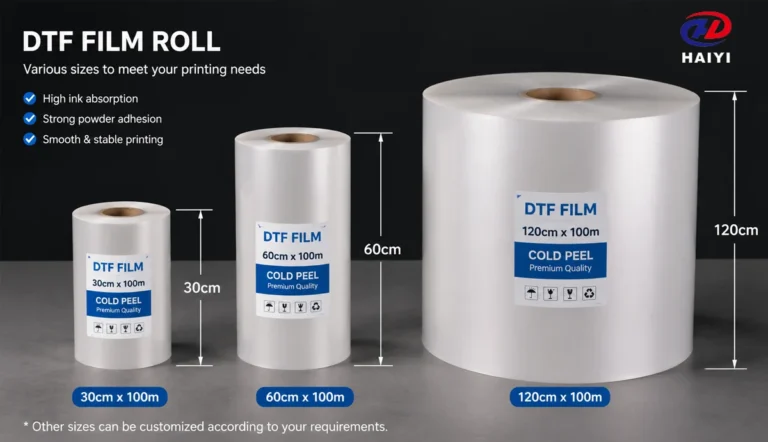
DTF transfer film is part of a material system. Its coating must accept the intended ink load, hold fine detail, retain powder consistently, tolerate curing, release at the specified peel condition, and support adhesion after pressing. A batch can appear normal in the roll while behaving differently at the printer, shaker, oven, or press. Qualification catches these interactions before they affect saleable garments.
Batch qualification is different from troubleshooting. Troubleshooting starts after a defect appears and searches for a cause. Qualification starts with controlled samples and proves that the lot can run inside a stable window. The second approach is faster and less expensive than discovering variation during a customer order.
What must remain fixed during the test?
A useful test holds every non-test variable constant. Use one printer, one nozzle-check standard, one RIP preset, ink and powder from identified lots, one curing device, one heat press, one garment construction, and the same artwork. Condition all materials in the same room before testing. If two variables change together, the result cannot show which change caused the difference.
- Printer baseline: complete a nozzle check, confirm alignment, and record the media preset.
- Consumable baseline: identify ink, adhesive powder, and film lot numbers.
- Environment: record room temperature and relative humidity rather than assuming they are stable.
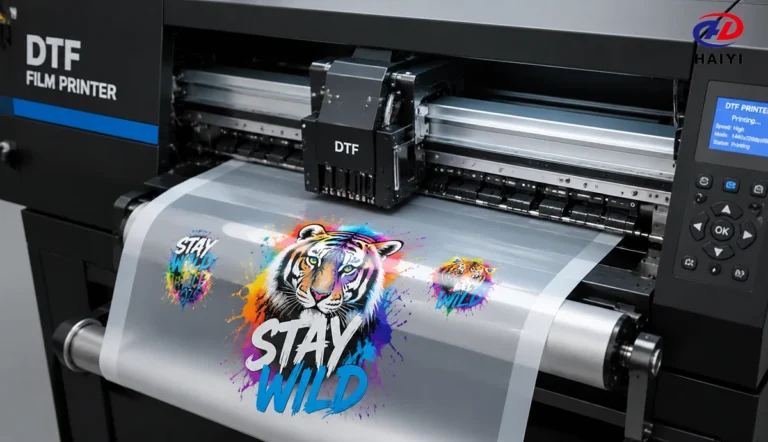
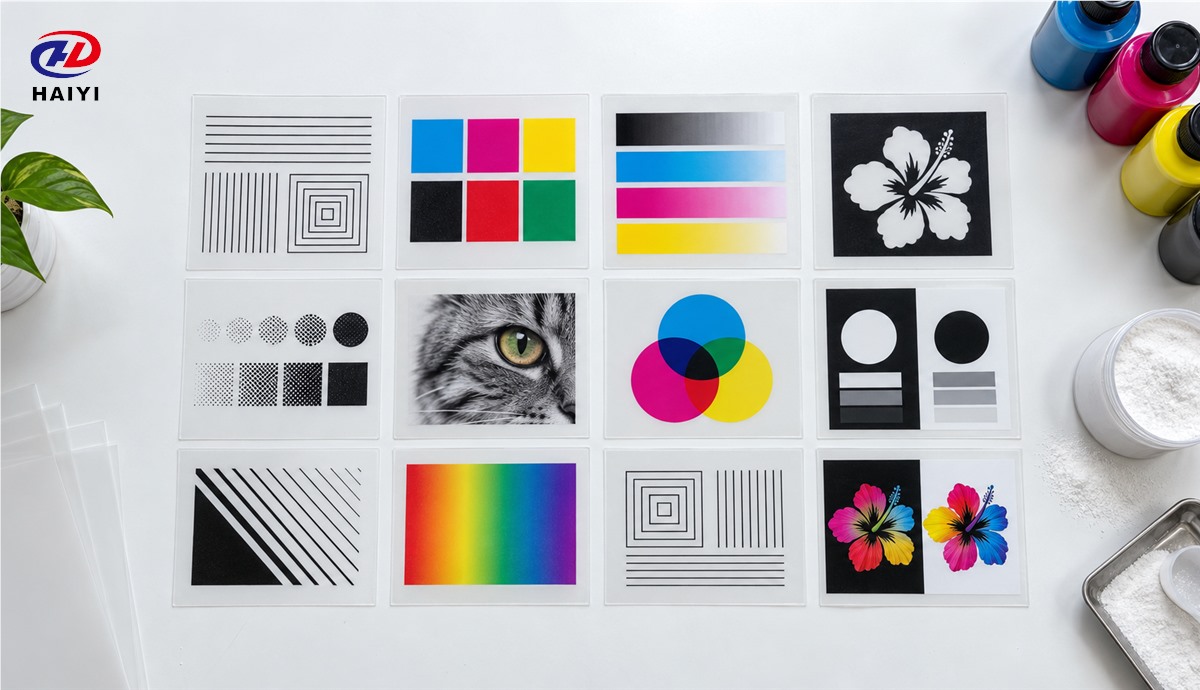
- Artwork: include gradients, small type, fine lines, solid color, white underbase, and high-ink-load areas.
- Press baseline: verify actual platen temperature and use consistent pressure, dwell time, garment, peel method, and post-press method.
How should the parameter matrix be designed?
Begin with the supplier’s recommended range, but treat it as a starting window rather than a universal recipe. First compare two or three ink-load settings while keeping powder, cure, press, and peel constant. Select the cleanest printable range. Next compare powder coverage and curing conditions within that range. Finally test press and peel variables. This staged design prevents an oversized matrix and makes the cause-and-effect logic clear.
| Stage | Variable to compare | What to observe |
|---|---|---|
| Печать | Color and white ink load | Coalescence, mottling, edge definition, banding, drying behavior |
| Powdering | Coverage and removal of excess | Complete image coverage, clean non-image area, edge contamination |
| Curing | Temperature, time, airflow, and transport speed | Powder fusion, oiliness, bubbles, film distortion, blocking |
| Pressing | Verified temperature, dwell, and pressure | Adhesion, image shape, surface finish, edge lift |
| Peeling | Specified peel temperature and direction | Complete release, tearing, residue, distortion |
| Post-press | Cover sheet and dwell | Hand, finish, edge security, color change |
How is a safe curing window established?
A curing setpoint is not the same as the film temperature. Equipment design, airflow, belt speed, heater distance, room conditions, ink load, and powder all influence the energy reaching the transfer. Test a low, nominal, and high condition around the recommended starting point, then inspect the transfer after it cools. The goal is a range in which the adhesive is fused consistently without smoke, surface oil, bubbles, brittleness, blocking, or visible film shrinkage.
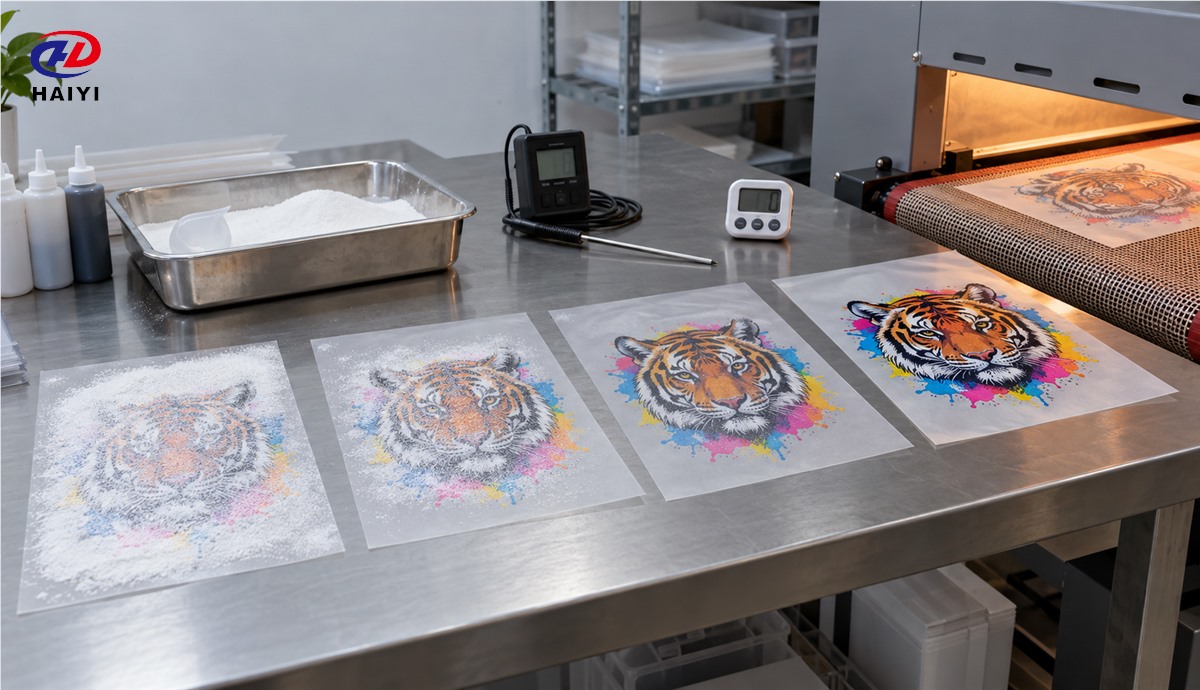
Do not compensate for poor powder coverage by increasing cure energy. Excess heat can hide one symptom while creating another. If powder does not adhere cleanly, inspect wet ink behavior, static, powder condition, shaking, and coating compatibility before changing the cure.
What should be measured after heat pressing?
Immediate appearance is only one acceptance point. Score every sample for release, fine-detail retention, solid-area uniformity, edge definition, stretch recovery, hand, and visible residue. Allow samples to stabilize before performing stretch or wash comparisons. Use the same garment area and test method for every candidate so the ranking is meaningful.
A practical scoring sheet uses a fixed scale, such as 1 to 5, with written anchors. For example, release score 5 means a clean, complete peel at the specified condition; score 3 means minor hesitation without image damage; score 1 means incomplete release or visible transfer loss. Written anchors reduce disagreement between operators.
How should repeatability be confirmed?
Repeat the best condition on different parts of the roll and in more than one production cycle. A setting that works only once is not an operating window. Run enough repeated samples to expose coating streaks, edge-to-center differences, winding pressure effects, and shift-to-shift variation. If the new lot is replacing a current approved lot, print both under the same baseline and compare them side by side.
For a complete production sequence, see the DTF transfer printing guide. If press time is the suspected variable, use the site’s focused guide to DTF pressing time as a diagnostic reference.
What are sensible acceptance and rejection rules?
Acceptance criteria should be defined before testing. At minimum, require clean printing at the approved ink load, even powder retention, a usable cure window, complete release at the specified peel condition, secure edges, acceptable stretch recovery, and repeatable results across the sampled roll. Also require intact packaging, correct width and length, traceable lot identification, and no blocking, telescoping, or coating damage.
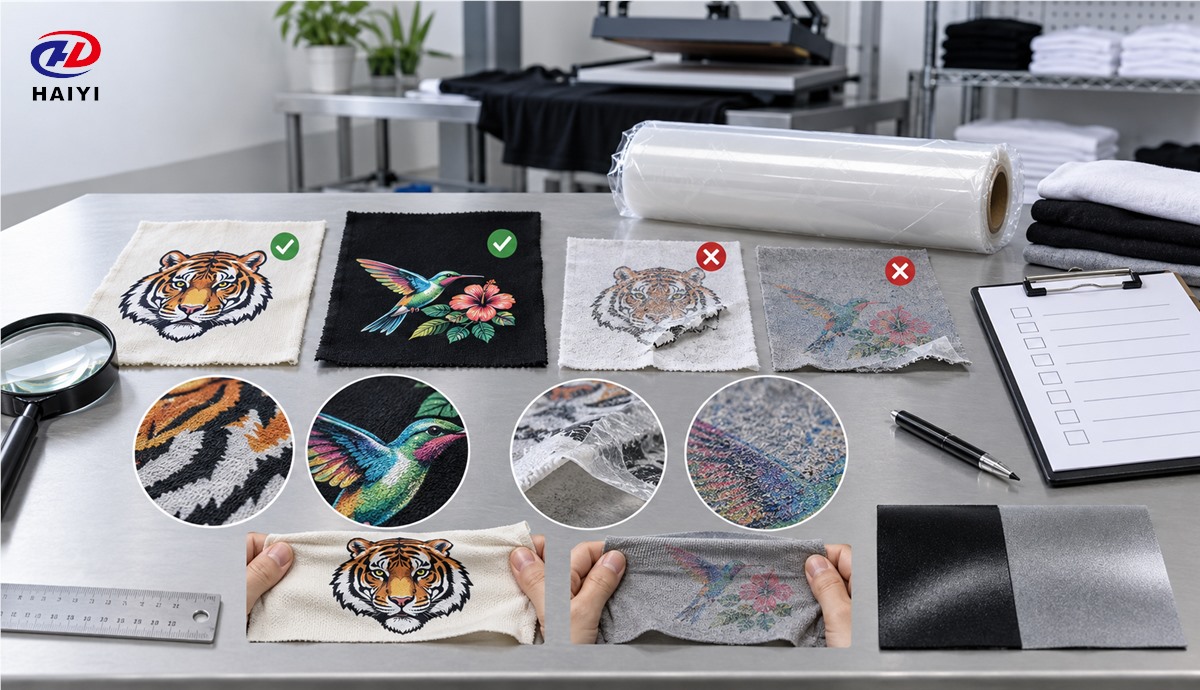
Quarantine a lot when a critical defect repeats under controlled conditions, the acceptable window is too narrow for normal production, or results differ materially across the roll. Do not blend an unapproved lot into production to use it up. Preserve samples, settings, photographs, and roll labels so the supplier can investigate the same evidence.
What records should accompany the released batch?
The release record should include film SKU and lot, roll width, received date, test date, operator, printer and RIP preset, ink and powder lots, environmental conditions, cure equipment and settings, verified press settings, peel method, artwork revision, score sheet, photographs, and final disposition. Attach a retained sample when practical. These records convert future troubleshooting from guesswork into a comparison against a known baseline.
Часто задаваемые вопросы
Can the previous film profile be used for a new batch?
Use the previous profile as a baseline, not automatic approval. A short comparison against the approved lot is still needed because coating, storage, transport, and equipment conditions can interact.
Should every roll be fully tested?
The sampling plan should match purchasing risk and supplier history. New suppliers and high-volume orders justify broader sampling. Stable, documented suppliers may support reduced testing, but incoming identity and condition checks should remain.
What if all samples peel poorly?
Confirm film side, ink cure, powder fusion, actual press temperature, pressure, peel timing, and material compatibility before rejecting the film. The site’s guide to hard-to-peel DTF film provides a focused diagnostic path.
Build a film specification that production can repeat
Haiyi supports wholesale and customized DTF film programs for distributors, converters, and production users. Share your printer platform, roll dimensions, ink and powder system, peel preference, production speed, target fabrics, and required test evidence. Связаться с Хайи to discuss samples, lot qualification, packaging, private labeling, and volume supply.