
DTF Film vs Heat Transfer Vinyl: Which Should You Choose?
Compare DTF film and heat transfer vinyl by artwork, labor, cost drivers, fabric, feel, durability, equipment, and production fit.

Choose DTF for detailed full-color artwork, gradients, and mixed-color orders that would require extensive vinyl cutting and weeding. Choose heat transfer vinyl for simple one- or two-color graphics, names, numbers, and specialty finishes such as reflective, flock, metallic, or glitter. Neither process is universally better. The right choice depends on artwork, quantity, labor, equipment, fabric, desired feel, and the need for personalization.
What is the fundamental difference?
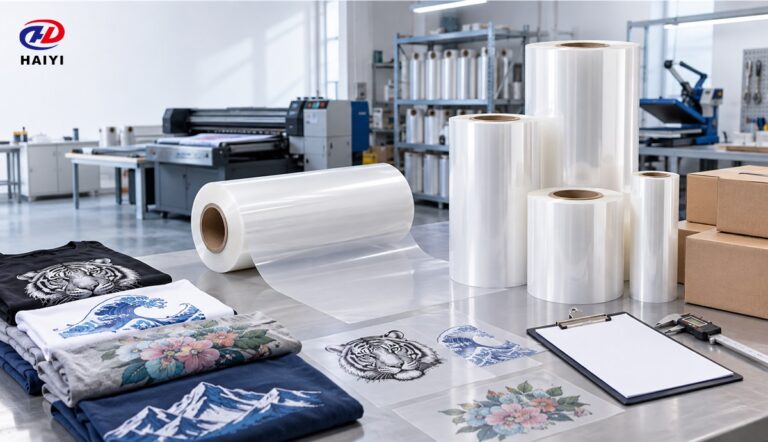
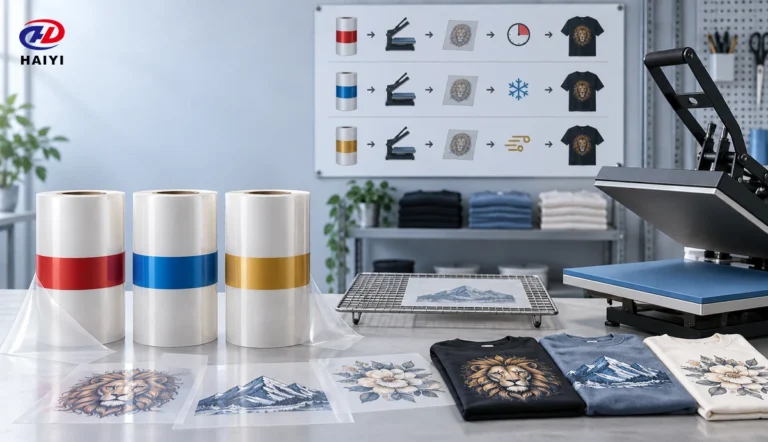
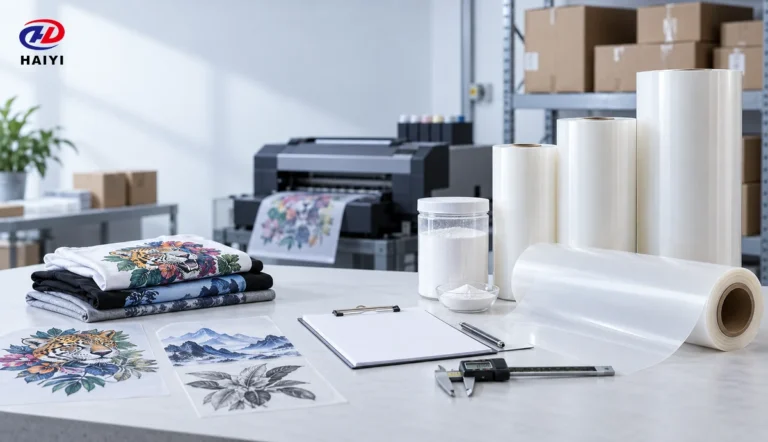
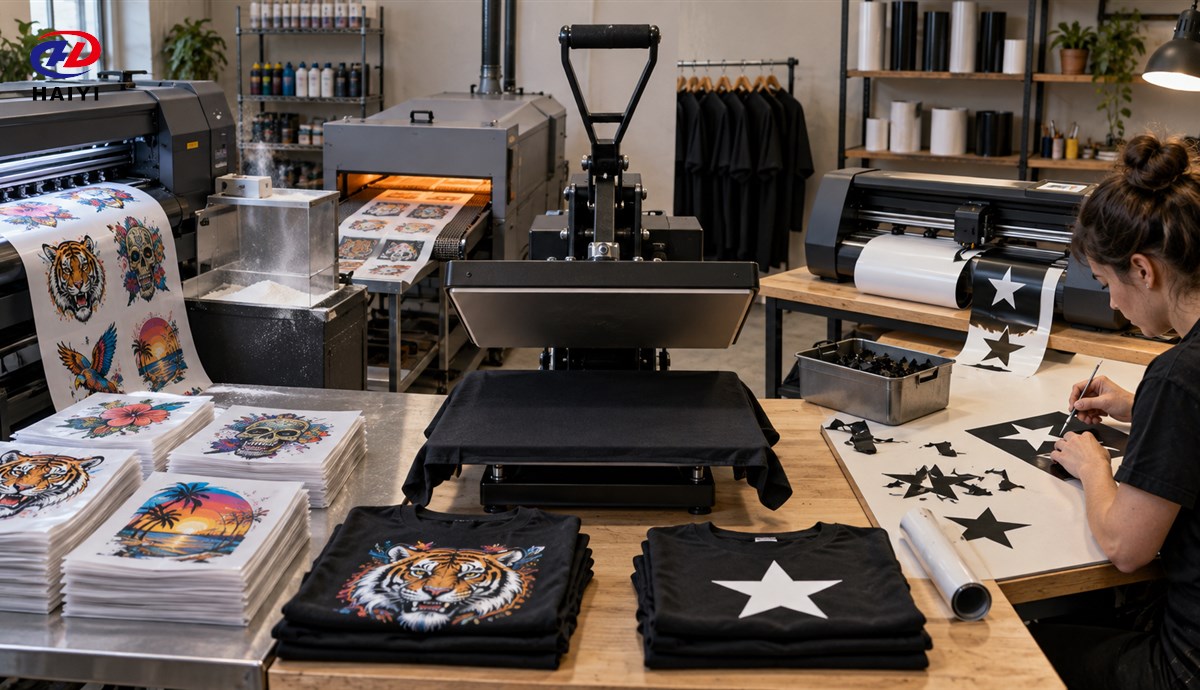
DTF is a printed transfer process. Color and white ink are printed onto coated PET film, adhesive powder is applied and cured, and the transfer is heat pressed onto fabric. HTV is a cut-film process. A plotter cuts shapes from colored vinyl, an operator weeds away unused material, and the remaining design is heat applied. DTF creates the design through printing; HTV creates it through cutting.
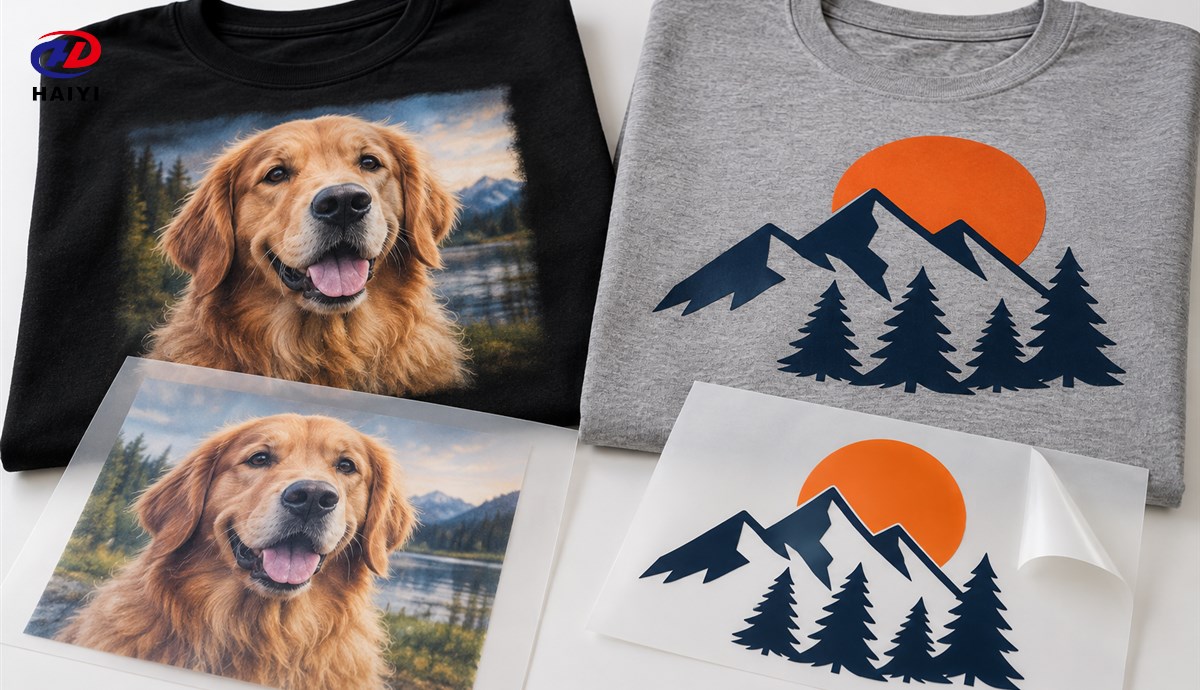
DTF vs HTV comparison
| Fator de decisão | Filme DTF | Vinil de transferência térmica |
|---|---|---|
| Artwork | Full color, fine detail, photographs, gradients | Bold vector shapes, names, numbers, simple logos |
| Color count | Many colors printed in one transfer | Each standard color is cut and usually layered separately |
| Manual preparation | No contour cutting or weeding for normal artwork | Requires cutting and weeding |
| Personalization | Efficient when each item needs a printed multicolor design | Efficient for changing names and numbers |
| Special effects | Primarily printed color and surface variations defined by the system | Strong range of reflective, flock, glitter, metallic, and textured films |
| Equipamento | DTF printer, ink, film, powder, curing equipment, heat press | Cutting plotter, vinyl, weeding tools, heat press |
| Production risk | Ink circulation, coating, powder, cure, and color control | Cut settings, weeding labor, alignment, and layer compatibility |
Which process is faster?
Speed depends on the job. DTF often gains an advantage when artwork contains many colors or small details because printing does not add a separate weeding step for each design. HTV can be very fast for a simple name, number, or one-color chest logo, especially when files and cut settings are already standardized. Production planning should measure total labor from file preparation through final inspection, not only press time.
Which process costs less?
There is no universal cost winner. DTF cost includes ink, white ink, film, powder, maintenance, curing energy, waste, and operator time. HTV cost includes vinyl area, cut time, weeding labor, discarded material, alignment, press cycles, and inventory for colors and effects. A simple one-color name may favor HTV, while a detailed six-color illustration may favor DTF. Calculate cost per sellable garment, including rejects and labor.
Which feels better on fabric?
Both processes create a surface layer, and feel depends more on the design and material build than on the category name. A large solid DTF print with heavy white and powder can feel substantial. A thin PU vinyl design with open space can feel light, while thick specialty vinyl can feel raised. Compare identical artwork size and coverage on the actual garment.
Which lasts longer?
Durability depends on consumable quality, fabric compatibility, press calibration, application settings, curing, artwork coverage, laundering, and care. A well-made transfer in either process can perform reliably, while a poorly applied transfer can fail early. Do not accept a fixed wash-life claim without a documented test method, garment type, wash conditions, and pass criteria.
Which fabrics can be decorated?
Both processes can work on common cotton, polyester, and blended garments when the product is compatible. Polyester may require attention to dye migration and lower application temperatures. Coated, waterproof, stretch, heat-sensitive, or textured textiles need specific testing. DTF’s white underbase supports dark and light fabric colors; HTV provides opaque color through the film itself.
Use this job-routing checklist
- Use DTF when the design contains photographs, gradients, many colors, fine detail, or repeated multicolor artwork.
- Use HTV when the design is a simple vector, a changing name or number, or requires a specialty surface effect.
- Compare both when the artwork is simple but volume is high; total labor and material yield may determine the winner.
- Run a fabric trial when the garment is coated, stretchable, dye-sublimated, heat-sensitive, or unfamiliar.
- Keep both processes when order mix varies. A hybrid shop can route each job to the most efficient line.
Can DTF and HTV be combined?
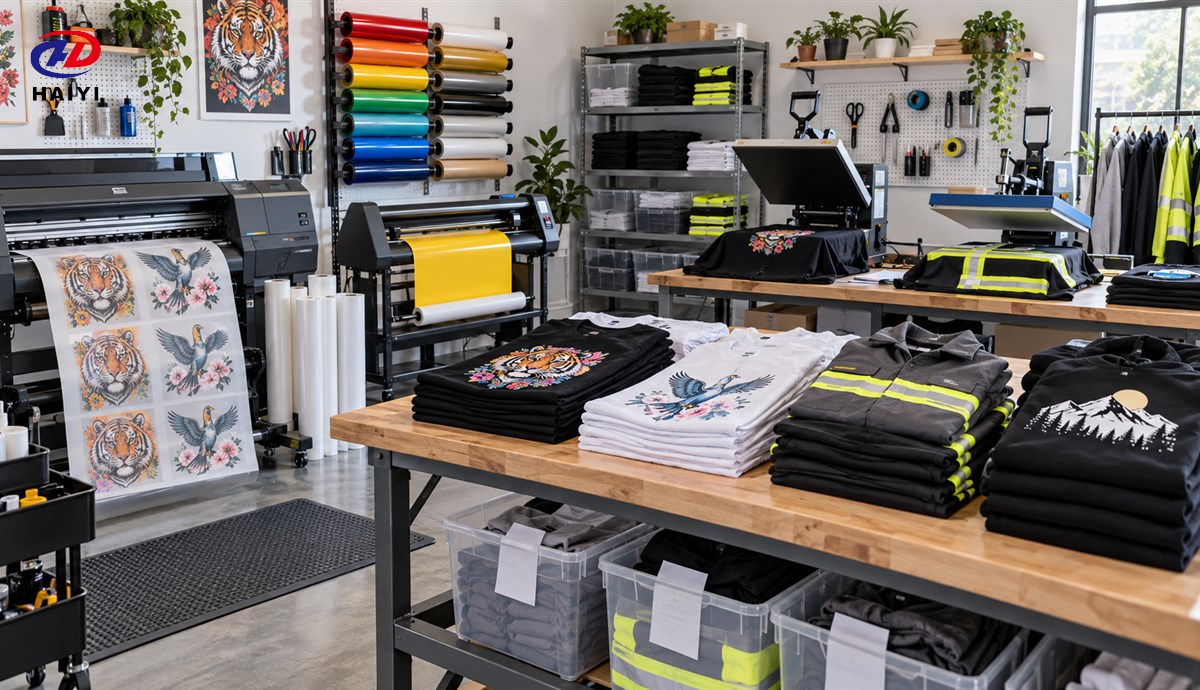
Yes, but the combined application must be tested. A shop may use DTF for a full-color logo and reflective HTV for a visibility element. Plan the press sequence around each product’s temperature, time, pressure, carrier, and re-press tolerance. Avoid placing one material over another unless the material suppliers approve that construction.
How should a B2B buyer validate DTF film?
Test printing stability, white-ink holdout, powder release, curing, carrier release, fine detail, solids, fabric adhesion, stretch, wash durability, storage, and batch consistency. Record the full consumables combination because film performance cannot be separated from ink, powder, press, and fabric. Review how DTF film works and our guide to heat transfer vinyl for process-level details.
Build the right transfer workflow with Haiyi
Haiyi provides wholesale and custom DTF film for print shops, distributors, and private-label programs. Share your printer configuration, ink and powder, garment range, roll dimensions, artwork mix, peel requirement, monthly volume, and quality tests. We can prepare samples for a controlled trial before bulk supply. Contact Haiyi for DTF film specifications, samples, and wholesale customization.