



DTF Film vs Heat Transfer Paper: Are They the Same?
DTF film and heat transfer paper are not the same. Compare carriers, inks, workflows, fabrics, equipment, and selection criteria.

DTF film and heat transfer paper are not the same material and are not normally interchangeable. DTF uses a coated PET film as a temporary carrier for specialized ink, a white underbase, and hot-melt adhesive powder. “Heat transfer paper” is a broad category that may refer to inkjet garment paper, laser transfer paper, or sublimation paper. Each product requires a different print system, transfer method, and substrate.
The confusion often comes from sellers using the informal phrase “DTF paper” for DTF film. A purchasing specification should say exactly what the carrier is, which ink process it supports, and which fabrics it is designed to decorate.
What is DTF film?
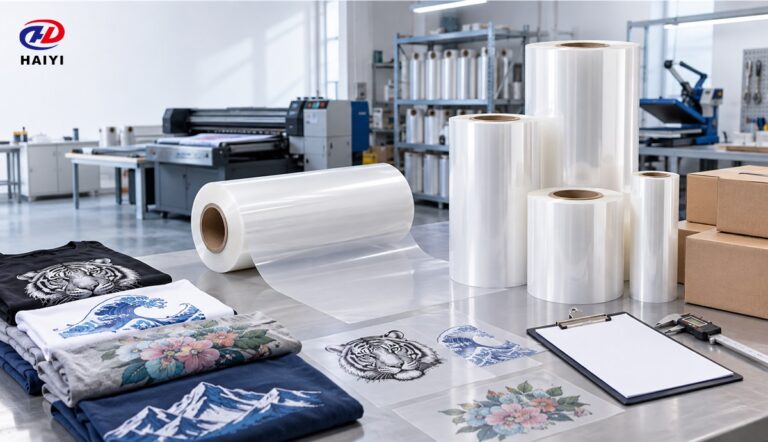
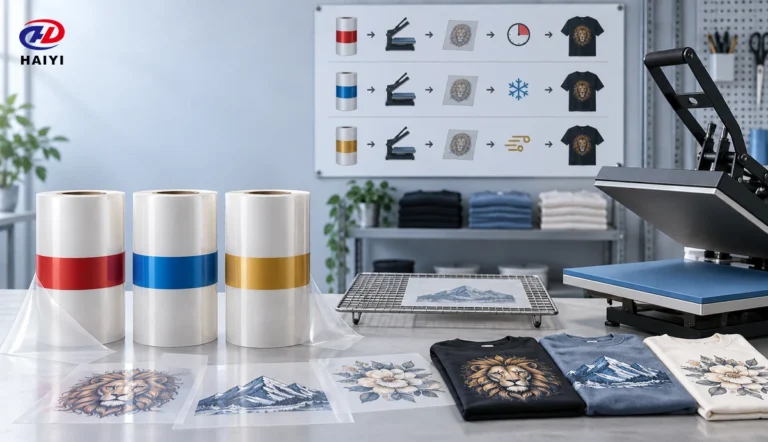
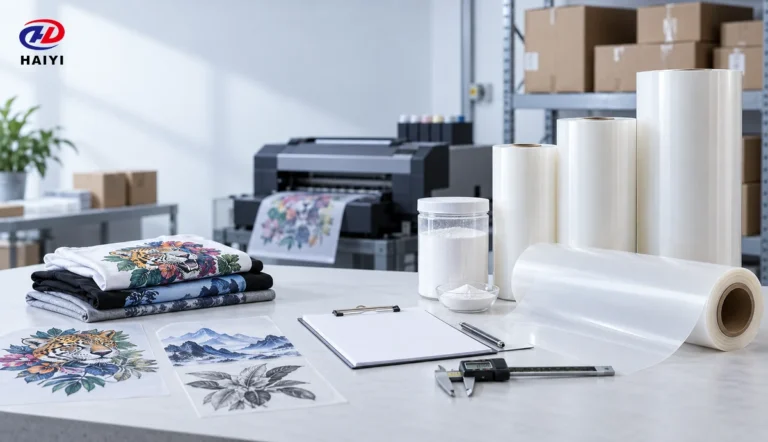
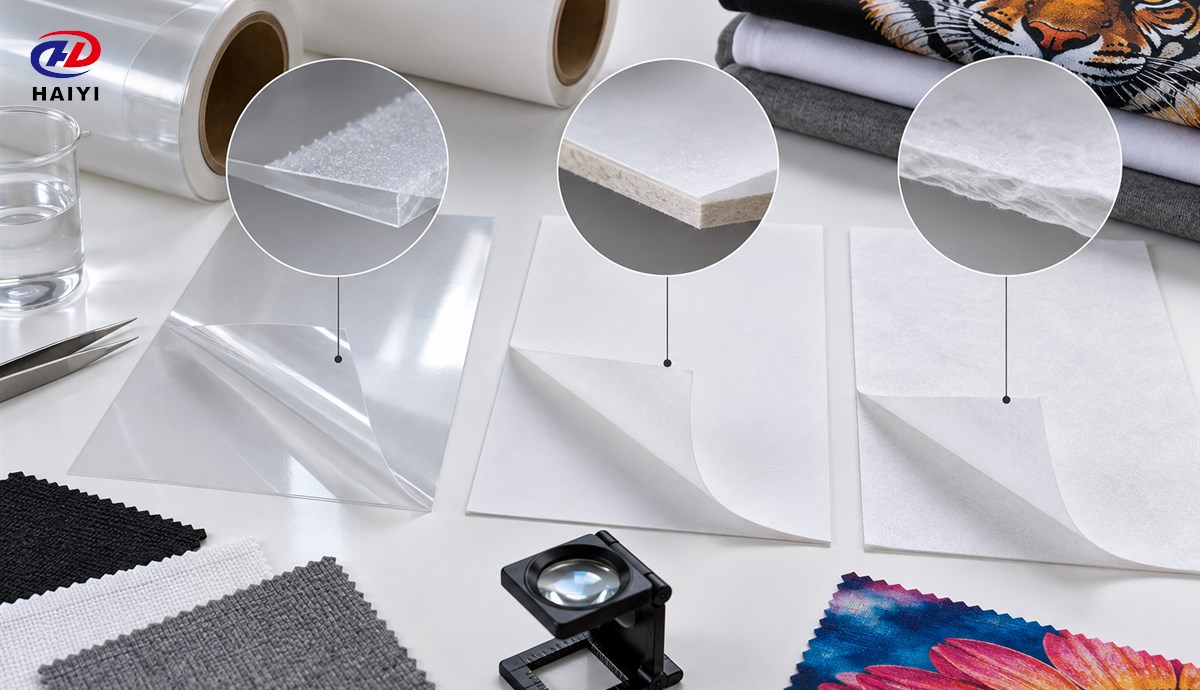
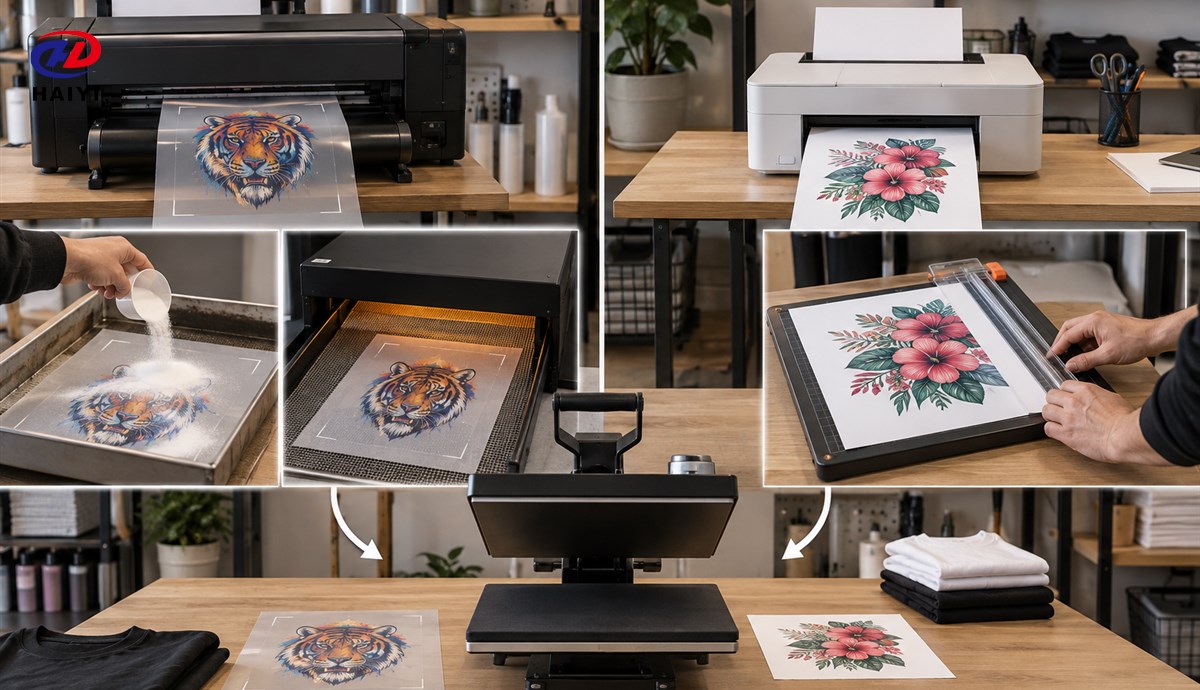
DTF film is usually a transparent or translucent PET carrier with a printable release coating. A DTF printer lays down color ink and a white backing layer, adhesive powder is applied to the wet ink, and the transfer is cured. The finished transfer is then heat pressed onto the garment and the PET carrier is peeled according to its hot, warm, cold, or instant-release specification.
What does heat transfer paper mean?
Heat transfer paper is not one single product. Inkjet garment transfer paper receives ordinary compatible ink and transfers a printed layer to light or dark fabric. Laser transfer paper is engineered for a compatible laser system and its fusing process. Sublimation paper temporarily holds dye-sublimation ink before heat drives the dye into polyester or a coated rigid substrate. These papers cannot be grouped into one universal workflow.
DTF film vs heat transfer paper: key differences
| Decision point | Filme DTF | Garment transfer paper | Papel para sublimação |
|---|---|---|---|
| Carrier | Coated PET film | Coated paper with a transferable layer | Coated paper that releases dye |
| Ink system | DTF color and white ink | Product-specific inkjet or laser system | Sublimation ink |
| Adhesive | Hot-melt powder applied after printing | Usually integrated into the paper’s transfer layer | No garment adhesive layer in the standard process |
| Dark garments | Supported through a printed white underbase | Requires paper designed for dark garments | Not suitable for standard dark fabric because sublimation has no white ink |
| Typical fabrics | Cotton, polyester, blends, and others after testing | Depends on the exact paper | Polyester-rich or specially coated surfaces |
| Cutting and trimming | No contour cutting for normal full-color DTF artwork | Often requires trimming or contour management | Usually not cut around the image |
How are the workflows different?
The DTF workflow is print, powder, cure, press, peel, and sometimes finish-press. Inkjet or laser transfer paper is normally print, trim if required, press, and peel according to the paper instructions. Sublimation is print in mirror, press against a compatible substrate, and remove the paper. A heat press may appear in all three workflows, but sharing one machine does not make the consumables interchangeable.
Which option works on dark fabric?
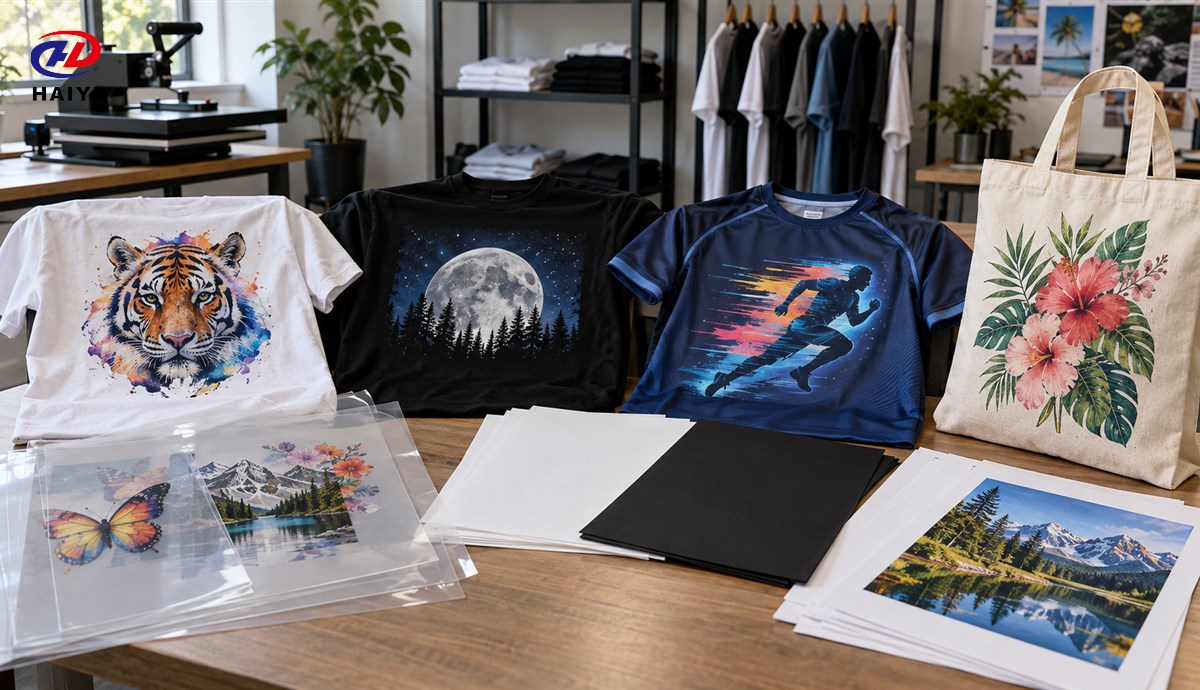
DTF is a practical choice for both light and dark garments because the printer produces a white underbase behind the color image. Inkjet transfer paper for dark garments can also create an opaque base, but it is a different product from light-garment paper and may require trimming or contour cutting. Standard sublimation cannot create white and therefore depends on a light polyester-rich background.
Which option produces the softest feel?
Hand feel depends on printed area, ink and adhesive laydown, artwork coverage, transfer media, fabric, and press settings. A small DTF design with controlled white and powder can feel flexible, while a large solid design can feel heavier. Transfer paper also varies: some products leave a larger background layer, while others are designed to transfer only printed areas. Buyers should compare identical artwork and fabric rather than relying on the carrier name alone.
Can transfer paper be used in a DTF printer?
Do not substitute paper for DTF film unless the complete printer and consumables supplier explicitly approves that material. The transport behavior, coating absorption, static level, ink holdout, white-ink stacking, powder release, curing response, and carrier release can differ. An incorrect material may cause ink spreading, head strikes, powder contamination, poor release, or unstable adhesion.
How should a buyer choose?
- Choose DTF film for detailed full-color artwork, dark and light garments, mixed fabric orders, and a production workflow built around DTF ink and powder.
- Choose garment transfer paper for a compatible inkjet or laser system, especially when order volume and available equipment favor sheet production.
- Choose sublimation paper for polyester-rich white or light substrates where dye becomes part of the material and no white underbase is required.
What should appear on an RFQ?
Specify the exact process, printer model, ink system, film or sheet width, roll length, peel type, fabric range, artwork coverage, transfer settings, required certifications, packaging, private-label needs, and monthly volume. For DTF film, also request batch identification and a sample for a complete compatibility test. Our guide to how DTF film works explains the full mechanism, while the DTF film buying guide covers supplier and specification decisions.
Source the correct DTF film for your system
Haiyi provides wholesale and custom DTF film for print operations, distributors, and private-label buyers. Tell us your equipment, ink and powder, fabric applications, peel preference, roll dimensions, and approval criteria. We can recommend a sample plan that verifies compatibility before bulk purchasing. Contact Haiyi for DTF film samples, specifications, and wholesale customization.