






Which Side of DTF Film Do You Print On?
Identify the printable side of DTF film with supplier instructions and a controlled test; double-sided matte does not always mean both sides print.

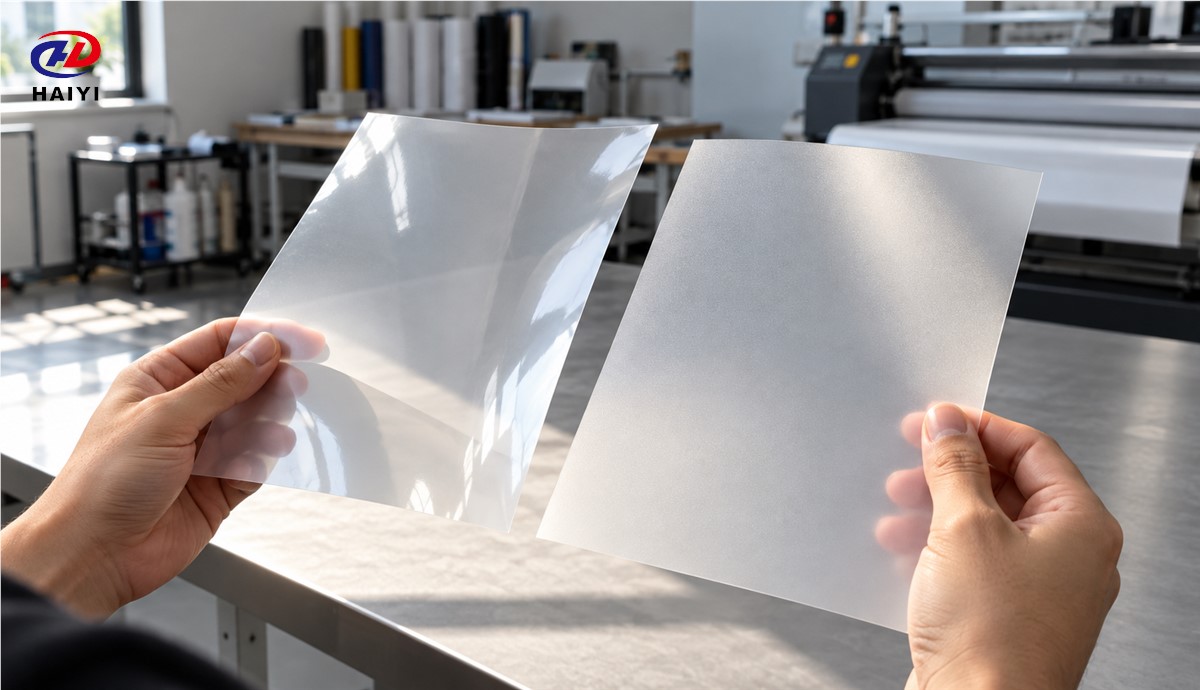
Print on the face that the film supplier designates as the ink-receiving side. On many single-matte products, that face looks more matte than the glossy back. However, appearance is only a clue: some films are matte on both sides, and the second matte surface can be an anti-static or transport coating rather than a second printable face. Confirm the product instruction before loading a production roll.
Estimated reading time: 8 minutes.
Why does the printable side matter?
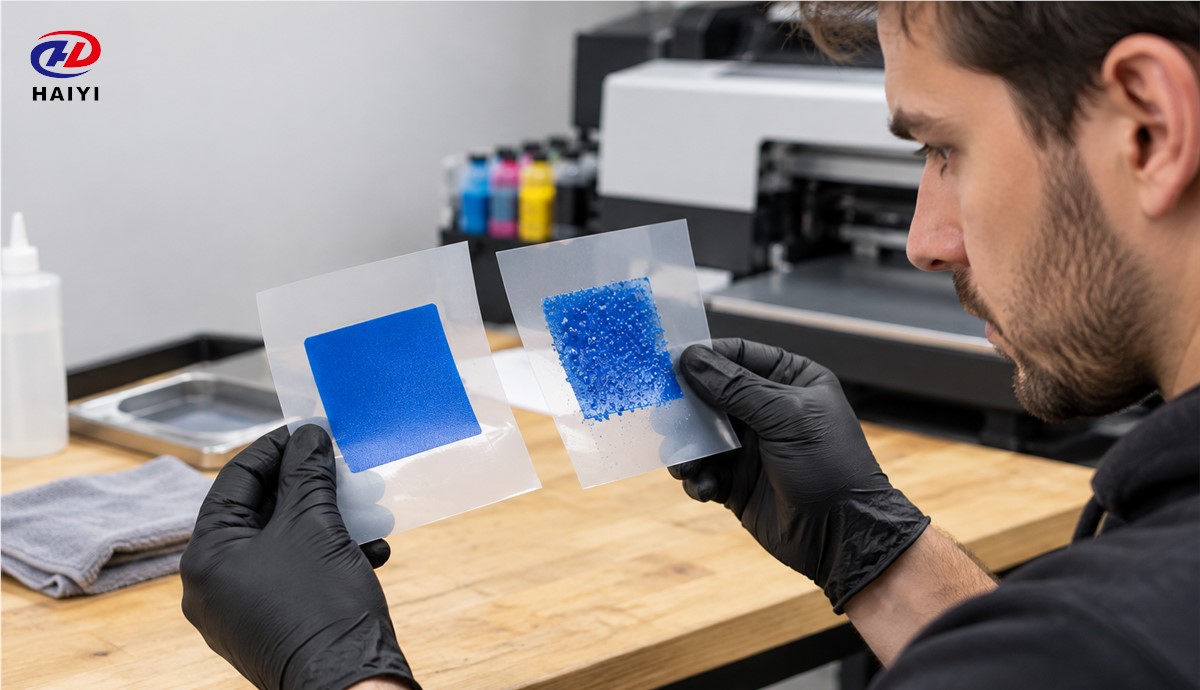
The front coating is engineered to receive ink, keep image detail controlled and release the cured transfer at the intended peel stage. Printing on an unsuitable back may cause beading, weak image definition, handling defects or inconsistent release. Even when a test image appears to print on the back, it does not prove that powdering, pressing and laundering will meet the same standard.
Film side is only one variable in the print process. If the correct face is loaded and defects persist, inspect ink/coating compatibility, static, environment and print mode. The film-layer function guide explains why the two surfaces can behave differently.
How can you identify the coated face safely?
First read the packaging, roll-edge label or technical sheet. If the supplier provides an unwind diagram, follow its orientation. Next compare a small unused corner under angled light and by the product’s documented tactile characteristics. On a conventional one-matte/one-gloss film, the matte face is commonly the receiving face, but this is a heuristic rather than a guarantee.
If labels are missing or ambiguous, contact the supplier with the lot number before using production material. A small controlled print on a sacrificial strip is preferable to guessing with a full roll. Do not use water, solvent or aggressive scratching on a production area; such tests may damage the very coating being assessed.
Does double-sided matte mean both faces are printable?
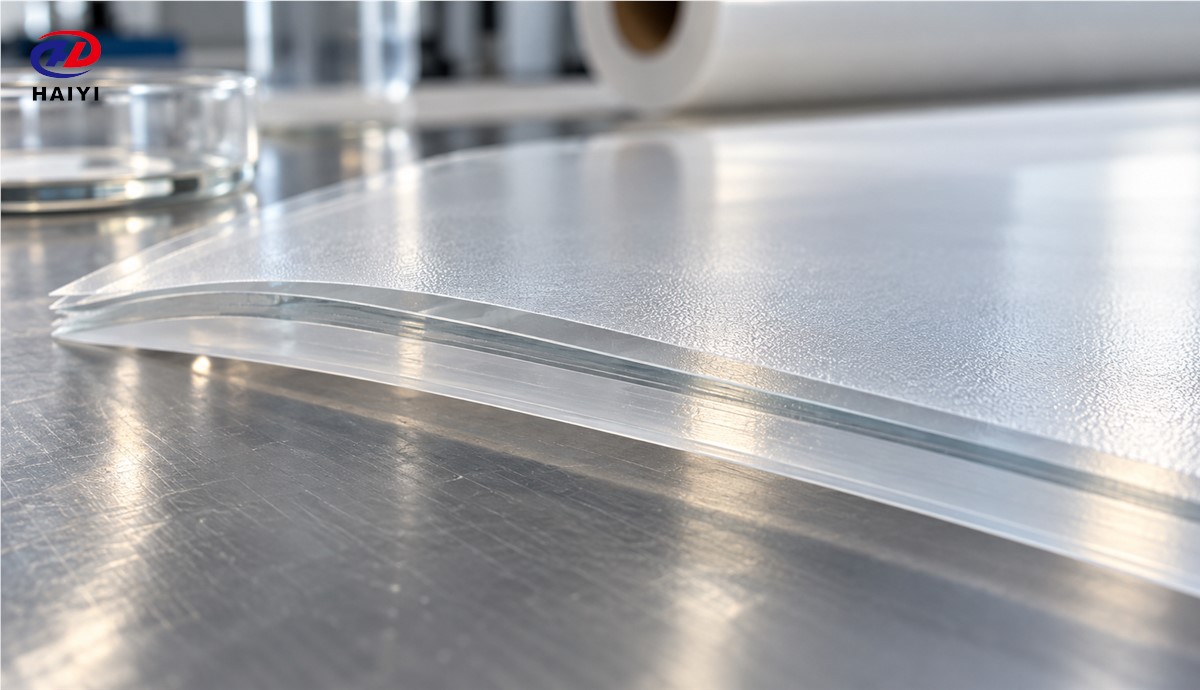
No. “Double-sided matte” describes appearance, not necessarily dual print functionality. One face may carry the print/release coating while the opposite face uses a matte anti-static or feed treatment. Technical documentation from a film manufacturer describes exactly this one-printable-side, two-matte-side construction. Only a supplier’s explicit statement and qualification test can establish that a given product is printable on both faces.
This distinction matters to distributors because ambiguous catalog wording can create avoidable returns. A specification should state “designated printable face” and show roll orientation rather than rely on “matte side” alone. For buyers comparing constructions, our single-sided versus double-sided DTF film guide provides more context.
What is a reliable two-strip orientation test?
Cut two small strips from the same batch without touching their center areas. Mark the edges “A” and “B” outside the print zone, then print the same small pattern on opposite faces using identical settings. Check wetting, edge sharpness, drying and powder pickup. Cure and press both onto the same garment material, following the candidate film’s peel instructions. Record the orientation that passes all stages and confirm it with the supplier.
A visual film print alone is insufficient. One face may accept wet ink but release poorly after pressing. Another may appear smooth but become unstable during roll feeding. Test enough length to reveal repeatability, and keep a reference sample from the approved lot.
Which direction should the film face in the printer?
The printable coating must face the printheads in the machine’s film path. The exact unwind direction depends on the printer and how the roll is wound. Verify the printer manual and roll label together; do not infer orientation from whether the roll unwinds over or under its core. For cut sheets, ensure the printer driver, sheet feed and handling procedure all preserve the same face-up orientation.
Before a production run, load a short section, perform a nozzle check and print a small standard target. If the image beads, smears or looks unexpectedly pale, pause and recheck the film face before changing color profiles or increasing ink density.
What if the film was printed on the wrong side?
Quarantine the affected material and run a small transfer test rather than sending it to customers. The printed image may not bond or release consistently even if it looks passable on the carrier. Reload correctly oriented film, document the waste and add a visible roll-orientation check to the operator setup sheet. When printing multiple batches, preserve the supplier’s lot label and orientation note with the remaining stock.
How can distributors prevent orientation mistakes?
Ask for consistent inside/outside winding, an arrow on cartons, a clear printable-face icon, technical instructions and batch traceability. Include a quick-start note in sample kits. A distributor selling both sheets and rolls should check that the face designation remains consistent when material is converted to another format. The compatibility test protocol can help turn those checks into repeatable acceptance criteria.
Need clearly specified DTF film for wholesale supply? Haiyi supports DTF film customization and distributor programs. Skontaktuj się z nami with your printer model, roll or sheet size, peel preference and required labeling so we can discuss a suitable sample and orientation specification.
Często zadawane pytania
Is the matte side always printable?
Often it is on a simple matte/gloss construction, but supplier instructions take priority because both sides may be matte.
Can I use a water-drop test?
Avoid wetting saleable film; if the supplier recommends any diagnostic test, perform it only on a sacrificial corner and still validate the full print-and-transfer cycle.
Can I flip a roll after printing one side?
Only if the specific product is explicitly designed and validated for printing on both faces. A matte back is not sufficient evidence.