







Lista kontrolna obsługi filmu DTF dla operatorów produkcji
A practical DTF film handling checklist for receiving, conditioning, loading, printing, powdering, curing, pressing, storage, and shift handover.

A DTF film handling checklist protects the coating before printing and keeps process variables traceable after the roll reaches production. The checklist should cover receiving, conditioning, loading, printing, powdering, curing, pressing, partial-roll storage, and shift handover. Each step prevents a specific class of defects.
Quick answer: keep DTF film sealed until it reaches the production environment, identify the lot, handle only the edges with clean gloves, confirm the coated side, load the roll squarely with even tension, stop when contamination or skew appears, and reseal every partial roll promptly.
What should operators check when film is received?
Inspect the shipping carton before opening it. Record crushed corners, water exposure, punctures, or loose cores because transport damage may affect roll edges or winding even when the outer film looks normal. Confirm the product code, dimensions, quantity, lot number, and packaging against the receiving document. Keep a label photograph when lot traceability matters.
Quarantine rolls with telescoping, crushed cores, damaged edges, blocking, visible coating marks, missing identification, or compromised moisture protection. Do not load a damaged roll merely to see whether it runs; that can move a receiving problem into the printer and create avoidable downtime.
How should DTF film be conditioned before opening?
Move sealed rolls into the production room and allow them to approach room conditions before opening. This reduces the chance of condensation forming on a cool film surface. The conditioning time depends on roll size, storage temperature, shipping conditions, and room climate, so the procedure should define an observable rule rather than one universal number.
Open only the quantity needed for the scheduled job. Keep film away from direct sunlight, heater outlets, wet cleaning areas, powder dust, and high-static zones. Operators should record room temperature and humidity when conditions are known to affect feeding, static, ink behavior, or powder cleanup.
What is the correct way to handle and load the film?
- Wash and dry hands, then use clean lint-free gloves when required by the process.
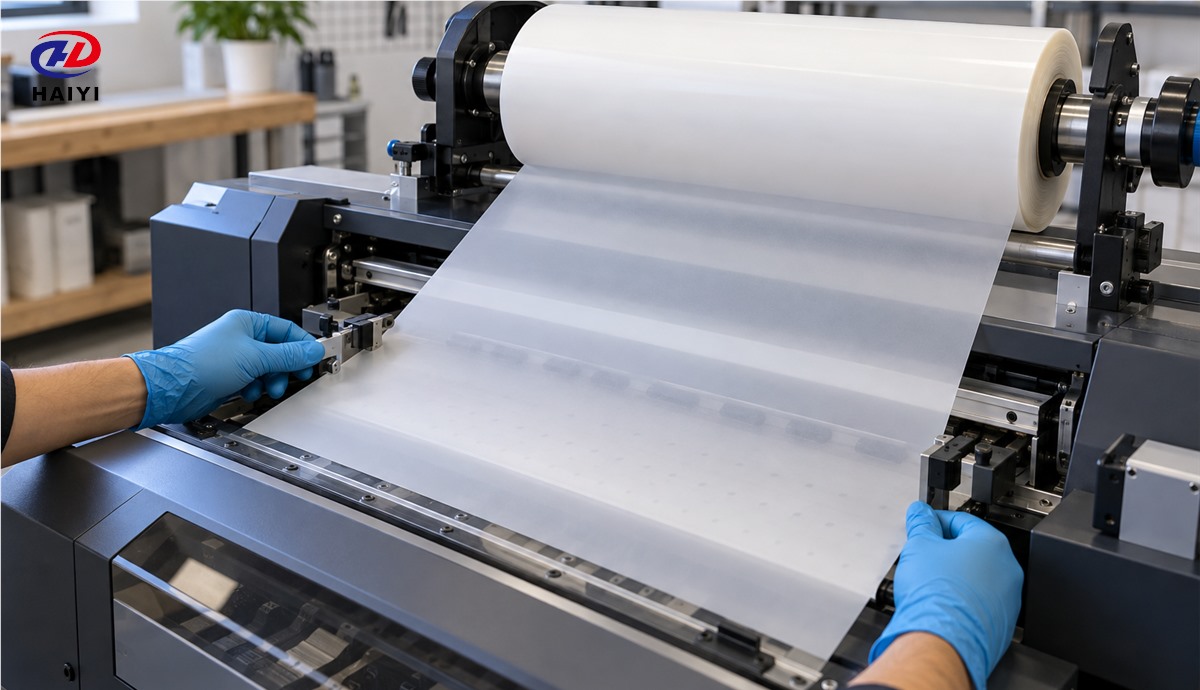
- Handle the roll by the core and edges; avoid touching the printable coating.
- Confirm the coated side from the supplier’s identification or approved test.
- Inspect the leading edge and trim it squarely if the approved procedure allows.
- Mount the roll centrally and confirm the unwind direction.
- Set guides without pinching the film and route the media through the correct path.
- Apply even tension and advance enough material to confirm tracking before printing.
- Run a nozzle check and the approved control image before production artwork.
Film should enter the print zone flat and without diagonal pull. If the edge walks against a guide, correct roll alignment, spindle position, path, or tension. Increasing guide pressure can wrinkle the film and hide the actual cause.
What should operators monitor during printing?
Monitor feeding, head clearance, edge position, surface cleanliness, color ink behavior, white ink coverage, and the spacing between images. Stop the job when the film wrinkles, lifts, skews, contacts the head, shows repeated coating marks, or produces a defect across multiple nozzle-clean checks. Continuing to print converts a controllable setup issue into material waste.
| Observation | Immediate operator action | Do not assume |
|---|---|---|
| Ink beads or spreads | Pause and inspect film side, surface, ink load, environment, and lot | That more heat will correct wet printing |
| Film skews | Check mounting, guides, path, and tension | That stronger guide pressure is the answer |
| Powder remains off-image | Check static, moisture, powder condition, and shaking | That excess curing will clean the background |
| Repeated release failure | Confirm cure, actual press settings, peel timing, and compatibility | That film alone is responsible |
How should powdering and curing be controlled?
Apply powder while the printed image is in the approved receptive condition. Coverage should be complete on the image and clean outside it. Break up clumps, protect powder from contamination, and follow the site’s approved reuse policy. Inspect both heavy solid areas and fine details because incomplete coverage can appear in one before the other.
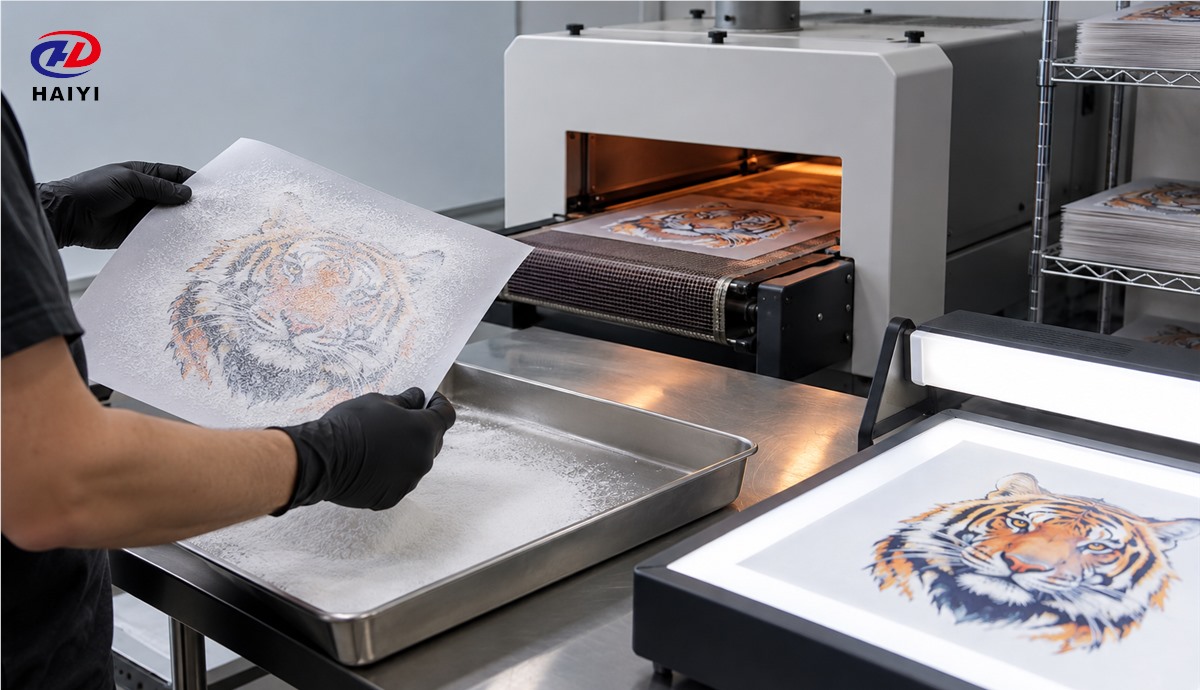
Cure settings must be linked to the actual equipment, ink load, film, powder, airflow, and line speed. Operators should recognize the approved appearance of fused adhesive and the stop conditions for smoke, oiliness, bubbles, brittle surfaces, blocking, or film distortion. A change in line speed or artwork ink coverage can change the energy received even when the temperature display is unchanged.
What checks belong at the heat press?
Confirm garment type, transfer orientation, platen cleanliness, verified temperature, dwell time, pressure method, peel condition, and post-press procedure. Pre-press only when the approved garment process calls for it. Place the transfer without stretching the garment and remove the carrier in the defined direction and temperature window.
Inspect edge adhesion, fine details, surface finish, release residue, distortion, and color before stacking completed garments. If several transfers fail in the same way, stop and preserve one failed transfer, one unpressed transfer, and the related film label for investigation.
How should a partial roll be stored?
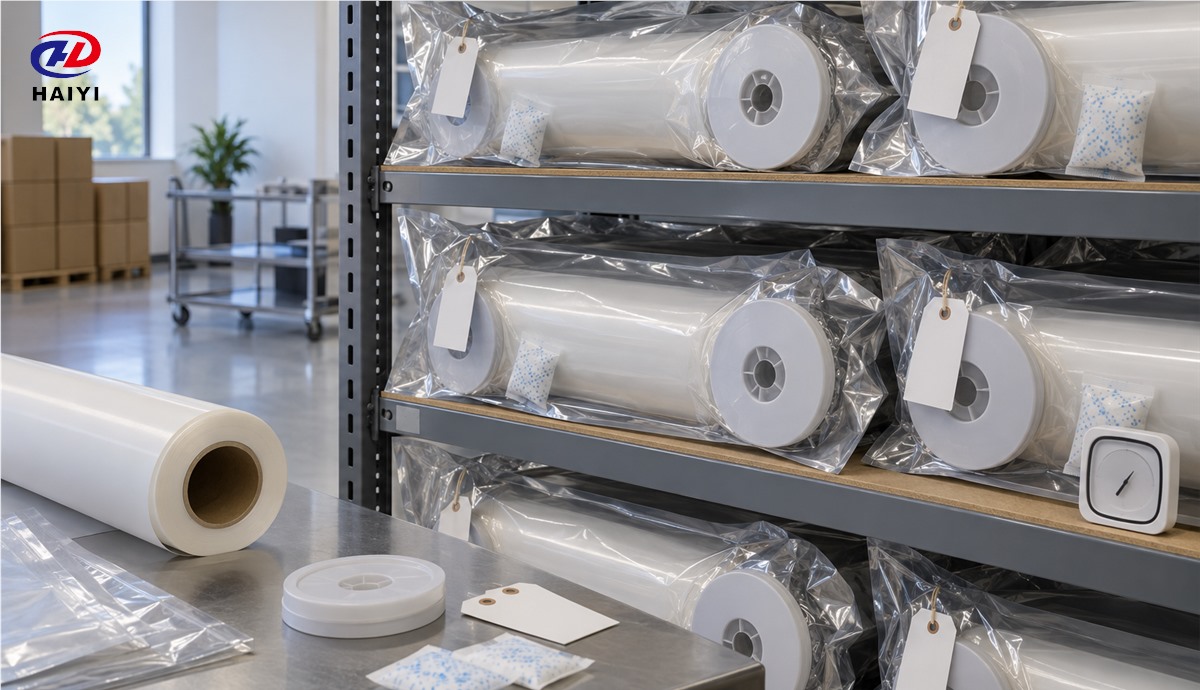
Remove dust from the work area before unloading. Protect the roll edge, secure the loose end without damaging the coating, return the roll to a moisture-resistant bag with appropriate desiccant, and reseal it. Identify the product, lot, remaining quantity, open date, and operator. Store the roll upright or horizontally according to the packaging design so the core and edges are not deformed.
What belongs in the shift handover?
The outgoing operator should record film lot and remaining quantity, printer preset, nozzle condition, ink and powder lots, cure settings, press settings, room conditions, job status, defects, corrective actions, and quarantined material. A verbal comment such as running fine is not enough for the next shift to reproduce the state of the process.
Use the step-by-step DTF film guide for a broader process explanation and the DTF ink-spread troubleshooting guide when the printed image will not remain controlled.
Często zadawane pytania
Can operators touch DTF film with bare hands?
Avoid touching the coated print area. Skin oil, moisture, and dust can alter ink behavior or leave visible marks. Handle the core and edges, using clean gloves when the approved procedure requires them.
Should opened film remain beside the printer overnight?
Leaving a partial roll exposed increases contamination and environmental variation. Reseal and identify it unless the supplier and internal procedure explicitly approve protected machine storage.
When should the operator stop the line?
Stop when a condition risks equipment, creates repeated defects, breaks traceability, or moves outside the approved process window. Clear stop rules prevent pressure to continue a job from multiplying waste.
Standardize handling across teams and locations
Haiyi supplies wholesale and customized DTF film for distributors and production operations. Tell us your printer platform, roll size, workflow, peel preference, environment, packaging, labels, and traceability needs. Skontaktuj się z Haiyi to request samples and develop a repeatable supply specification.