




DTF Printing Market Trends in 2026: What B2B Buyers Should Watch
A practical September 2026 analysis of DTF printing trends: market maturity, automation, quality control, multi-technology shops, distribution, and private label.

As of September 2026, the most important DTF printing trends are market maturity, tighter competition, workflow automation, stronger color and batch control, multi-technology production, and more demanding B2B procurement. The opportunity has not disappeared, but buying a printer is no longer a complete business strategy. Successful operators increasingly compete on reliable output, fast order handling, differentiated service, and supply consistency.
This article does not rely on a single market-size forecast. Forecasts use different definitions, regions, and assumptions. The operational signals below are more useful for print shops, distributors, and consumables buyers deciding what to improve now.
1. DTF is moving from novelty to operating discipline
More businesses understand the basic DTF workflow, which makes entry easier but differentiation harder. A low equipment price can attract new capacity quickly. The competitive advantage therefore moves toward uptime, color repeatability, job accuracy, delivery reliability, customer service, and cost control. Buyers should evaluate the entire production system rather than choosing equipment or film from a single headline specification.
2. Workflow automation matters more than isolated print speed
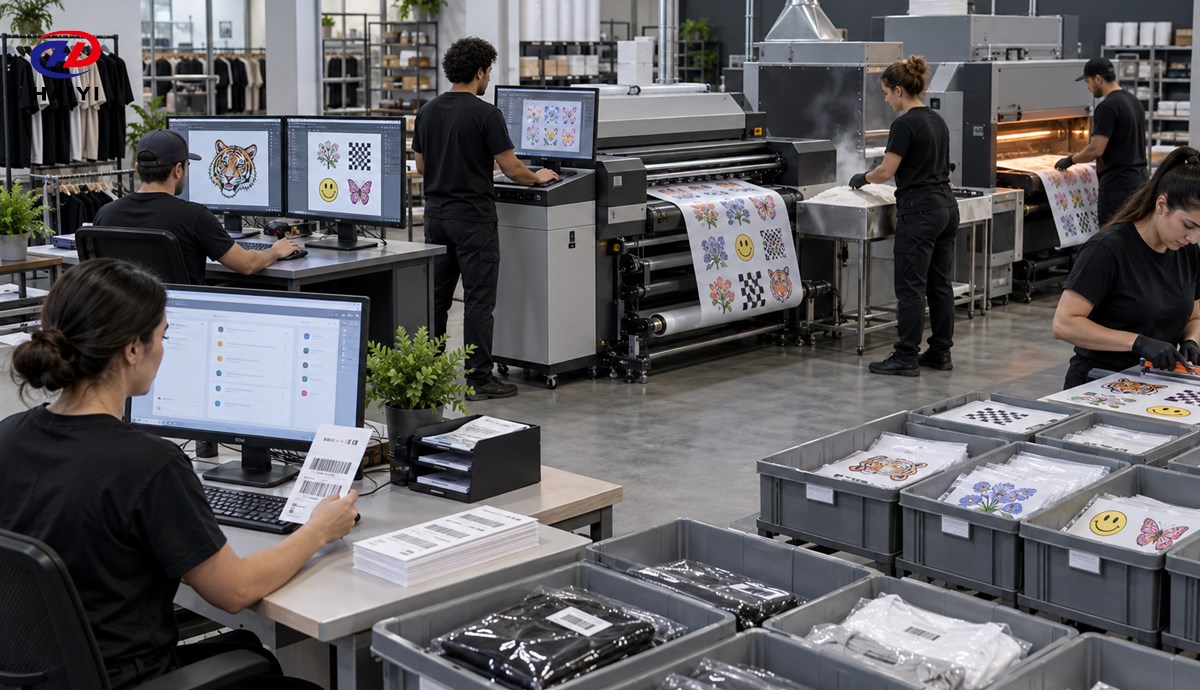
Print speed has value only when orders move efficiently from artwork intake to RIP, nesting, printing, powdering, curing, cutting, sorting, pressing, inspection, and shipment. Manual job identification and sorting can become the bottleneck after printer capacity increases. Connected order data, standardized file checks, automated nesting, clear batch identification, and organized finishing reduce errors that a faster print engine cannot solve.
3. Quality control is becoming a commercial requirement
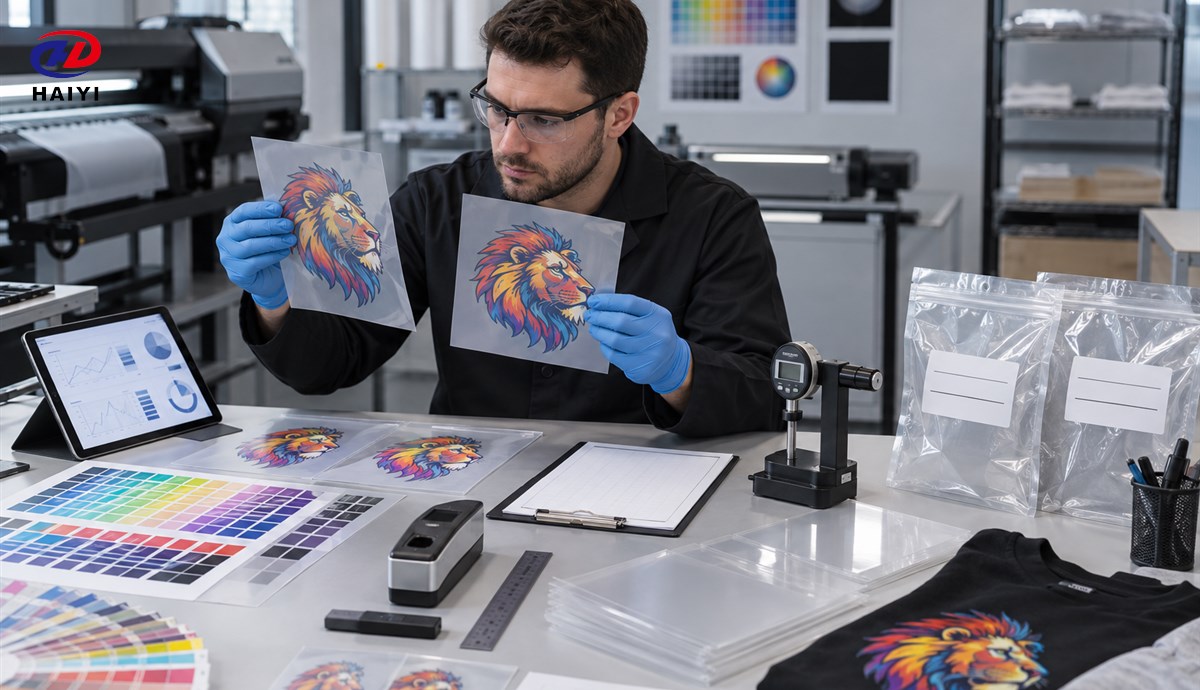
Customers ordering repeat designs expect the new batch to match the previous one. That expectation requires control of ink condition, white-ink density, film coating, powder application, cure energy, press temperature, color profiles, and substrate. Visual judgment remains useful, but production teams increasingly benefit from defined tolerances, retained samples, lot records, and written acceptance criteria.
Consumables buyers should compare more than one perfect demonstration sheet. Test multiple positions across the roll, repeat runs, and separate production lots. Our guide to comparing DTF film across two production batches provides a practical structure.
4. Multi-technology shops are routing jobs by fit
DTF is increasingly one production tool within a wider decoration business. Shops may retain screen printing for suitable long runs, sublimation for polyester-rich products, embroidery for textured premium decoration, and HTV for names, numbers, or specialty finishes. DTF handles detailed full-color work, mixed garment colors, short runs, and on-demand transfers well. Job routing protects margin because no single process is optimal for every design.
5. Personalization and on-demand production keep expanding
Customers expect smaller quantities, more designs, faster launches, and localized or personalized products. DTF supports these needs because the same print workflow can produce varied full-color artwork without screens. The business benefit depends on good batching and artwork preparation; uncontrolled one-off jobs can still consume excessive administrative labor. Profitable personalization combines flexible printing with disciplined order intake and pricing.
6. Sustainability claims are becoming more measurable
Broad environmental language is less useful than specific operating evidence. Buyers increasingly ask about material documentation, chemical compliance, packaging, process waste, rejected transfers, energy use, and the ability to print closer to actual demand. On-demand production can reduce overproduction, but poor setup, failed transfers, and unstable consumables create waste. A credible improvement plan tracks yield and rework instead of relying only on a generic “eco-friendly” label.
7. Distributors need a deliberate SKU strategy
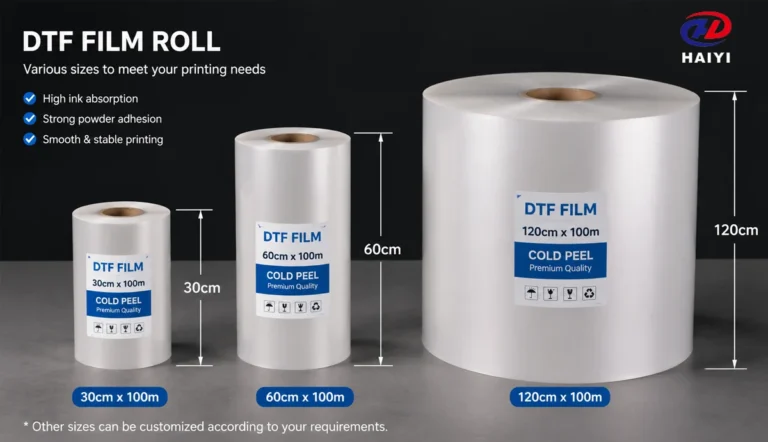
A larger catalog does not automatically create a better distribution business. Each added width, roll length, finish, coating, and peel type increases inventory and forecasting complexity. A strong SKU matrix connects product variations to clear customer segments, equipment compatibility, reorder behavior, and contribution margin. See our guide to building a profitable DTF film SKU matrix.
8. Private-label programs require traceability, not only packaging
Private-label buyers need consistent product identity behind the box. A scalable program defines approved specifications, artwork control, packaging materials, roll labeling, lot coding, sample retention, change notification, complaint handling, and reorder lead time. A professional sample kit should make product selection easier and connect every sample to a reproducible specification.

9. Supplier audits are shifting toward evidence
A factory video or attractive showroom is not enough for a strategic supply decision. Buyers should examine incoming raw-material control, coating capability, in-process inspection, roll conversion, cleanliness, lab testing, lot traceability, nonconformance handling, packaging, capacity planning, and change control. Use our DTF film supplier audit guide and request a meaningful DTF film certificate of analysis.
10. The winning offer is becoming a system
Customers do not experience film, ink, powder, profiles, curing, pressing, and support as separate categories; they experience the final transfer. Suppliers and distributors that help customers qualify a compatible system can reduce complaints and improve retention. Useful support includes sample protocols, documented settings, troubleshooting logic, application boundaries, and clear escalation when materials change.
What should a DTF business do next?
- Measure true order-to-ship time, not only printer output.
- Calculate cost per sellable transfer, including maintenance, reprints, and labor.
- Define color, release, adhesion, and wash acceptance criteria.
- Retain batch samples and connect complaints to lot records.
- Route each design to the most suitable decoration process.
- Reduce unnecessary SKUs and clarify the customer for each remaining option.
- Qualify backup supply without changing several consumables at once.
- Replace general sustainability claims with measurable waste and yield improvements.
When will this trend analysis be updated?
This article reflects operating conditions observed and reviewed in September 2026. It should be updated when major changes affect DTF equipment economics, consumables chemistry, regulatory requirements, production automation, or buyer behavior. Time-stamping prevents a market article from presenting old assumptions as permanent facts.
Plan wholesale or private-label DTF film supply
Haiyi provides wholesale and customized DTF film for print businesses, distributors, and private-label programs. Share your markets, printer base, required widths and lengths, peel preferences, monthly volume, packaging, documentation, and quality criteria. We can build a controlled sampling and approval path before bulk supply. Contact Haiyi to discuss DTF film distribution and private-label requirements.