

Is DTF a Heat Transfer? DTF vs Other Transfer Methods
DTF is one type of textile heat transfer. Compare its film, adhesive, fabric range, artwork workflow, and surface feel with HTV and sublimation.

Estimated reading time: 6 minutes
DTF is a heat-transfer method for decorating textiles. A design is printed onto coated PET film, combined with hot-melt adhesive powder, cured, and then transferred to fabric with controlled heat and pressure. However, “heat transfer” is a broad category that also includes processes such as heat transfer vinyl and dye sublimation, so DTF should not be treated as a synonym for every heat-transfer method.
The right comparison depends on the alternative being considered. DTF, heat transfer vinyl, and sublimation all use heat during application, but they differ in image formation, carrier material, adhesive mechanism, fabric range, artwork preparation, production workflow, feel, and limitations.
How does DTF heat transfer work?
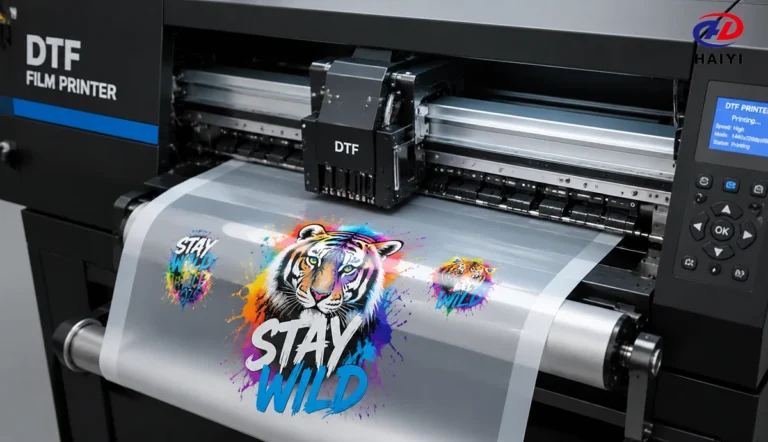
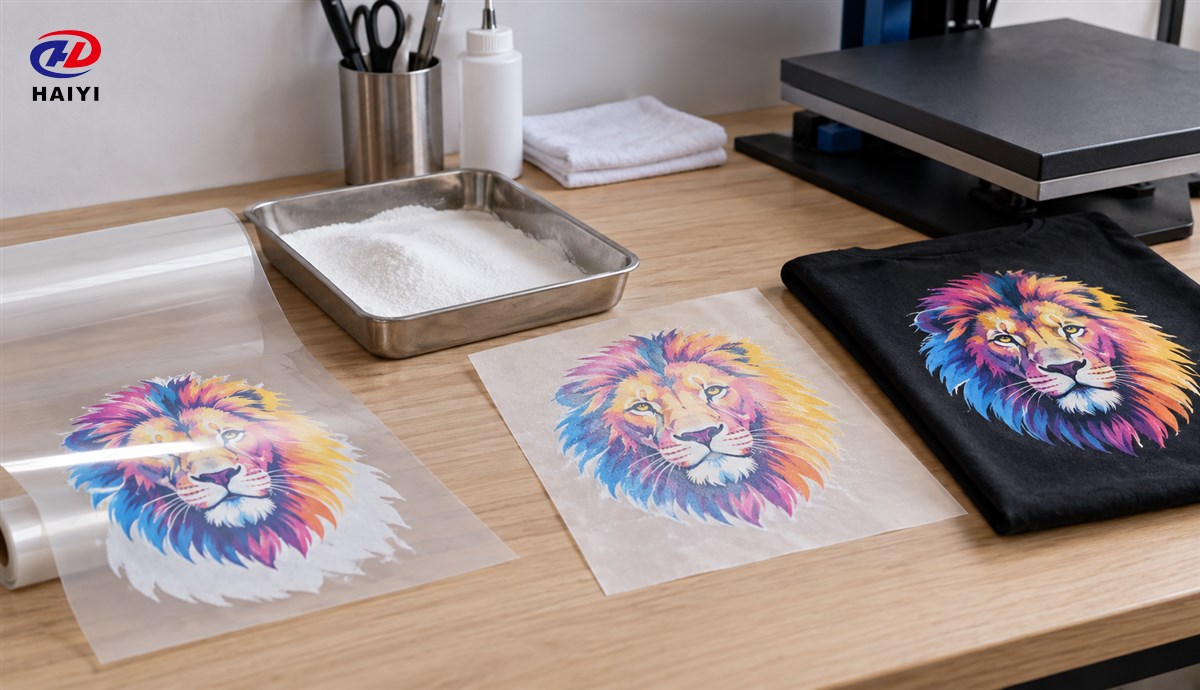
A DTF printer typically places color ink and a white backing layer onto an ink-receptive film. Hot-melt powder adheres to the printed area and is cured to create a transferable assembly. The operator positions the transfer on a garment, applies the specified heat and pressure, and removes the carrier at the correct peel condition.
The PET film is a temporary process carrier, not the final decorated surface. The printed and adhesive layers remain on the textile after transfer. Film, ink, powder, cure, fabric, press conditions, and peel method work as one system, so changing one component can change the result.
What does the term heat transfer include?
Heat transfer describes a family of decoration methods that use heat, usually with pressure and a carrier, to move or bond a design to a substrate. The phrase does not identify a single ink, film, paper, adhesive, or production process. A buyer who asks only for “heat transfer film” may receive products intended for very different systems.
A clear specification should name the method: DTF transfer film, cuttable heat transfer vinyl, printable transfer material, sublimation paper, screen-print transfer, or another defined product. This article compares DTF with HTV and sublimation because those are common sources of confusion; it does not claim that they represent every heat-transfer technology.
How is DTF different from heat transfer vinyl?
Heat transfer vinyl is normally supplied as a colored or printable film that is cut into shapes and weeded before pressing. It works efficiently for names, numbers, simple logos, specialty finishes, and short runs where cut graphics suit the design. Each color or layer may require separate preparation depending on the vinyl system.
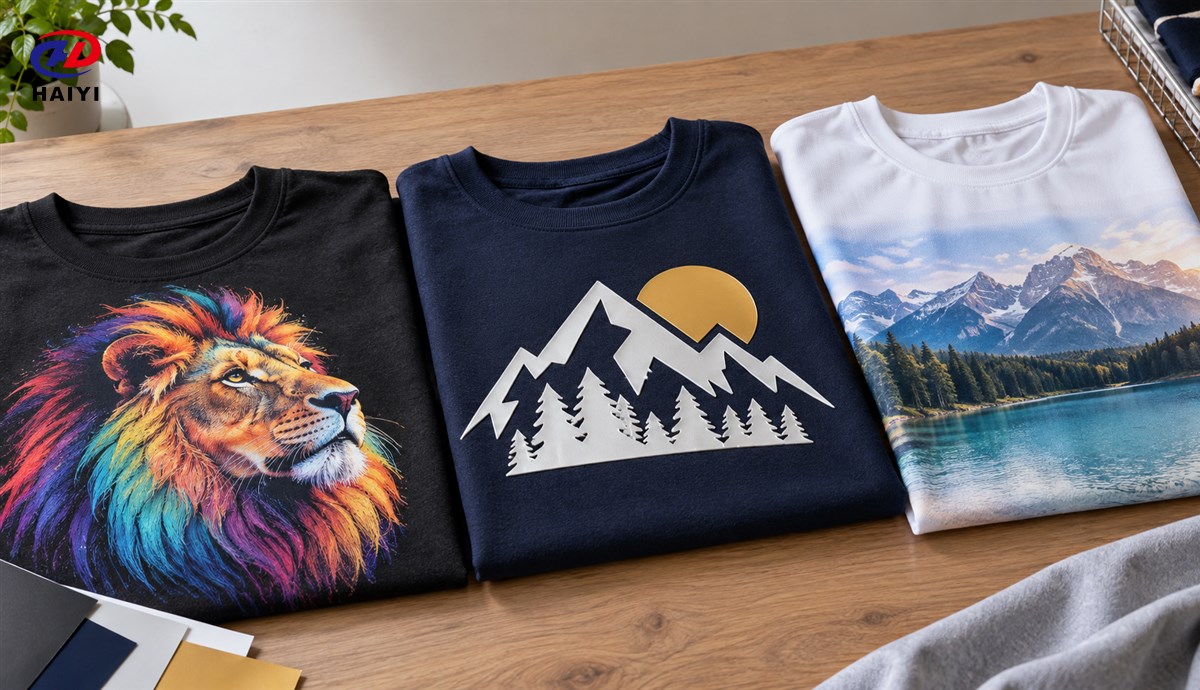
DTF prints full-color artwork digitally and does not require contour weeding around every internal detail. It is useful for gradients, photographic imagery, small multicolor elements, and mixed design batches. DTF still requires artwork preparation, white-ink control, powdering, curing, and a compatible press recipe, so “no weeding” does not mean “no process control.”
How is DTF different from dye sublimation?
Dye sublimation uses heat to convert dye into a form that bonds with a suitable polyester-based or specially coated substrate. On apparel, it is generally associated with light-colored polyester-rich materials because the process does not normally add an opaque white underbase. The design becomes part of the receptive substrate rather than sitting as an adhesive-backed printed layer.
DTF uses pigment ink, a white backing, and hot-melt adhesive, which allows it to decorate a wider range of light and dark textiles when the specific fabric and process are validated. DTF creates a printed layer with a perceptible hand, while sublimation on suitable polyester can retain a very low surface feel. Neither method is universally better; the fabric, color, artwork, feel, and production goal decide.
What are the practical differences between DTF, HTV, and sublimation?
| Fator de decisão | DTF | Vinil de transferência térmica | Dye sublimation |
|---|---|---|---|
| Image creation | Digital CMYK plus white on coated film | Cut or printed vinyl | Sublimation dye printed on transfer paper |
| Bonding mechanism | Hot-melt adhesive | Heat-activated vinyl adhesive | Dye enters a receptive polyester surface |
| Dark garments | Possible with white backing | Possible with opaque vinyl | Generally unsuitable without a separate receptive layer |
| Complex full color | Well suited | Depends on printable vinyl and workflow | Well suited on compatible light substrates |
| Weeding | No contour weeding of printed design | Usually required for cut vinyl | Não é necessário |
| sensação da superfície | Printed adhesive layer | Vinyl layer | Minimal on suitable polyester |
The table describes typical workflows, not every specialty product. Manufacturers may offer unusual vinyl, hybrid, low-temperature, stretch, textured, or printable systems. Use the data sheet and sample test for the actual material rather than extending a category summary to every SKU.
Which method should a print shop choose?
Choose DTF when full-color artwork, dark and light garments, mixed fabrics, fine detail, and varied order sizes make a digital film transfer practical. Choose cut HTV when simple shapes, names, numbers, or specialty vinyl effects justify cutting and weeding. Choose sublimation when the substrate is suitable, the color is light enough, and an exceptionally low-hand result is more important than an opaque white layer.
A shop may operate more than one method because customer jobs differ. Build a decision matrix using fabric fiber and finish, garment color, artwork colors and detail, quantity, required feel, stretch, heat tolerance, operator time, equipment, waste, and durability test. The selected method should satisfy the application rather than follow a single-material preference.
What is the difference between DTF film and generic heat transfer film?
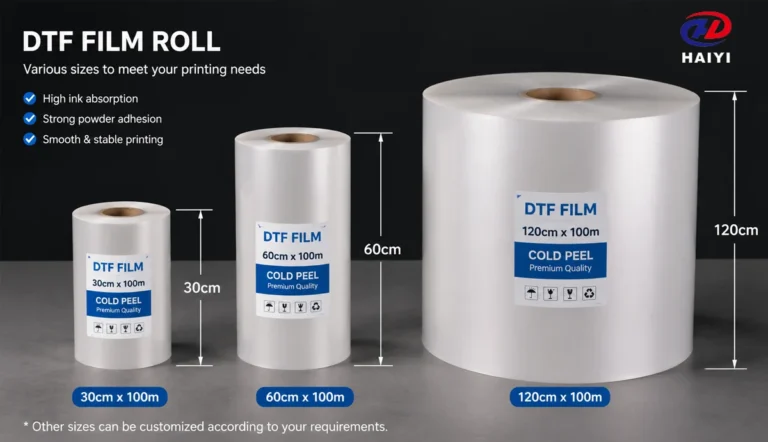
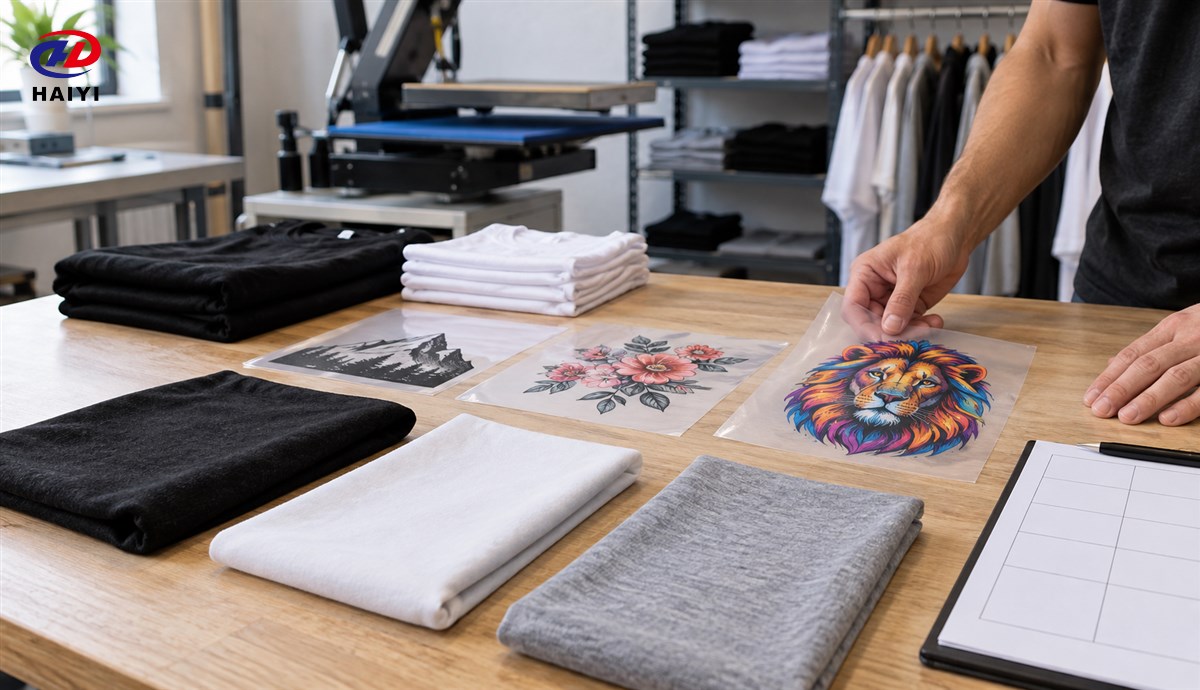
DTF film is a coated carrier engineered to accept the selected DTF ink system, hold powdered adhesive during curing, and release the transfer under a specified peel condition. Generic PET packaging film or an unidentified heat-transfer sheet should not be assumed compatible. Visual similarity does not establish coating, heat behavior, dimensional stability, or release performance.
O Guia de compra de película de transferência térmica explains how to identify the process before comparing film. The DTF process guide follows the role of film from printing through transfer.
What should be tested before production?
Test the selected material with the actual printer, ink, adhesive, curing method, heat press, artwork, and garment. Record feed behavior, ink acceptance, powder coverage, cure, platen temperature, pressure, time, peel condition, edge quality, stretch, hand feel, appearance, and an appropriate wash protocol. A sample from a different consumable system is not a substitute for an application test.
Press conditions are material-specific. The DTF pressing time guide explains why time, temperature, pressure, fabric, and peel method must be approved together. For a full sample plan, use the DTF consumables compatibility protocol.
How should distributors describe DTF accurately?
A distributor can accurately describe DTF as a digital textile heat-transfer process that uses printed coated film and hot-melt adhesive. Avoid claiming compatibility with every fabric, a universal press setting, or guaranteed durability without stated test conditions. Product communication should identify the SKU, peel mode, dimensions, storage, compatible system, and buyer validation requirement.
This precise definition helps customers distinguish blank DTF film from ready-to-press transfers and from other heat-transfer media. It also reduces purchasing errors caused by treating broad category words as interchangeable product names.
Discuss wholesale DTF film with Haiyi
Haiyi provides wholesale and customizable DTF film for distributors and printing businesses. Send the printer, ink and powder system, film format, peel requirement, fabrics, volume, destination, and packaging needs when requesting a sample or quotation. The supplied film should be validated as part of the buyer’s complete DTF process.
Contact Haiyi for DTF film samples and wholesale customization.