



Can You Use Sublimation Ink on DTF Film?
Can sublimation ink work on DTF film? Compare the ink systems, understand the limits of the sublimation hack, and use a controlled compatibility test.

Krótka odpowiedź: Sublimation ink is not a drop-in replacement for DTF pigment ink. A controlled “sublimation hack” can sometimes make a transfer when dye ink is printed on a compatible coated film and combined with hot-melt powder, but its results depend on the entire ink-film-powder-fabric system. A commercial DTF workflow should use ink and film qualified together unless a documented trial proves the alternative fit for the intended garment.
Estimated reading time: 8 minutes.
Why are sublimation ink and DTF ink different?
Sublimation ink contains disperse dyes designed to migrate into receptive polyester or polymer-coated surfaces under heat. Conventional DTF ink is formulated as a pigment-based ink that forms a printed image on a coated PET carrier; white ink commonly supplies an opaque underbase. The two ink systems have different color, opacity, coating-wetting, curing and durability requirements. A film that accepts one ink cannot automatically be assumed to accept the other.
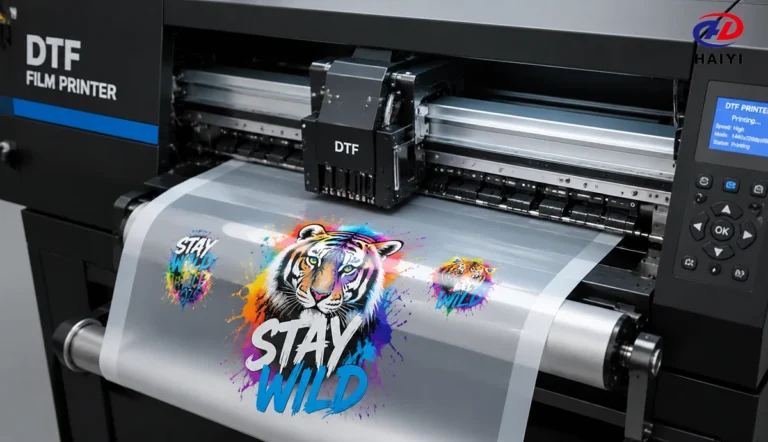
In standard DTF production, the operator prints the image on the film’s designated face, applies compatible hot-melt powder to the wet ink, cures the powder and heat-presses the transfer. The powder creates the bond to the textile. In conventional sublimation, dye transfers under heat to a receptive substrate and no DTF white underbase or powder step is normally involved. The workflows therefore should not be conflated simply because both use a carrier and heat press. See our comparison of DTF, heat transfer and sublimation printing for a wider process view.
Can a sublimation hack actually work on DTF film?
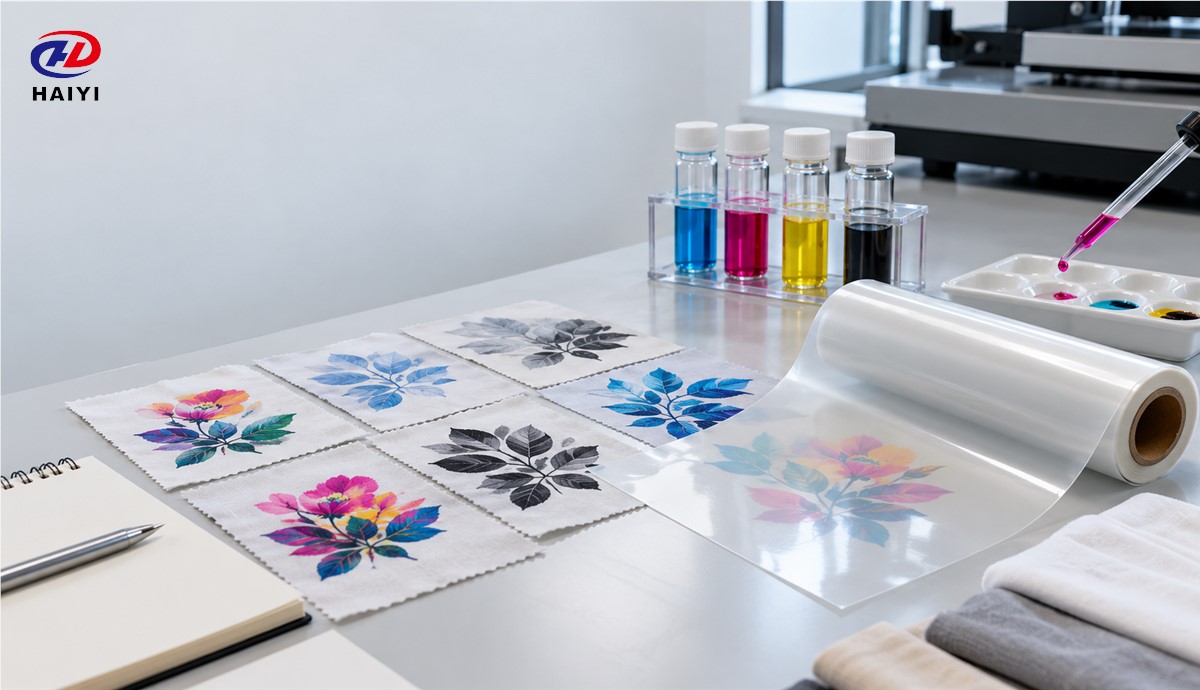
A sublimation-hack trial may produce a usable image when a particular sublimation ink wets a particular film, powder adheres evenly to the printed image, and the press cycle transfers the result to the chosen fabric. That is a conditional outcome, not a universal specification for blank DTF film. A visible print on film is only the first gate; powder coverage, release, wash performance and hand feel are separate acceptance gates.
The key commercial distinction is repeatability. One attractive sample does not establish batch-to-batch compatibility, because film surface energy, ink laydown, humidity, powder grade and press conditions can all change the outcome. A distributor should qualify a defined combination and record its limits instead of selling it as interchangeable with a standard DTF set.
Which garments are most likely to expose limitations?
Dark fabric is the first limitation to examine because ordinary sublimation ink has no white ink channel. Without a verified opaque underbase, bright artwork may lose contrast against a dark garment even if the powder bonds. Color-sensitive artwork also needs testing, because the color management developed for sublimation on polyester may not predict the appearance of an experimental film-and-powder transfer.
Cotton, blends and polyester should be tested separately. The fabric affects bonding, dye behavior, stretch, laundering and final color. It is unsafe to promise equal performance across all three from a trial on only one white polyester shirt. Film release style matters too: hot-, warm- and cold-peel instructions are product-specific, not substitutes for an ink compatibility test.
What should a controlled compatibility test include?
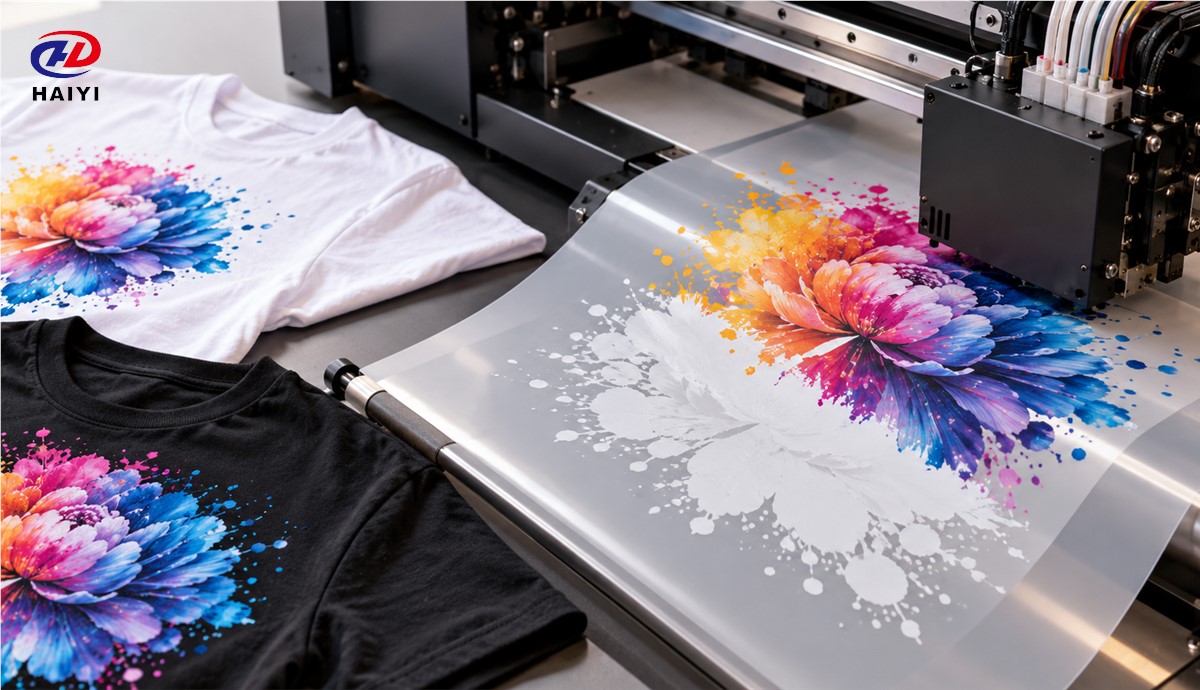
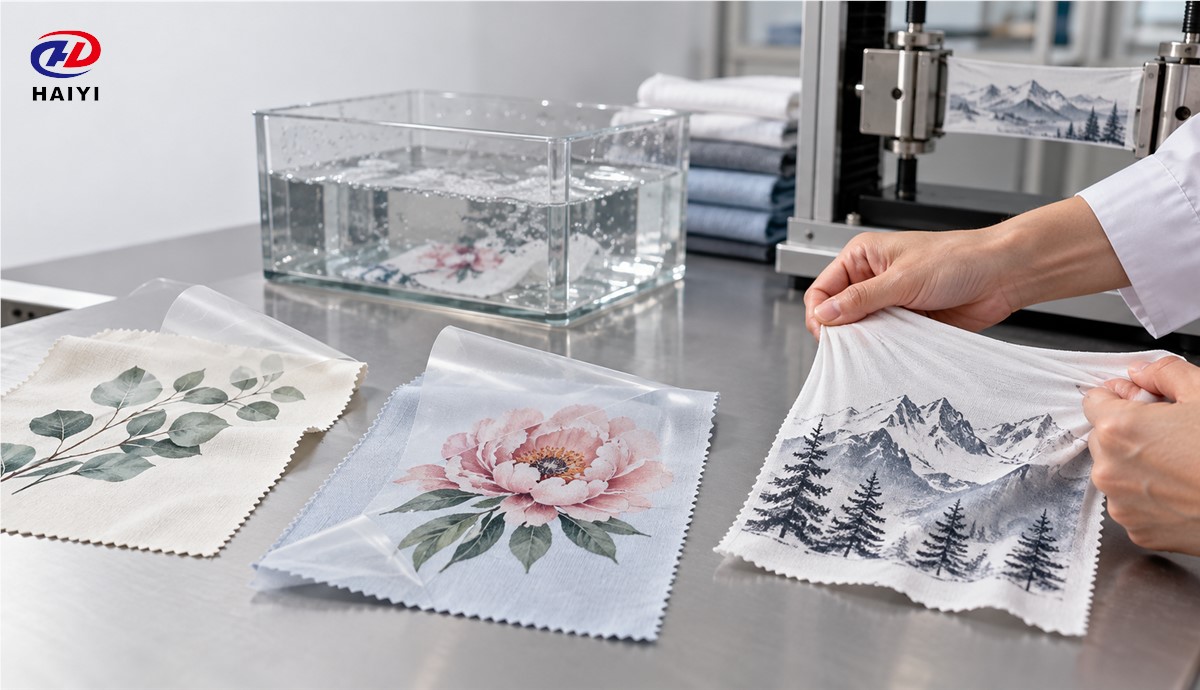
Start with the film supplier’s stated printable side and the ink supplier’s equipment requirements. Print the same test artwork on the candidate film and on a known approved reference. The artwork should include fine lines, solid colors, pale tones, an edge detail and a repeated patch so coating defects become visible. Keep print mode, powder, cure and press settings recorded for every sample.
- Film stage: Check wetting, beading, bleed, drying and handling marks before powdering.
- Powder stage: Check coverage on printed areas and unwanted powder on clear film.
- Cure stage: Confirm the adhesive has reached the supplier’s specified condition without scorching or film distortion.
- Transfer stage: Follow the film’s designated peel window; record release, edge definition, color and hand feel.
- Aftercare stage: Use a documented wash-and-stretch plan, compare against a reference transfer and retain specimens.
A test result should be recorded as “passes for this combination under these conditions” rather than “sublimation ink works on DTF film.” The DTF consumables compatibility protocol offers a more detailed sample-matrix approach.
Can you switch an existing printer from DTF ink to sublimation ink?
Changing ink chemistry in an installed printer is a separate equipment decision. Pigment residues, dye ink, printhead requirements and fluid-path materials may be incompatible; casual mixing can cause instability or damage. Ask the printer and ink suppliers for written guidance before conversion. A film compatibility experiment does not authorize pouring a different ink into a working DTF system.
When is standard DTF the better choice?
Standard DTF is usually the clearer route for production orders that require an opaque white underbase, defined film/ink/powder compatibility, repeatable color and documented release behavior. An experimental sublimation workflow can be useful for a tightly controlled niche, but it should be sold only with its tested fabric, artwork and care limitations. For a broader selection framework, read our DTF transfer film guide.
How can a distributor specify the right film?
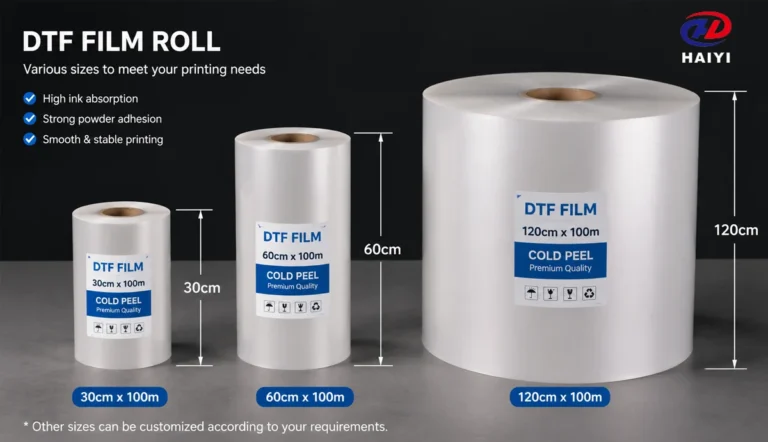
Send the supplier the printer model, ink system, artwork type, target garments, production volume, powder grade, cure method and required peel window. Request the printable-side instruction, batch identification, trial quantities and the tests used to support compatibility claims. That information lets a supplier propose a film based on the intended system rather than on the vague phrase “works with DTF.”
Work with Haiyi: Haiyi supplies DTF film for wholesale and customization projects. If you need a film sample plan for a defined ink and garment workflow, skontaktuj się z zespołem Haiyi with your equipment, ink, fabric and volume requirements so we can discuss a suitable evaluation.
Często zadawane pytania
Can sublimation ink be used on every DTF film?
No. Coating chemistry differs by product, so compatibility must be established with the specific film and ink combination.
Will a successful print on film guarantee a durable garment?
No. Powder adhesion, curing, release, garment bonding and laundering must all pass the intended acceptance checks.
Does sublimation ink supply a white underbase?
No. A typical sublimation ink set does not provide the white opacity used in standard DTF printing for dark fabrics.